




அகநானூறு 212
பாடல் · The poem
Tap a word to see where else it occurs.
பொருள் · Meaning in TamilAI
குற்றமற்ற நல்ல பொன்னால் செய்த பாவை, வானில் தவழும் இளவெயிலைத் தாங்கிக்கொண்டு நிற்பதைப் போன்ற மிகுந்த அழகுடையவள் அவள். அவளுடைய ஐம்பாலாகப் பகுத்த கூந்தல் கொத்தாகத் திரண்டது. கிளைத்துப் பின்னிய நாணலின் கிழங்கு மணலில் ஈன்ற முளையைப் போன்ற ஒளிரும் பற்களும், பவழம் போன்ற சிவந்த வாயும் உடையவள். இசையில் தேர்ந்தவன் தடவும் செவ்வழிப் பண்ணமைந்த நல்ல யாழின் இசையைக் கேட்பது போன்ற இனிய சொல்லுடையவள். தெய்வத்தன்மை கொண்ட அழகுடைய அந்தப் பெண்ணை விரும்பி, பெரிய யானைக் கூட்டம் இறங்கிய நீரைப் போலக் கலங்கிய நிலையில், 'அவள் பெறுவதற்கு அரியவள்' என்று எண்ணாமல், நாள்தோறும் துன்பம் தரும் அரிய பாலை வழியை நீந்திக் கடந்து, நெஞ்சே, நீ என்னைத் துன்பப்படுத்தினாய். மின்னலால் வானைப் பிளக்கும் வலிய கார்மேகம் போல மறம் கொண்டு, பல மொழி பேசுவோர் கலந்த பாசறையை விரும்பிய இடத்தில் அமைத்து, படைக்கலங்கள் நிலவைப் போல ஒளிரும் கடல் போன்ற படையும், தேன் ஒழுகும் மாலையும், மறப்போரும் உடைய குட்டுவன், தன்னோடு போரிடத் தகுந்த பகைவனைப் பெறாததால் சினம் மிகுந்து, போராற்றலோடு கடலையே முற்றுகையிட்டு, உயர்ந்த அலைகளையுடைய கடலைப் பின்வாங்கச் செய்தான். நீரில் தோய்த்துச் சிறப்பாக்கிய அவனுடைய வேல் மார்பில் சென்று அழுந்துவது போல, நெஞ்சே, உன் கூரிய காம வேட்கை அழிந்து போகட்டும்! எளிதில் கிடைக்காதவளை ஓயாமல் நினைத்து, நீங்காத துன்பத்தை என் மேல் கொண்டு வந்தாய்.
இது குறிஞ்சித் திணை; அரியவளான தலைவியை அடையத் தூண்டி வருத்தும் தன் நெஞ்சைத் தலைவன் கடிந்து கூறுவது. யானைகள் இறங்கிக் கலக்கிய நீர், காதலால் கலங்கிய அவன் மனத்தைக் காட்டுகிறது. குட்டுவன் கடலைப் பின்வாங்கச் செய்தான் என்பது சேரரைப் பற்றிய மரபுச் செய்தி; பாடல் அதை ஒப்புமையாக மட்டுமே கூறுகிறது.
ஆங்கிலம் · English translationAI
Translation
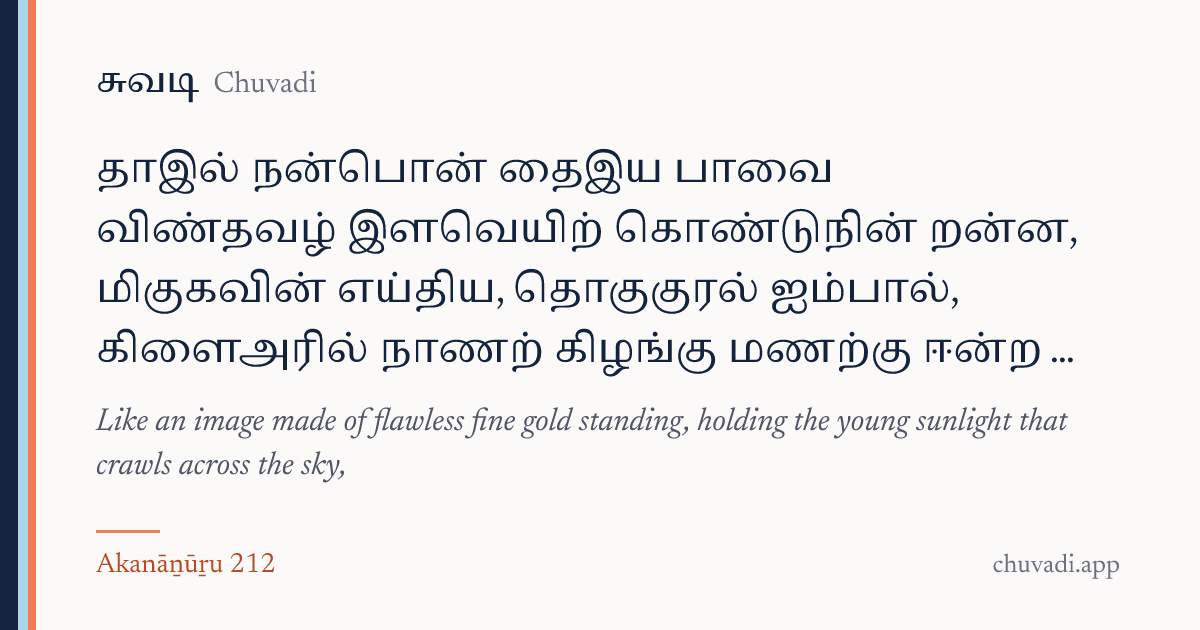
- Like an image made of flawless fine gold
- standing, holding the young sunlight that crawls across the sky,
- of surpassing beauty, her five-part hair in gathered tresses,
- like the shoots the root of the clumped, tangled reed
- puts forth into the sand, her flashing teeth, her coral mouth,
- as a master strokes a fine yāḻ in the cevvaḻi mode
- and one listens to its music, so is her sweet, pleasant voice:
- longing for that girl of overwhelming beauty, troubled like the water
- where a herd of great elephants wades in,
- not thinking 'she is hard to win', every day
- swimming across the cruel, hard wasteland, you
- have brought me to grief; splitting the sky with lightning,
- like the mighty monsoon cloud, raging in his strength,
- setting his camp of mixed tongues wherever he wished,
- with an army like the sea where weapons gleam like moonlight,
- Kuṭṭuvaṉ of fierce wars, with a garland where honey opens,
- finding no foe to match him in battle, his anger swelling,
- with warlike might laid siege to the ocean
- and drove back the sea of high waves:
- as his water-tempered spear goes in and sinks into the breast,
- so may your sharp passion perish, O heart! Without ceasing,
- thinking of her who is not easy to win,
- you have brought upon me pain that never ends.
What the poem says
The hero turns on his own heart. It has driven him, day after day, across a dangerous wasteland to court a girl who is not easy to win, and now he curses it: may its keen desire be destroyed as an enemy is destroyed by the spear of Kuṭṭuvaṉ.
The first seven lines are a portrait of the heroine, built from three comparisons. She is like a statue of pure gold standing in the early sunlight; her teeth gleam like the white shoots a reed root sends into sand; her voice is like the music a connoisseur draws from a yāḻ in the cevvaḻi mode. Her beauty is 'aṇaṅku', overwhelming, with a touch of the dangerous divine. The heart that longs for her is 'troubled like water where elephants wade', muddied and stirred.
The closing comparison describes Kuṭṭuvaṉ, a Cēra name, whose army gleams with weapons like moonlight and whose camp is full of many languages. Finding no rival to fight, he besieged the ocean itself and drove back its high waves with his spear. The poem states this as the measure of his might; it is the well-known Cēra tradition of the king who 'turned back the sea', and nothing more is added here.
The setting is kuṟiñci in its classification, but the long road is a pālai motif; the hero's difficulty is the difficulty of reaching her, which suits the tiṇai of secret union. The text is clear.