




அகநானூறு 215
பாடல் · The poem
Tap a word to see where else it occurs.
பொருள் · Meaning in TamilAI
'தடுத்து நிற்கும் உயர்ந்த சிகரங்களையுடைய மலைக்கு அப்பால், பல வேறு மொழிகள் பேசப்படும் நாட்டை நோக்கி, செயலை விரும்பி விரைந்து செல்லும் வலிமை மிக்க நெஞ்சோடு, சிறந்த வேலைப்பாடமைந்த வேலை வலக்கையில் ஏந்தி, பெருமையோடு புறப்படும் உம்மிடம் விரைவாக "வெற்றி உண்டாகுக!" என்று சொல்வதும் நல்லதுதான், நாம் அஞ்சுவது பொய்யாகிப் போனால். அங்கே, இழுத்த நாண் விரல்களைக் கவ்வும், இரக்கம் அறியாத பார்வையுடைய, வளைந்த வில்லைப் பிடித்த, கோணாத வன்கண்மையுடைய, கூர்மையாகத் தீட்டிய அம்புகளை எய்யும் ஆடவர்கள், தாம் கொன்றவர்களின் மேல் உயர்த்திய அச்சம் தரும் கற்குவியல்கள் உள்ளன. அங்கே, கூர்மையான முனையும் சிவந்த அலகும் உடைய ஆண் கழுகு, வீழ்ந்த பிணங்களின் புதிய தலைகளைத் தொட்டுக் கூட்டமாகக் கூடி, வலிய நெருங்கிய விரல்களால் அழுத்திக் கண்மணியைப் பிடுங்கி, வலிய அலகுடைய தன் பெண் கழுகுக்குச் சொரிகிறது. அத்தகைய வழியில் சென்றவர்களை நினைந்து இரங்கும் நெஞ்சோடு இங்கே தனித்துத் தங்கியிருக்கும் ஆற்றல் உடையவர்களுக்கே அந்த வாழ்த்துப் பொருந்தும்!'
இது பாலைத் திணை; பொருள் தேடிப் பிரியும் தலைவனிடம் தலைவியோ தோழியோ செலவைத் தடுக்கும் நோக்கில் கூறுவது. தன் பெண் கழுகுக்கு உணவு தரும் ஆண் கழுகு, துணையைக் காக்க வேண்டிய கடமையை மறைமுகமாக நினைவூட்டுகிறது; கொடிய பறவையும் தன் துணையைப் பேணும்போது தலைவன் பிரியலாமா என்பதே குறிப்பு.
ஆங்கிலம் · English translationAI
Translation
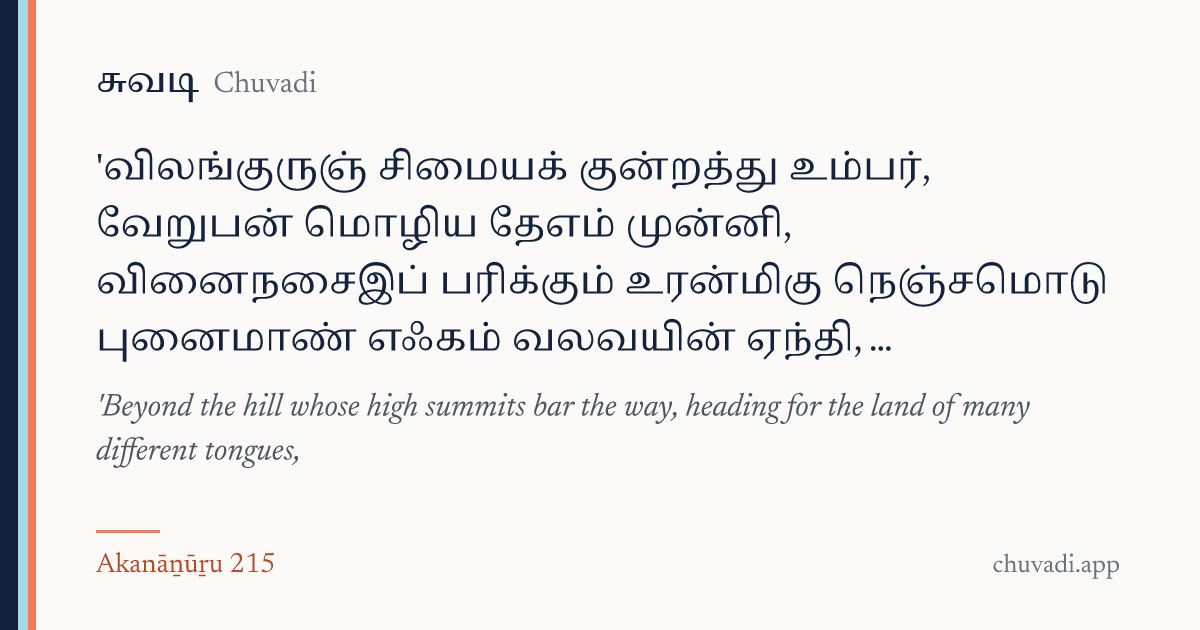
- 'Beyond the hill whose high summits bar the way,
- heading for the land of many different tongues,
- with a heart of great strength that hurries in desire for the task,
- holding in your right hand a spear of fine workmanship,
- to you, so nobly set on your journey, quickly
- "May you prevail!" to say that would be good indeed,
- if what we dread proves mistaken; where, the string they have drawn
- biting into their fingers, men of untaught sight,
- gripping their curved bows, unswerving and hard-eyed,
- the bowmen who shoot their well-honed arrows,
- under the fearful cairns raised over the men they have killed,
- the male vulture with a sharp-pointed red beak
- gathers with others at the fresh heads of the fallen, touching them,
- pressing with its strong crowded toes, taking out the eye,
- pours it out for its hard-beaked mate; there,
- with a heart that grieves for those who have gone,
- for those who can bear to stay behind here!
What the poem says
The speaker addresses the hero, who is setting off with his spear for a far country of strange speech. She is the heroine or her friend speaking for her; the poem gives no clear sign which. Her words are bitterly polite: to wish him 'May you prevail!' would be good indeed, but only for a woman who could bear to stay behind grieving, and only if the dangers she fears turn out to be false.
The danger is drawn with grim exactness. Along the road wait bowmen of 'untaught sight', men who know nothing but killing, whose fingers are bitten by the drawn bowstring, who grip their curved bows with hard, unwavering eyes. They raise cairns of stones over the travellers they have killed. At those cairns a male vulture with a sharp red beak gathers with others at the fresh heads of the dead, presses down with its toes, plucks out an eye and pours it out for its mate.
The vulture feeding its mate is a savage parody of conjugal care. Even the carrion bird provides for its partner, while the hero abandons his. The final line turns all the earlier praise into reproach: the blessing is for 'those who can bear to stay here', and she cannot.
The quotation mark at the start is the edition's, and it seems to open the whole poem as speech. 'Kallāk kāṭci', 'untaught sight', is taken as a description of men without pity.