




அகநானூறு 216
பாடல் · The poem
Tap a word to see where else it occurs.
பொருள் · Meaning in TamilAI
நாண் கட்டிய மெல்லிய தூண்டில் கோலால் மீன் பிடிக்கும் பாணர் மகள், நீர் ஒழுகும் கரையில் பிடித்த வரால் மீனை, நாரால் வடிகட்டிய கள்ளைக் குடித்து அமர்ந்திருக்கும் தன் தந்தைக்கு வஞ்சி விறகில் சுட்டு வாயில் ஊட்டுகிறாள். அத்தகைய குளிர்ந்த துறையுடைய ஊரனின் பெண்டிர், 'எம்மைப் பற்றித் தாம் விரும்பியபடி பேசுகிறார்கள்' என்று ஊரார் சொல்கிறார்கள். அந்த அலரை ஏற்கெனவே பட்டுவிட்ட நமக்கு இனி என்ன ஆகப்போகிறது? கடலில் நீராடும் மகளிர் கொய்த ஞாழல் மலரையும், வயலில் உழவர் பறித்த குவளை மலரையும், காவல் மிகுந்த முள்வேலிக் காட்டில் பூத்த முல்லை மலரையும் சேர்த்துப் பல இளம் கோசர்கள் கண்ணி தொடுக்கும் வளம் மிக்க செல்லியின் தலைவனாகிய ஆதன் எழினி, எறியும்போது தவறாத, இறுகிய குழையுடைய வெள்ளிய வேலைப் பெரிய யானையின் உயிர்நிலையில் அழுத்தியபோது அந்த யானை பட்ட துன்பத்தைப் போல, நாம் அவர்கள் தெருவுக்குச் சென்றால் அவர்கள் வருந்துவார்கள்!
இது மருதத் திணை; தலைவனின் வீட்டுப் பெண்டிர் தன்னைப் பழித்துப் பேசுவதைக் கேட்ட பரத்தை செருக்கோடு கூறுவது. குடித்திருக்கும் தந்தைக்கு மீன் சுட்டு ஊட்டும் பாண்மகளின் காட்சி மருத நிலத்தின் வாழ்க்கையைக் காட்டுகிறது. செல்லிக் கோமானும் ஆதன் எழினியும் ஒருவரே என்று கொண்டேன்; செல்லிக் கோமான் ஆதன் எழினியின் மார்பில் வேலைப் பாய்ச்சினான் என்றும் பொருள் கொள்ள இடமுண்டு.
ஆங்கிலம் · English translationAI
Translation
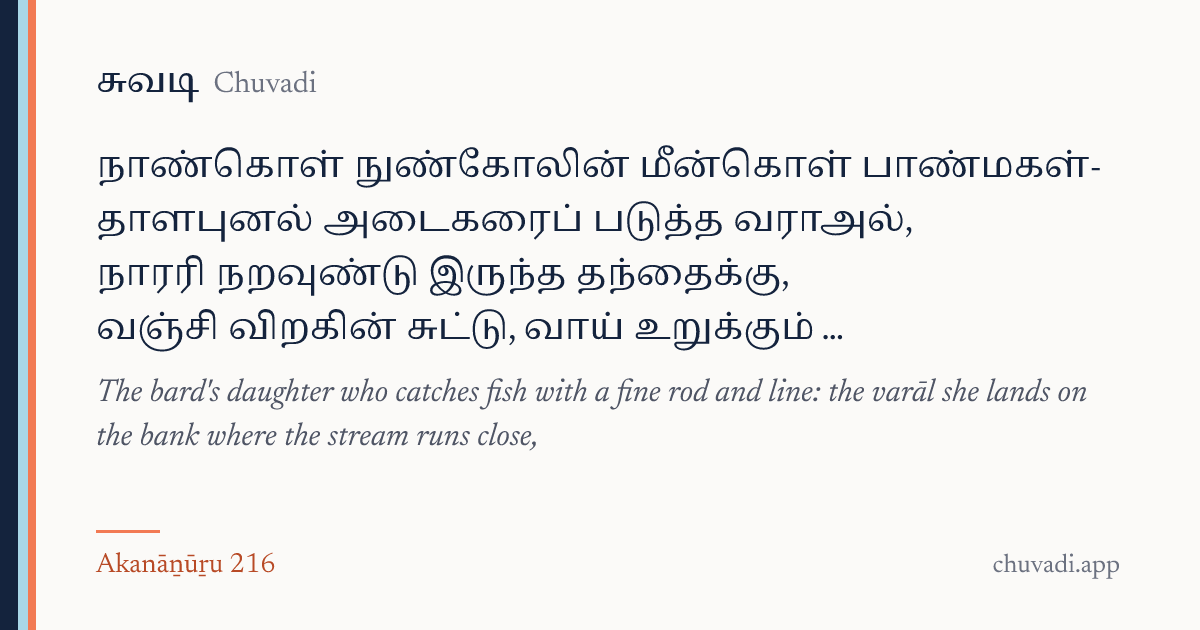
- The bard's daughter who catches fish with a fine rod and line:
- the varāl she lands on the bank where the stream runs close,
- for her father sitting there, having drunk toddy strained through fibre,
- she roasts on vañci firewood and puts into his mouth:
- 'The women of the man of such a town of cool ghats, about us,
- say whatever they please,' so people say; that gossip,
- if we have suffered it already, what more can happen now?
- The ñāḻal flowers plucked by women who bathe in the sea,
- the kuvaḷai pulled by the ploughmen in the fields,
- with the mullai blooming in the guarded thorn-forest,
- the many young Kōcar weave into their garlands:
- the lord of Celli, rich in fresh abundance,
- whose white spear with tight socket never falters when thrown,
- Ātaṉ Eḻiṉi, when he drove it into the vital part,
- like the agony of that great elephant,
- so they will suffer, if we go into their street!
What the poem says
The speaker is the other woman, a courtesan with whom the hero has been involved. She has heard that the women of the hero's household, his wife and her circle, are saying whatever they like about her. Her answer is defiant: she has already borne the gossip, so what more can it do? But if she were to walk into their street, they would suffer as a great elephant suffers with a spear in its vitals.
The opening image belongs to the riverside life of marutam. A bard's daughter catches a varāl fish with a fine rod and line, roasts it over vañci wood and puts it into the mouth of her father, who sits drunk on toddy. The scene is homely and a little sardonic; it may hint at a household that indulges a man's appetites, but the poem does not press the point.
The closing comparison names Celli, a rich place whose young Kōcar weave garlands from three landscapes at once: ñāḻal from the shore, kuvaḷai from the paddy fields, mullai from the guarded forest. Its lord is Ātaṉ Eḻiṉi, whose unfailing white spear sank into the vital spot of a great elephant. I read 'lord of Celli' and 'Ātaṉ Eḻiṉi' as the same man; it is also possible to read the lines as the lord of Celli driving his spear into Ātaṉ Eḻiṉi, but the elephant's agony then has no clear owner.
The poem shows the courtesan's voice at its most confident, and her threat is the measure of the wife's vulnerability.