




அகநானூறு 220
பாடல் · The poem
Tap a word to see where else it occurs.
பொருள் · Meaning in TamilAI
ஊரிலும் சேரியிலும் ஒருசேர அலர் எழும்படி, நீ தேரோடு தெருக்களில் சுற்றி வந்து, பணிவான சொற்களைப் பலமுறை பேசுகிறாய். அணையாத தீயுடைய அச்சம் தரும் செல்லூரில், மதயானைகள் கூட்டமாகப் பொருத போர்கள் சிதையும்படி அரசர் குலத்தையே அழித்த மழுவாளேந்திய நெடியோன் முன்பு முயன்று அரிதாக முடித்த வேள்வியின், நடுவில் கயிறு கட்டிய, காணத் தக்க அழகுடைய, கடுங்காவலுடைய நெடிய தூணைப் போல, யாரும் காண முடியாத சிறந்த அழகுடையது அவள் மேனி. அதை நினைக்கும்தோறும் நடுங்கும் நெஞ்சுடையவனாய், நீ நெடுநேரம் வீட்டின் புறத்தே நிற்கிறாய். நீ உண்மையாகவே வருந்துகிறாய் என்றால், முழங்கும் கடலின் அலை காலையில் சுழன்று வரும், பழமையான மிகுந்த நெல்லுடைய ஊணூரில் பட்டினி கிடக்காத பெரிய பறவைகளைப் போல, நெஞ்சு அமைதியுற்று, அன்பு மாறாத இனிய கூட்டத்தில் வாழ்வாயாக. கரிய கழியை முகக்கும் சிவந்த கைப்பிடியுடைய அழகிய வலை வளைந்த முதுகுடைய இறால்களோடு மீன் கூட்டங்களை நிறைக்கும், நீண்ட கதிர்களையுடைய வயல்களும் குளிர்ந்த சாய்ப்புல் நிலமும் உடைய உன் வளமான குளிர்ந்த மருத நாட்டை அவள் அடைவாள் என்று நாங்கள் உறுதியாக நம்பும்படி, கடற்கரைச் சோலையில் விளையாடும் தோழியர் போற்றிய, வளைந்த மூட்டுகளையுடைய அவளுடைய பெரிய தோள்களின் நல்ல அழகு சிதையாமல் காக்கும் வழியை இப்போதே சொல்வாயாக.
இது நெய்தல் திணை; தலைவியின் வீட்டுப் புறத்தே நின்று வருந்தும் தலைவனிடம், அவளை மணந்து கொள்ளும்படி தோழி வற்புறுத்துவது. காவல் மிகுந்த வேள்வித் தூண், இற்செறிக்கப்பட்ட தலைவியைக் குறிக்கிறது; மழுவாளேந்தியவனைப் பரசுராமன் என்பது மரபு. பதிப்பில் உள்ள 'நெடுஞ்சினை' என்பதை 'நெஞ்சினை' என்று திருத்திக் கொண்டேன்; பதினைந்து முதல் பத்தொன்பது வரையிலான அடிகளின் தொடர்பு உறுதியாகத் தெரியவில்லை.
ஆங்கிலம் · English translationAI
Translation
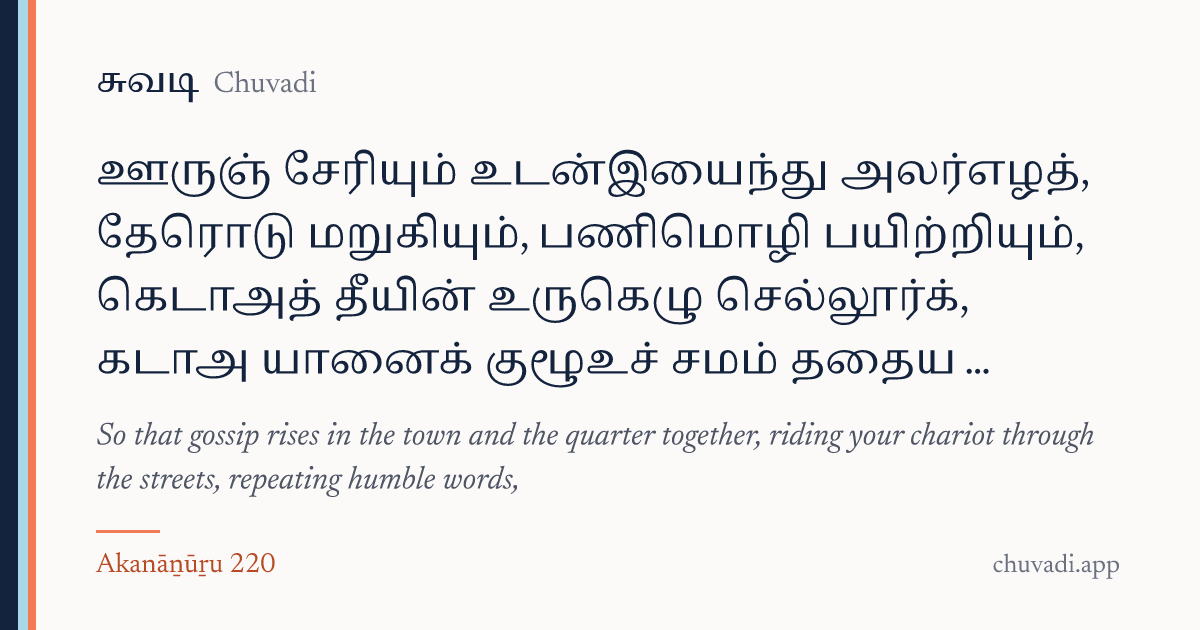
- So that gossip rises in the town and the quarter together,
- riding your chariot through the streets, repeating humble words,
- at Cellūr, fearsome with its fire that never dies,
- so that the crowded battles of musth-elephants were shattered,
- the Tall One with the axe who cut down the line of kings
- first undertook and with difficulty completed a sacrifice;
- bound with a rope round its middle, of beauty worth seeing,
- like that well-guarded tall pillar, which no one at all
- may look upon, is her body of excellent beauty:
- you have a heart that trembles each time you think of it; you
- stand long outside her house; if you are suffering,
- where the roaring sea's tide wheels in at morning,
- in Ūṇūr of old and plentiful paddy,
- like the great birds there that never fast, content at heart,
- in a lovely union whose love never changes,
- where the fine red-handled net that scoops the dark backwater
- packs in shoals of fish with curved-backed prawns,
- in the land of cool cāy rushes by the long-eared paddy fields,
- 'she will come to those rich cool fields', so; of the seaside grove's
- playmates, admired by them, her broad shoulders with sloping joints,
- the safeguard that will not ruin their fine beauty,
- tell it to us now, so that we may be sure.
What the poem says
The heroine's friend speaks to the hero, who has been driving his chariot through the streets and speaking humble words at the heroine's door, so that the whole village is talking. He stands outside, trembling with longing. If he truly suffers, the friend says, let him name the 'safeguard' that will protect the heroine's beauty, that is, let him marry her and take her to his own rich country.
The heroine is now closely guarded, and the friend makes this vivid with a comparison from Cellūr, a place of undying sacrificial fire. There the 'Tall One with the axe', who cut down the race of kings and shattered their elephant battles, completed a difficult sacrifice, and its sacrificial pillar, bound with rope at the middle, was beautiful but so strictly guarded that no one could look at it. Tradition identifies the axe-bearer with Paraśurāma; the poem names him only by his axe. The heroine's body is like that pillar: lovely and forbidden.
The second half describes what marriage would mean. Like the great birds of Ūṇūr that never go hungry, he would live content in lasting union; and she would go to his country of paddy fields and cāy rushes, where red-handled nets scoop prawns and fish from the backwaters. The friend asks him to say this plainly, 'so that we may be sure'.
In line 10 the edition prints 'neṭuñciṉai', 'long branch', which makes no sense here; I read 'neñciṉai', 'you have a heart'. The construal of lines 15 to 19 is uncertain.