



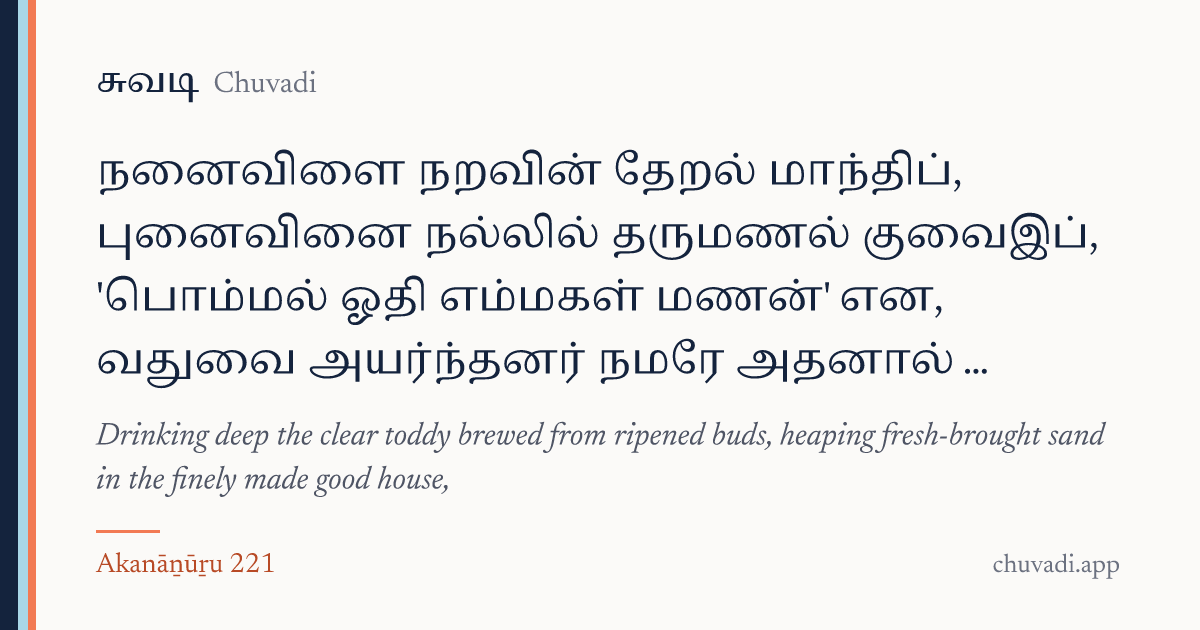

அகநானூறு 221
பாடல் · The poem
Tap a word to see where else it occurs.
பொருள் · Meaning in TamilAI
முற்றிய அரும்புகளிலிருந்து விளைந்த தெளிந்த கள்ளை நிறையக் குடித்து, அழகாகப் புனைந்த நல்ல வீட்டில் புதிதாகக் கொண்டு வந்த மணலைக் குவித்து, 'அடர்ந்த கூந்தலையுடைய நம் மகளின் திருமணம்' என்று சொல்லி, நம் உறவினர் மணவிழாவுக்கு ஏற்பாடு செய்கின்றனர். அதனால், புதிதாகச் செய்த சிவந்த இலைவடிவ முனையுடைய வெள்ளிய வேலும் கரிய தாடியும் உடைய, உன் மனம் ஒப்புக்கொண்ட அந்த இளைஞன், வளைந்த கிளைகள் நிறைந்த திரண்ட அடிமரமுடைய மராமரத்தின் தேன் ஒழுகும் மென்மையான பூங்கொத்துகளைத் தளிரோடு பறித்து உன் குளிர்ந்த மணமுள்ள தலைமுடியில் சூட்டும்படி, அவனோடு நீ செல்ல நான் ஏற்பாடு செய்துவிட்டேன். மூங்கில் அழகிழந்த, மேகம் தொடும் உயரமுடைய பரந்த நிலத்தில், யானை இரையைத் தவறவிட்டதால் சினம் மிகுந்து முழங்கும் பெரிய வாயுடைய புலிக்கு அஞ்சிப் பெரிய பெண்யானை ஓடும் சோலைகளையுடைய அரிய சுரவழியில் நீ அவனோடு செல்வதற்கு நான் வழி செய்துவிட்டேன்.
இது பாலைத் திணை; வீட்டில் மணம் ஏற்பாடாவதை அறிந்த தோழி, தலைவியைக் காதலனோடு உடன்போக்கில் அனுப்ப முடிவு செய்ததைக் கூறுவதாகத் தோன்றுகிறது. வீட்டார் ஏற்பாடு செய்யும் மணம் வேறொருவனுடன் என்பது 'அதனால்' என்ற சொல்லிலிருந்து ஊகிப்பதே; பாடல் அதை நேரடியாகச் சொல்லவில்லை. 'அயர்ந்தனென்' என்ற சொல்லின் பொருளும் உறுதியானதன்று.
ஆங்கிலம் · English translationAI
Translation
- Drinking deep the clear toddy brewed from ripened buds,
- heaping fresh-brought sand in the finely made good house,
- 'the wedding of our daughter of thick hair,' so saying,
- our people are making ready a marriage; and therefore,
- with his white spear whose red blade is newly forged,
- the young man with the dark beard to whom your heart has agreed,
- from the thick-trunked marā crowded with bending boughs
- taking its soft clusters dripping honey, with tender leaves, your
- cool fragrant crown to adorn, with him,
- through the wide land as high as clouds, where bamboo has lost its beauty,
- where the wide-mouthed tiger, having missed its elephant prey,
- blazes with fierce anger and roars, and in terror
- the great she-elephant flees through the grove,
- on that hard wasteland I have arranged your going, I have.
What the poem says
The speaker is most likely the heroine's friend, speaking to the heroine. The household is preparing a wedding: the men are drinking toddy, fresh sand has been heaped in the house, and they speak of 'the marriage of our daughter'. 'Therefore,' says the friend, she has arranged for the heroine to go away with the young man she loves.
The logic of 'therefore' suggests that the wedding being prepared is not with the heroine's own lover, but with a match arranged by the family. That would explain why the friend, who in akam convention manages the lovers' affairs, now sets up an elopement (uṭaṉpōkku). The poem does not state this directly, and the reading should be held lightly. It is also possible to take 'ayarntaṉeṉ' as 'I am worn out' or 'I have lost myself', but 'I have arranged' fits best with 'therefore'.
The lover is drawn in a few strokes: a youth with a dark beard, carrying a newly forged spear, who will adorn her hair with honeyed marā blossoms on the way. The road itself is ominous. On the high bamboo land a tiger that has missed an elephant roars in fury, and a great she-elephant flees through the grove in terror. The fleeing female may hint at the heroine's own flight; the tiger's fury at the dangers ahead.
The tiṇai is pālai, and the poem belongs to the moment just before the elopement.