




அகநானூறு 222
பாடல் · The poem
Tap a word to see where else it occurs.
பொருள் · Meaning in TamilAI
வானைத் தொடும்படி உயர்ந்த நீலநிறப் பெரிய மலையுடைய காட்டு நாட்டின் தலைவன் தந்த காதல் நோயால் என் உடலின் சிறந்த அழகு அழிந்ததால் நான் பேசுகிறேன். முழவின் முகம் உலராத ஆரவாரமுடைய கழார் என்னும் பெருந்துறையில் நடந்த விழாவில், திரண்ட அழகால் பொலியும் உயர்ந்த திரண்ட தோள்களையுடைய ஆட்டன் அத்தி ஆடினான். அவனுடைய அழகை விரும்பி அவனைச் சுற்றி ஓடிய, தாழ்ந்த கரிய கூந்தல் போன்ற காவிரி அவனைக் கவர்ந்து சென்றது. அப்போது எல்லாத் திசைகளிலும் தேடி, அறிவு மயங்கி அலைந்த ஆதிமந்திக்கு அவளுடைய காதலனைக் காட்டிவிட்டு, முழங்கும் கடலுக்குள் புகுந்த, பாடல்களில் புகழப்படும் சிறப்புடைய மருதியைப் போல நீயும் சிறந்த புகழைப் பெறும்படி, தோழி, செல்வாயாக; வாழ்க! பல நாள்களாக வலிய இடியோடு கலந்து இரவில் மழை பொழிந்த ஈரமான குளிர்ந்த வழியில் செல்வாயாக.
இது குறிஞ்சித் திணை; காதல் நோயால் வருந்தும் தலைவி, தலைவனிடம் சென்று தன் நிலையைச் சொல்லும்படி தோழியை வேண்டுவது. ஆதிமந்திக்கு அவள் காதலனைக் காட்டிய மருதியின் செயல், பிரிந்த காதலரைச் சேர்த்து வைக்கும் தோழியின் கடமைக்கு ஒப்பாகக் காட்டப்படுகிறது. மருதி ஏன் கடலில் புகுந்தாள் என்பதைப் பாடல் விளக்கவில்லை; பதிப்பில் உள்ள 'மரதிரம்' என்பதை 'மாதிரம்' என்று கொண்டேன்.
ஆங்கிலம் · English translationAI
Translation
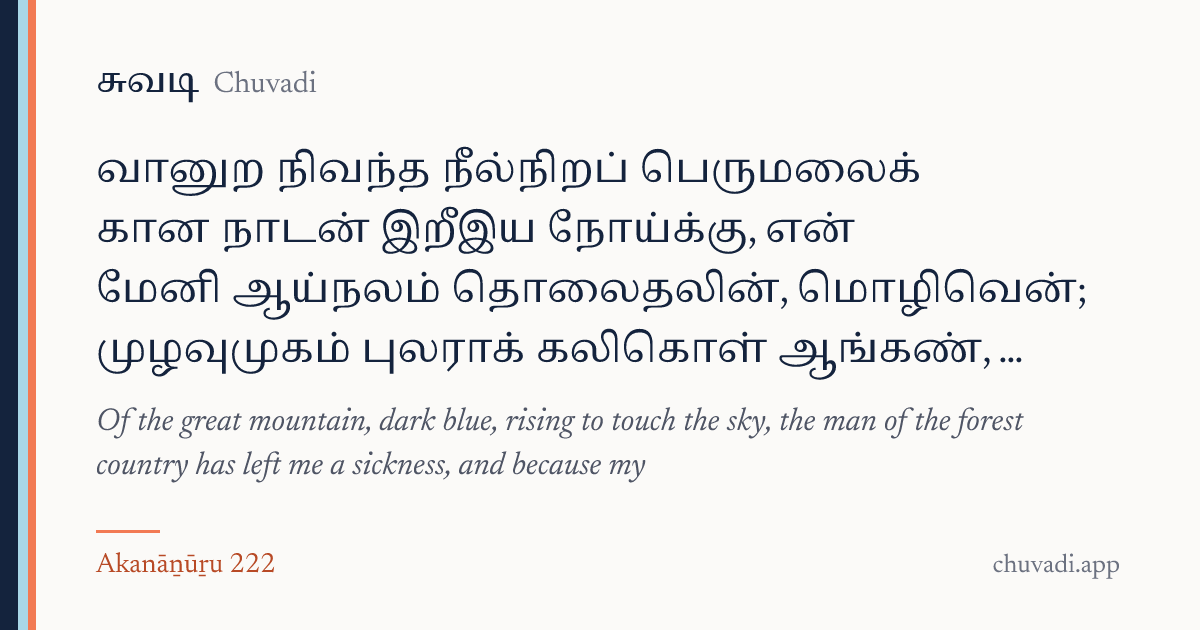
- Of the great mountain, dark blue, rising to touch the sky,
- the man of the forest country has left me a sickness, and because my
- body has lost its fine beauty, I speak:
- in that place of festive din where the drumheads never dry,
- at the great ghat of Kaḻār, dancing at the festival,
- bright with gathered beauty, his shoulders raised and rounded,
- Āṭṭaṉ Atti: desiring his beauty, flowing round him,
- when the Kāviri of long dark tresses seized him,
- searching every direction, bewildered and distraught,
- Ātimanti: showing her her beloved,
- she entered the roaring sea, of glory rich in song,
- Maruti: like her, so that you may gain great fame,
- go, may you live, my friend! Many a day,
- mingled with the mighty thunder,
- the night rain has poured down on the wet, cold path.
What the poem says
The heroine speaks to her friend. The hill man has left her love-sick, her beauty is fading, and so she breaks her silence and asks the friend to go to him, by the path that the night rains have soaked, and win for herself the kind of fame that Maruti won.
The middle of the poem tells, in a few compressed lines, a story the poet expects the hearer to know. At the great ghat of Kaḻār, where festival drums never stop, Āṭṭaṉ Atti, a dancer of splendid shoulders, was dancing at a festival. The Kāviri, pictured as a woman with long dark hair who desired his beauty, swept him away. Ātimanti, who loved him, searched in every direction, bewildered and distraught. Maruti showed Ātimanti her beloved and then entered the sea, and her deed became famous in song.
The point of the comparison is Maruti's service in restoring a lost lover to the woman who loved him. The heroine asks her friend to do the same for her: to go to the hero, tell him of her state, and bring him back. Why Maruti entered the sea is not explained in the poem, and nothing is added here.
The edition's 'maratiram' in line 9 is probably a misprint for 'mātiram', 'the directions', which gives 'searching every direction'; I have translated that reading. The closing description of the rain-soaked path is both the road the friend must take and a hint of the hero's own hard journeys.