




அகநானூறு 224
பாடல் · The poem
Tap a word to see where else it occurs.
பொருள் · Meaning in TamilAI
பாகனே, தேரைச் செலுத்து! பொழுது இருண்டுவிட்டது. திறமையுள்ள பாகன் அடக்கும் கடிவாளக் கயிற்றைச் சரியாக அமைக்க, கொல்லன் இழுத்து ஊதும் துருத்தியைப் போல வெப்பமாக மூச்சு விட்டு, வளைந்த நுகத்தில் கட்டப்பட்ட தலைகளையும் விரைந்த நடையையும் உடைய, காற்றின் வேகம் போன்ற விரைவுடைய குதிரைகளின் வாயிலிருந்து, பால் கடையும்போது மிதக்கும் பருத்த நுரையைப் போன்ற தூய வெண்மையான நுரை வழியில் ஒழுகி, சிலந்தி நூலைப் போல நுண்ணியதாகச் சிதறி, சந்தனம் உலர்ந்த மார்பில் புள்ளிகளாகப் படிகிறது. வெப்பம் நீங்கிப் புதிய அழகு பெற்ற, காணத் தக்க காட்டுநிலத்தில், துள்ளும் நடையுடைய மரைமான் கூட்டம் ஓடும்படி, மனைவி மெல்லியதாக உலர்த்திய தானியத்தை இட்டுச் சுழற்றும் திரிகையின் ஒலியைப் போல, ஒளிரும் ஆரங்களையுடைய சக்கரத்தின் விளிம்பு வரிவரியான மணலைப் பிளந்து செல்கிறது. 'தோழி, நம் இனிய உயிர்த்துணைவர் வருவாரோ?' என்று சொல்லி, மெலிந்த கையில் கழலும் சில வரிசை ஒளிரும் வளையல்களை மேலே ஒதுக்கி, கடுங்காவலுடைய பெரிய வீட்டிலிருந்து பலமுறை வழியைப் பார்த்து, அழகிய அணிகலன்களை அணிந்த அவள் இரங்கத்தக்கவளாய் வருந்துகிறாள்.
இது முல்லைத் திணை; வினை முடிந்து திரும்பும் தலைவன், மாலையில் தன் வரவை எதிர்நோக்கி வருந்தும் தலைவியை நினைத்துத் தேரை விரைந்து செலுத்தும்படி பாகனிடம் கூறுவது. சக்கரம் மணலைப் பிளக்கும் ஒலியைத் திரிகையின் ஒலியோடு ஒப்பிடுவது, வீட்டு வாழ்க்கையை வழியின் நடுவிலேயே நினைவூட்டுகிறது.
ஆங்கிலம் · English translationAI
Translation
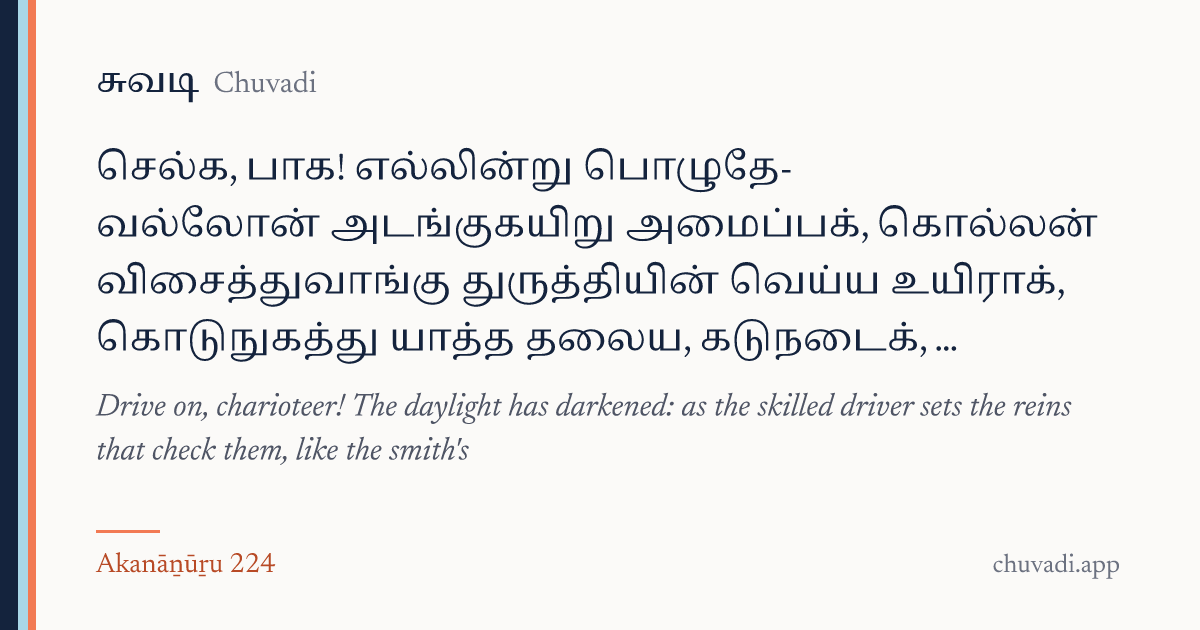
- Drive on, charioteer! The daylight has darkened:
- as the skilled driver sets the reins that check them, like the smith's
- bellows that he draws and pumps, breathing hot,
- their heads bound to the curving yoke, of swift gait,
- the horses whose fast going is like the wind's speed,
- like the thick floating foam of churned milk,
- the pure white froth that drips along the way, fine,
- fine as spider's thread, scatters,
- spotting the chest where the sandal paste has dried; lovely to see,
- in the woodland that has gained fresh beauty, its heat gone,
- so that the herds of marai with leaping gait run off, like the housewife's
- quern, into which she has poured the thin-dried grain and set it turning,
- the voice of the turning stone, like that, the striped sand
- cut by the rim of the wheel with its flashing spokes;
- 'Will he come, friend, our dear life's companion?' so,
- pushing up her few-stranded bright bangles, many times
- looking out from the strictly guarded wide house,
- she suffers, poor thing, she of the fine jewels.
What the poem says
The hero speaks to his charioteer on the road home. Evening has come, and he urges speed, imagining his wife at that very moment asking her friend whether he will come and looking out again and again from the house.
The ride is described with a craftsman's eye. The horses breathe hot like a smith's bellows; foam drips from their mouths like the froth on churned milk, fine as spider thread, and flies back to spot the driver's chest, where the sandal paste has dried. The rains have refreshed the woodland and cooled it; herds of marai deer leap away; and the chariot's wheel slices the rippled sand with a sound like a housewife's hand-quern grinding dried grain. The quern is a well-chosen sound. It brings the domestic world into the middle of the journey, and points ahead to the home he is hurrying toward.
The last four lines move to the heroine. She asks, 'Will our dear life's companion come?', pushes up the bangles that slide on her thinning arms, and looks out many times from the closely guarded house. In mullai convention the evening of the rainy season is the hour of waiting; the hero, by imagining her suffering, gives the charioteer his reason to hurry.
The text is sound. 'Cil kōl' means bangles of few strands, worn loose on a wasted arm; 'tirimaram' is the turning stone or wooden part of the hand-mill.