




அகநானூறு 225
பாடல் · The poem
Tap a word to see where else it occurs.
பொருள் · Meaning in TamilAI
அவளுடைய அன்பும், கள்ளமற்ற தன்மையும், மென்மையும், இயல்பும், எலும்பையும் உருக்கும் இனிய சொற்களும், பிறவும் ஒன்றாகக் கலந்த மனத்தோடு, ஒருசேரத் தழுவி இன்று நாம் இங்கே இருக்கிறோம். நாளையோ, புதர்களின் மேல் படர்ந்து அசையும் மூங்கிலில் வண்டு துளைத்த அழகிய துளைகள் கோடைக்காற்றை ஏற்பதால், நீர் குடிக்கச் செல்லும் ஆநிரையின் பின்னே நீண்ட கோலோடு செல்லும் இடையனின் அழகிய குழலிசையைப் போல மெல்லிதாக ஒலிக்கும், தேக்கு மரங்கள் நிறைந்த சோலைகளையுடைய காட்டின் அரிய சுரவழியில், கட்டிய அம்பறாத்தூணியின் வாய்களைத் திறந்தது போல, இலைகளால் மூடிய குவிந்த பூங்கொத்துகளையுடைய இருப்பை மரத்தின் மலர்கள், கோப்பிலிருந்து கழன்ற முத்துகளைப் போலச் சிவந்த நிலத்தில் உதிரும், மழை மறந்த அழகிய குடியிருப்புகளையுடைய சிற்றூரில், நெஞ்சே, நாம் தங்குவோமோ? பூச்சூடிய, மேகம் போல ஒலிக்கும் தாழ்ந்த கரிய கூந்தலும், நெருங்கிய வளையல்கள் அணிந்த முன்கையும் உடைய நம் காதலியின், நம் பிரிவை அறிந்து வருந்திய பார்வையையும் அவளுடைய ஊடலையும் நினைத்துக்கொண்டே அங்கே தங்குவோமோ?
இது பாலைத் திணை; பிரிந்து செல்லத் துணிந்த தலைவன் தன் நெஞ்சிடம் கூறுவது. மூங்கில் துளைகளில் காற்று எழுப்பும் இசை, இடையனின் குழலிசை போல வீடு திரும்புவதை நினைவூட்டுகிறது. அவன் உண்மையில் செல்வானா என்பதைப் பாடல் திறந்த கேள்வியாகவே விடுகிறது.
ஆங்கிலம் · English translationAI
Translation
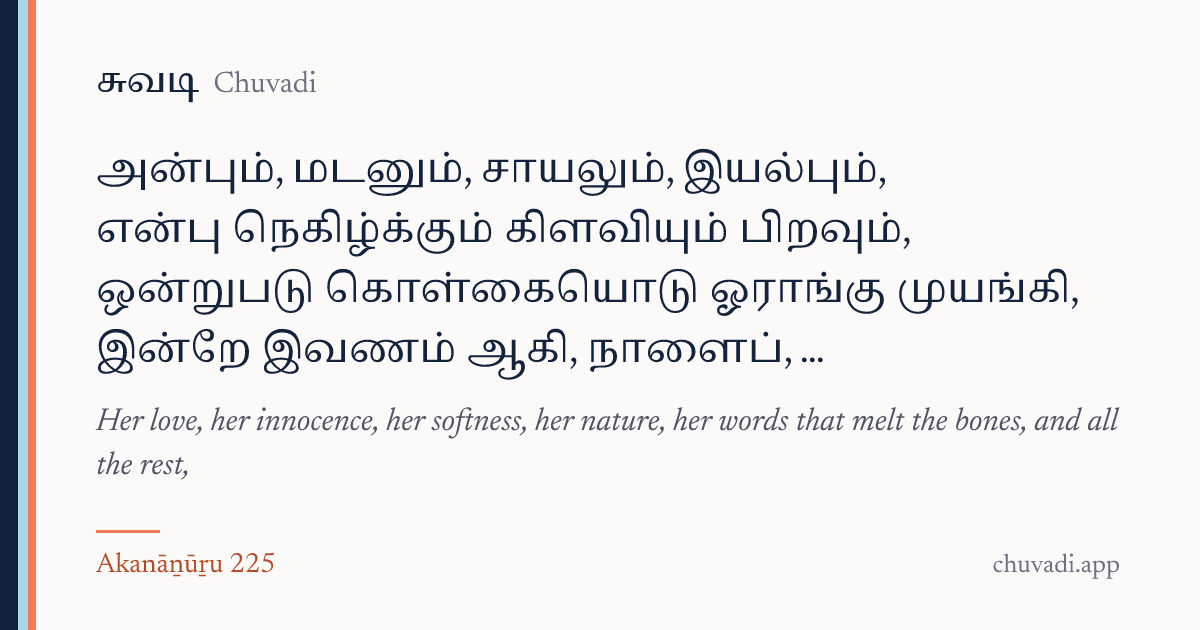
- Her love, her innocence, her softness, her nature,
- her words that melt the bones, and all the rest,
- with one shared resolve, embracing all together,
- today we are here; and tomorrow,
- where the swaying bamboo that climbs the bushes, bored by the bee,
- its lovely holes catching the summer wind,
- behind the herds going to water, along with the long staff,
- like the music of the cowherd's fine flute, sounds softly,
- in the hard wasteland of the forest where teak abounds,
- like the mouths of tied quivers opened,
- the clustered heads, wrapped in leaves, of the flowering iruppai,
- like pearls slipped from their holes, falling on the red earth,
- in the lovely-dwelling little village forgotten by the rain,
- shall we lodge, O heart? With flowers adorned,
- her long dark hair that sounds like a raincloud,
- our beloved with close-set bangles on her forearm:
- thinking of her knowing, grieving look and of her sulking?
What the poem says
The hero speaks to his heart on the eve of leaving. Today he is with her, held in the whole of her love, her innocence, her softness, her words that 'melt the bones'. Tomorrow, he says, will we be lodging in some little village in the wasteland, remembering her look and her sulking?
The road ahead is pictured with unusual sweetness for pālai. Bees have bored holes in bamboo that climbs over the bushes, and when the summer wind blows through them they sound softly like the flute a cowherd plays as he follows his herd to water. Flowering iruppai trees hold their leaf-wrapped clusters like the open mouths of tied quivers, and the white blossoms fall on the red earth like pearls slipped from their string. The village where he will stay is pretty, but 'forgotten by the rain'.
The music of the bamboo is the cowherd's music of homecoming, heard by a man who is going away. The softness of the scene sharpens the memory of what he is leaving: the look in her eyes when she understood he would go, 'aṟivu añar nōkkam', a knowing and grieving look, and her sulking.
The poem does not say whether he will actually go. The question to the heart leaves it open, and many akam poems of this kind end in the hero's change of mind. The detail 'akalā antuḷai', 'lovely holes that are not wide', is taken simply as the bee-bored holes.