




அகநானூறு 226
பாடல் · The poem
Tap a word to see where else it occurs.
பொருள் · Meaning in TamilAI
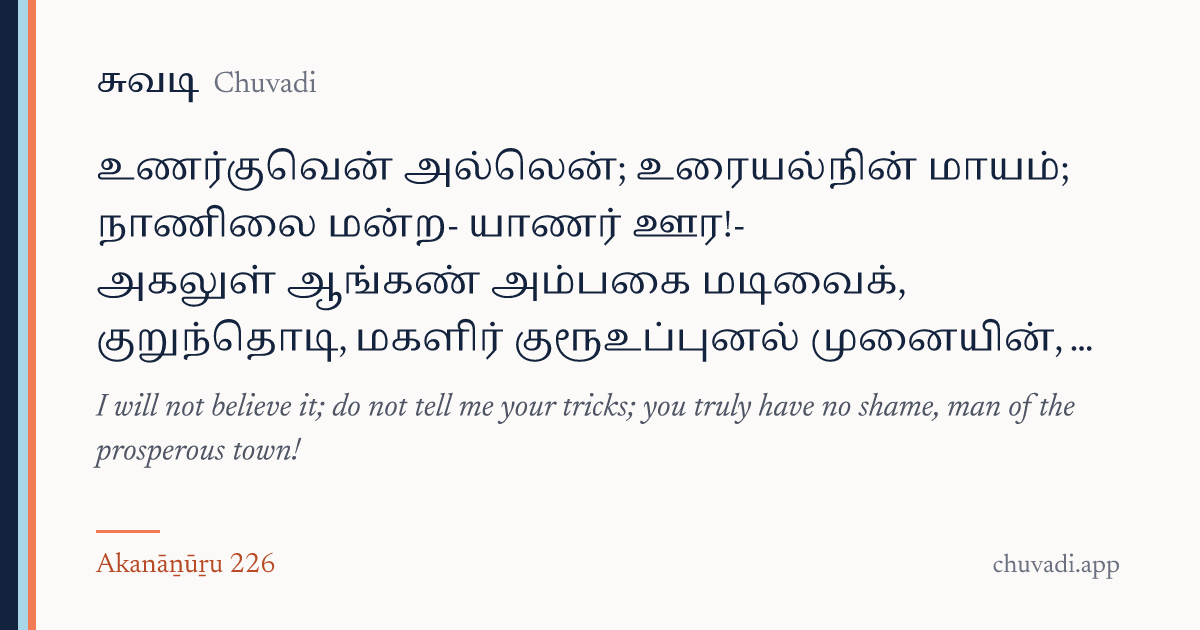
நான் நம்பமாட்டேன்; உன் வஞ்சகப் பேச்சைச் சொல்லாதே. புதுவளம் மிக்க ஊரனே! உனக்கு உண்மையாகவே நாணம் இல்லை. அகன்ற ஊரில், அழகிய பல நிறத் தழையாடையும் சிறிய வளையல்களும் அணிந்த மகளிர், கலங்கிய வெள்ள நீரில் விளையாடிச் சலித்துப் பொய்கையில் உள்ள பசுமையான சாய்ப்புல்லைக் கோதி, கரந்தை வளரும் வயல்களில் வெள்ளை நாரைகளை ஓட்டுகின்றனர். வலிய வில்லும் வலிமையான தோள்களும் பல வேல்களும் உடைய பரதவர் தலைவனாகிய மத்தியின் கழார் முன்துறையில், நீண்ட வெண்மையான மருத மரத்தையும் வஞ்சியையும் சாய்த்துக்கொண்டு விடியலில் வந்த காவிரிப் பெருவெள்ளத்தில், வளையல் அணிந்த முன்கையுடைய, நீ விரும்பும் பெண்ணோடு முன்னொரு நாள் நீ நீராடினாய். அந்த அலர் இன்று, நிறைந்த மாலையணிந்த தித்தன் வெளியனின் உறந்தை நகரக் காலை அவையில் ஒலித்த இனிய தெளிந்த கிணைப்பறையின் ஓசையைக் கேட்டு அஞ்சி, மிகுந்த வலிமையுடைய பாணனோடு, போரில் கொல்லும் படையுடைய கட்டி போரிடாமல் ஓடியபோது எழுந்த ஆரவாரத்தை விடவும் பெரிதாக இருக்கிறது!
இது மருதத் திணை; பரத்தையோடு காவிரியில் நீராடிய தலைவன் சாக்குச் சொல்லும்போது தலைவி ஊடிக் கூறுவது. கட்டி போரிடாமல் ஓடியபோது எழுந்த ஆரவாரம் ஊர் அலரின் அளவைக் காட்டுகிறது. இங்குப் 'பாணன்' என்பதை ஒரு தலைவனின் பெயராகக் கொண்டேன்; 'அம்பகை மடிவை' என்ற தொடரின் பொருள் உறுதியாகத் தெரியவில்லை.
ஆங்கிலம் · English translationAI
Translation
- I will not believe it; do not tell me your tricks;
- you truly have no shame, man of the prosperous town!
- In the wide town there, wearing lovely bright-patterned leaf-skirts,
- the women with small bangles, tired of the muddy flood,
- pluck at the green cāy reeds of the pond, and in the fields
- of karantai chase off the white herons:
- the lord of the Paratavar with strong bow and mighty shoulders,
- Matti of many spears: at Kaḻār's front ghat,
- bending the tall white marutu and the vañci,
- the Kāviri in great flood that came at dawn,
- with the woman you love, her forearm decked with bangles, you
- bathed there the other day; that scandal, today,
- with Pāṇaṉ of surpassing strength and might; of the full garland,
- Tittaṉ Veḷiyaṉ's morning court at Uṟantai,
- hearing the sweet-sounding clear kiṇai drum played there, afraid,
- Katti of the war-killing army
- fled without a fight: it is louder than that uproar!
What the poem says
The heroine speaks to her husband, who has come home with excuses after an affair. She cuts him short: she will not believe him, he has no shame, and the whole town is talking about how he bathed in the Kāviri flood with the woman he loves.
The place of the scandal is Kaḻār, the ghat of Matti, here called lord of the Paratavar, with a strong bow and many spears. At Kaḻār the river came down in flood at dawn, bending the white marutu trees and the vañci on its banks. Village women in bright leaf-skirts, tired of playing in the muddy water, pluck at the cāy reeds and chase the herons from the karantai fields. The busy, public scene makes the point: everyone was there to see.
The gossip is measured by a famous rout. At Uṟantai, in the morning court of Tittaṉ Veḷiyaṉ of the full garland, the sweet clear kiṇai drum was played, and Katti, with a war-killing army, together with Pāṇaṉ of great strength, heard it, took fright and fled without fighting. The shout that went up at that flight was loud, but the town's talk about the husband is louder.
'Pāṇaṉoṭu' could mean 'with the bard', but in context it reads best as a chief named Pāṇaṉ, Katti's companion in flight. The meaning of 'ampakai maṭivai' in line 3 is uncertain; I take it as patterned leaf-skirts.