




அகநானூறு 227
பாடல் · The poem
Tap a word to see where else it occurs.
பொருள் · Meaning in TamilAI
'இவளுடைய நெற்றி பசந்துவிட்டது; தோள்கள் மெலிந்துவிட்டன; தேமல் படர்ந்த அல்குலின் வரிகளும் வாடிவிட்டன; இவள் என்ன ஆவாளோ?' என்று சொல்லப்படுவதை எண்ணி, பல சிறப்புகளுடைய நீர் நிறைந்த கண்களோடு நெடுநேரம் நினைந்து கண்களை ஒற்றிக்கொண்டு வருந்தாதே, தோழி, வாழ்க! நனைந்த கன்னங்களும் கொதிக்கும் சினமும் வாயில் வழியும் மதநீரும் உடைய முழுவலிமையுள்ள ஆண்யானை, தன் முன்னே நிற்பதைப் பொறுக்காமல் மாறுபட்டு, பொன்னிறக் கொத்துகளையுடைய புலிநிற வேங்கையின் பூங்கிளைகள் தனித்து வருந்தும்படி அதன் அடிமரத்தில் பாய்ந்து, செம்மண் நிலத்தின் புழுதியில் புரண்டு, போரில் ஈடுபட்டுக் களத்தைக் கைப்பற்றும் வீரர்களைப் போல முழங்கும். அத்தகைய பல வழிகளைக் கடந்து அவர் தொலைவில் சென்றிருந்தாலும், நம் காதலர் உறுதியோடு இருந்து நோயில்லாதவராக இருப்பாராக! தவறாத வாளும், தமிழ்நாட்டைத் தன் ஆட்சிக்குள் கொண்டுவந்த முழங்கும் முரசும் உடையவனும், வருபவர்களை மறுக்காத பெருநாள் அவையை உடையவனும், தூங்கல் பாடிய உயர்ந்த பெரும்புகழுடையவனும், பிடியானைகள் மிதிக்கும் வழுதுணையையுடைய பெரும்பெயர் பெற்றவனுமாகிய தழும்பனின் காவலுடைய மதில் சூழ்ந்த ஊணூருக்கு அப்பால், பெருஞ்செல்வம் தங்கியிருக்கும் சிறப்புமிக்க அழகிய நகரமாகிய, கரிய கழிகளின் அருகே தோட்டங்களையுடைய மருங்கூர்ப் பட்டினத்தின் ஒளி வீசும் கடைத்தெருவைப் போலப் பேரொலி எழுப்பிவிட்டு அவர் பிரிந்து சென்றார்.
இது பாலைத் திணை; பிரிவால் வாடும் தலைவியைத் தோழி தேற்றி, பிரிந்த தலைவன் நலமாக இருக்க வாழ்த்துவது. வேங்கையைத் தாக்கி முழங்கும் களிறு வழியின் அச்சத்தைக் காட்டுகிறது. 'தூங்கல் பாடிய', 'பிடிமிதி வழுதுணை' ஆகிய தொடர்களின் பொருள் உறுதியாகத் தெரியவில்லை.
ஆங்கிலம் · English translationAI
Translation
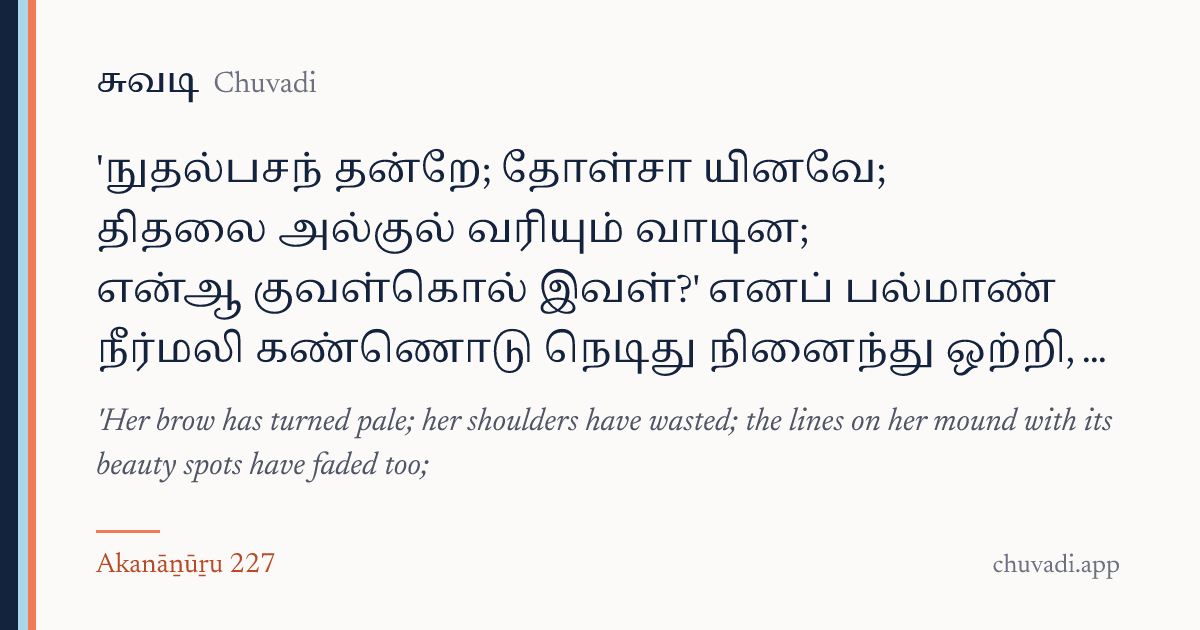
- 'Her brow has turned pale; her shoulders have wasted;
- the lines on her mound with its beauty spots have faded too;
- what will become of her?' so, with your many-graced
- eyes brimming with tears, brooding long and pressing them,
- do not grieve, may you live, my friend! With wet cheeks,
- its anger blazing, the musth flowing into its mouth,
- unable to bear what stands before it, turning on it, so that the golden-clustered,
- tiger-coloured vēṅkai's flowering boughs are left desolate,
- having charged at its trunk, the bull of full strength,
- rolling in the fallen dust of the red earth, joining battle,
- roars like warriors who take the field: on such roads,
- though he has gone far across many, may he stay steadfast,
- and may he be free of sickness, our lover! With true swords,
- with roaring-voiced war drums that brought the Tamil land under,
- his court on the great days that never turns away those who come,
- of lofty great good fame that Tūṅkal sang,
- Taḻumpaṉ of Vaḻutuṇai trampled by she-elephants, of great name:
- beyond Ūṇūr, set within its guarded walls,
- the splendid, prosperous town where great treasure sleeps,
- the Paṭṭiṉam of Maruṅkūr with its gardens on the dark backwaters,
- like its market that spills out light,
- making a loud clamour, he went away.
What the poem says
The heroine's friend comforts the heroine. The opening lines quote what is being said of the heroine, perhaps by her mother or the women around her, or what the heroine fears others are saying: her brow is pale, her arms are thin, the lines on her body have faded, what will become of her? The friend tells her not to brood over it, and turns the poem into a blessing for the absent lover: wherever he is, may he stay steadfast and be free of illness.
The road he has taken is pictured through a raging bull elephant. Its cheeks wet with musth, it cannot bear something that stands in its way, charges a flowering vēṅkai and strips its golden, tiger-coloured blossoms, then rolls in the red dust and trumpets like warriors taking the battlefield. The scene measures the danger of the road and the strength of the man who has gone through it.
The final lines measure the noise he left behind: the gossip that followed his departure is like the clamour of the bright market of the Paṭṭiṉam at Maruṅkūr, by the dark backwaters, beyond Ūṇūr, the walled town of Taḻumpaṉ, a chief whose drums 'brought the Tamil land under' and whose court never turned a visitor away.
Several details are uncertain. 'Tūṅkal pāṭiya' seems to name someone, Tūṅkal, who sang Taḻumpaṉ's fame, but this is not certain. 'Piṭimiti vaḻutuṇai', literally 'brinjal trampled by she-elephants', is obscure and may be a place name or an epithet whose sense is lost. 'Tamiḻ akappaṭutta' may mean that his drums brought the Tamil country, or Tamil warriors, under his sway.