



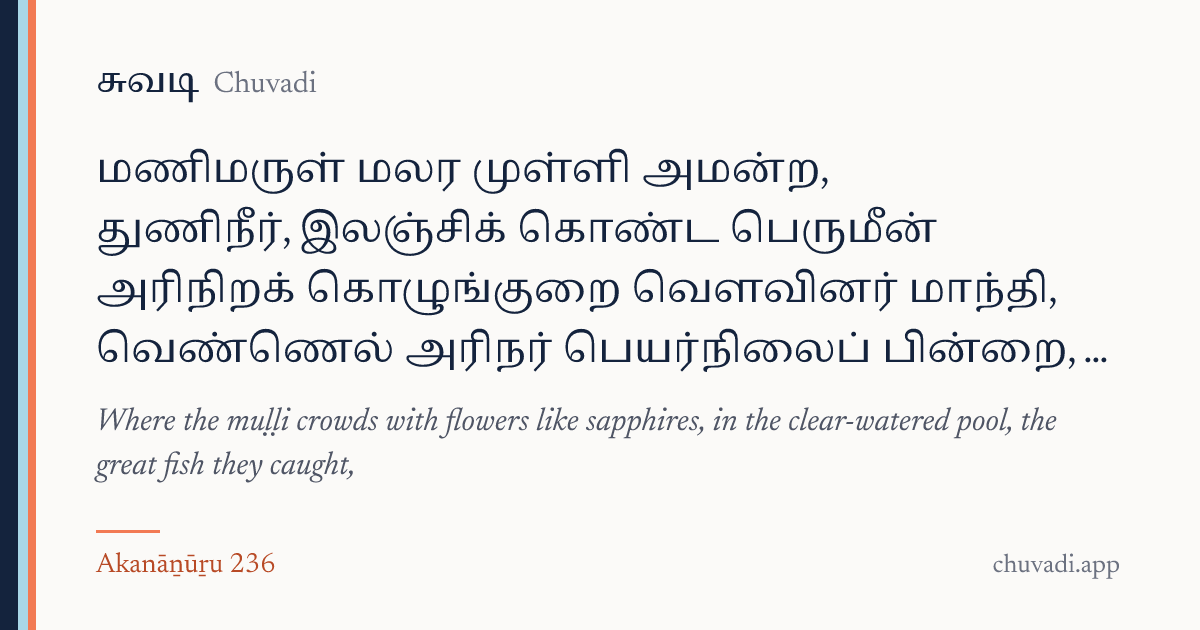

அகநானூறு 236
பாடல் · The poem
Tap a word to see where else it occurs.
பொருள் · Meaning in TamilAI
மணியைப் போன்ற மலர்களையுடைய முள்ளிச்செடிகள் நெருங்கிய, தெளிந்த நீருடைய குளத்தில் பிடித்த பெரிய மீனின் வரிநிறமுடைய கொழுத்த துண்டுகளை, வெண்ணெல் அறுப்பவர்கள் பற்றி உண்டுவிட்டுச் சென்ற பின், நடுவில் உள்ள நிலத்தில் நெருக்கி வைத்த நீண்ட கதிர்களையுடைய பல நெற்கட்டுகள் பனி படிந்த சாய்ப்புல்லின் முதுகைத் தாங்குகின்றன. வயலில் உள்ள கரிய கிளைகளையுடைய மாமரத்தின் அசையும் கொம்புகளில் பூத்த புதுப்பூக்கள், கலந்து பெய்யும் மழைச்சாரலைப் போல உதிர்கின்றன. அத்தகைய ஊரனின் காமத்தின் பெருமையை நான் அறியவில்லை. தோழி, வாழ்க! நான் மிகவும் பெருமூச்சு விட்டேன். நேற்றிரவு, ஒளிரும் சந்தனமும் அழகிய பட்டாடையும் அவன் மேனியில் மின்ன, அவன் செல்லக் கண்டு, வளைந்த குழை அணிந்த மகளிரைப் போல அடங்கி அமர்ந்திருக்கத் தெரியாமல், அழிந்த நெஞ்சோடு வருந்தினேன். 'காளையைப் போன்ற அழகிய நடையும், திரண்ட வலிமையும், பூவிதழ்களோடு கலந்த கரிய சுருண்ட தலைமயிரும் உடைய ஆட்டன் அத்தியைக் கண்டீர்களோ?' என்று நாடு நாடாகவும் ஊர் ஊராகவும் கேட்டு, 'கடல் அவனைக் கொண்டுவிட்டது', 'வெள்ளம் அவனை மறைத்துவிட்டது' என்று அழுத கண்களோடு, காதலனை இழந்து அலைந்த ஆதிமந்தியைப் போல, என் துன்பத்தைப் பிறரிடம் சொல்லிப் பெரிதும் மயங்குவது எவ்வளவு இழிவானது!
இது மருதத் திணை; பரத்தையரை நாடும் தலைவனால் வருந்தும் தலைவி தோழியிடம் கூறுவது. காதலனைத் தேடி அலைந்து புலம்பிய ஆதிமந்தியைப் போலத் தானும் தன் துன்பத்தை வெளிப்படுத்திவிடுவோமோ என்ற நாணம் இறுதி அடிகளில் தெரிகிறது; இது ஒரு பொருள்கோளே. பதிப்பில் உள்ள 'உய்ர்த்தனென்' என்பது 'உயிர்த்தனென்' என்பதன் பிழை.
ஆங்கிலம் · English translationAI
Translation
- Where the muḷḷi crowds with flowers like sapphires,
- in the clear-watered pool, the great fish they caught,
- its rich slices of striped colour, they seized and devoured,
- the reapers of white paddy; and after they have moved on,
- the many sheaves of long ears pressed down in the middle ground
- bear the cool, dew-wet backs of the cāy reeds; in the fields,
- the dark-boughed mango's swaying branches' fresh flowers
- scatter like the drizzle of mingling rain: the man of that town,
- the greatness of his passion I did not know; and deeply
- I sighed, may you live, my friend! Last night,
- with bright sandal paste and lovely silk gleaming on him,
- the modest, withdrawn bearing of women with curving earrings
- not knowing how to keep, with a ruined heart,
- 'Bull-like in gait, of beautiful bearing, with swelling strength,
- his dark curling hair twined with flower petals,
- have you not seen Āṭṭaṉ Atti?' so,
- from country to country, from town to town,
- 'The sea has taken him,' 'The flood has hidden him,' so,
- with weeping eyes, having lost her beloved,
- like Ātimanti,
- to speak out one's misfortune and be wholly bewildered!
What the poem says
The heroine speaks to her friend about her husband, who has been taking his pleasure elsewhere. She says she did not know how great his passion for other women was, and that she sighed deeply over it. Last night, when he went out dressed in bright sandal paste and fine silk, she could not keep the quiet, withdrawn bearing expected of a proper wife, and her heart broke.
The last eight lines compare her to Ātimanti, who lost her lover Āṭṭaṉ Atti to the Kāviri and went from country to country and town to town with weeping eyes, asking 'Have you not seen Āṭṭaṉ Atti?' and crying that the sea had taken him, the flood had hidden him. The same story is told in poem 222. Here the comparison seems to carry a note of shame: to go about proclaiming one's misfortune like that, utterly distraught, is what she fears she has done, or is close to doing. The construal of the closing lines as an exclamation of self-reproach is my reading; they could also be read as the friend's warning, though the poem's 'I' makes the heroine the most likely speaker.
The opening is a busy marutam harvest scene. Reapers of white paddy feast on a great fish from the pool where muḷḷi blooms; the sheaves they leave behind press down the cāy reeds; mango blossoms fall like drizzle. The abundance of the fields suggests the husband's easy, scattered pleasures.
The edition prints 'uyrttaṉeṉ' in line 10, a clear misprint for 'uyirttaṉeṉ', 'I sighed'. 'Am paṭṭu' in line 11 is taken as 'lovely silk'.