



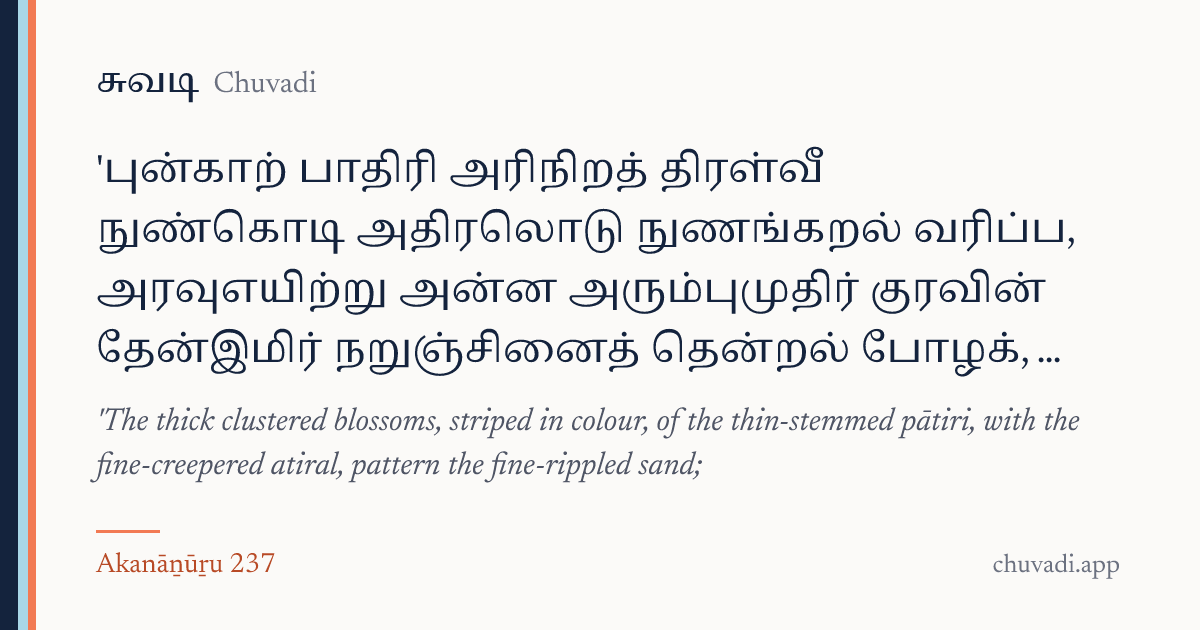

அகநானூறு 237
பாடல் · The poem
Tap a word to see where else it occurs.
பொருள் · Meaning in TamilAI
'மெல்லிய அடியுடைய பாதிரியின் வரிநிறமுடைய திரண்ட பூக்கள், நுண்ணிய கொடியுடைய அதிரல் மலர்களோடு உதிர்ந்து நுண்ணிய மணல் அறலை அழகுசெய்கின்றன. பாம்பின் பல்லைப் போல முற்றிய அரும்புகளையுடைய குரவமரத்தின், வண்டுகள் ஒலிக்கும் மணமுள்ள கிளைகளைத் தென்றல் பிளந்து வீசுகிறது. குயில் தன் குரலைக் கற்றுக்கொண்ட இந்த இளவேனிலிலும் உறக்கம் இழந்து இரவு துன்பமாகக் கழிகிறது' என்று சொல்லி, உன் அழகிய மாநிற மேனியின் அழகு தனித்து வாடும்படி வருந்துவதை நிறுத்து, அழகிய அணிகலன் அணிந்தவளே! மிகுந்த வலிமையுடன் செந்தீயில் வாட்டிய கொழுத்த இறைச்சித் துண்டுகளையும், மெல்லிய தினையின் சோற்றை உதிர்த்த கலங்களையும், கரிய கதிர்கள் அசையும் வயலில் விளைந்த கரும்பைப் பிழிந்த இனிய பாகையும், பாலில் ஊறவைத்த செந்நெல்லின் பசுமையான அவலையும் பகிர்ந்து உண்ணும், வெள்ளம் மோதும் மதகுகளையுடைய உறந்தையை அடைந்தாலும், செயலால் வரும் பொருளுக்காக அவர் அவற்றைக் கைவிடமாட்டார்: கடைக்கண் சிவந்து, மென்மையாகப் போரிடும் உன் மையுண்ட கண்களையும், உன் கூரிய அழகிய வெண்பற்களில் ஊறும் இனிய நீரையும் அவர் கைவிடமாட்டார்!
இது பாலைத் திணை; இளவேனிலில் தலைவனைப் பிரிந்து உறக்கமின்றி வருந்தும் தலைவியைத் தோழி தேற்றுவது. உறந்தையின் உணவுவளம் பொருளின் கவர்ச்சியைக் காட்டுகிறது; அதைவிடத் தலைவியின் கண்ணும் வாயமுதும் அவனை இழுக்கும் என்பது குறிப்பு. இறுதி அடிகளின் தொடர்பு சுருக்கமாக உள்ளதால் இங்கு ஒரு பொருளையே கொண்டேன்.
ஆங்கிலம் · English translationAI
Translation
- 'The thick clustered blossoms, striped in colour, of the thin-stemmed pātiri,
- with the fine-creepered atiral, pattern the fine-rippled sand;
- where the kuravam's ripened buds are like a snake's fangs,
- the south wind splits through its fragrant boughs where bees hum;
- in this spring when the koel has learned its voice, giving up sleep,
- the night passes painfully,' so saying, your
- fine dark body's lovely beauty left desolate,
- cease your grieving, girl of choice jewels! Of mighty force,
- the rich fat chunks of meat that the red fire has tormented,
- with bowls into which the soft millet's boiled grain is shaken,
- of the sugarcane in the fields where the dark ears sway,
- with the lovely sweet syrup pressed from its ripe stalks,
- the green flattened rice of red paddy soaked in milk they share out,
- at the sluices beaten by the flood: even if he reached Uṟantai,
- he will not give them up for the wealth of his task: red at the corners,
- gently fierce, your kohl-dark eyes, and of your
- sharp and lovely white teeth, the nectar welling there!
What the poem says
The heroine's friend speaks to the heroine. The friend first repeats her complaint: spring has come, the pātiri and atiral flowers lie on the rippled sand, the south wind blows through the kuravam, the koel has found its voice, and the heroine spends sleepless, painful nights. The friend tells her to stop grieving while her beauty fades. Her lover will not stay away for the wealth his task might bring, not even if he reached Uṟantai itself.
Uṟantai, the Cōḻa town, is pictured through its food. Its people share out rich chunks of meat roasted over fire, bowls of soft boiled millet, the sweet syrup pressed from ripe sugarcane in fields where dark ears of grain sway, and flattened green rice of red paddy soaked in milk, by sluices beaten by the floodwater. The list amounts to a town of plenty, the kind of place where a man seeking wealth might be tempted to stay.
Against all that abundance the friend sets two things only: the heroine's kohl-darkened eyes, red at the corners, 'gently fierce', and the sweetness that wells between her sharp white teeth. The second is a conventional image of the beloved's mouth as nectar. No feast of Uṟantai can compete with that, she implies, so he will come back.
The construction of the last lines is compressed; I take the eyes and the nectar as the objects of 'he will not give up'. The kuravam buds compared to a snake's fangs is a vivid image of their pointed white shape.