




அகநானூறு 238
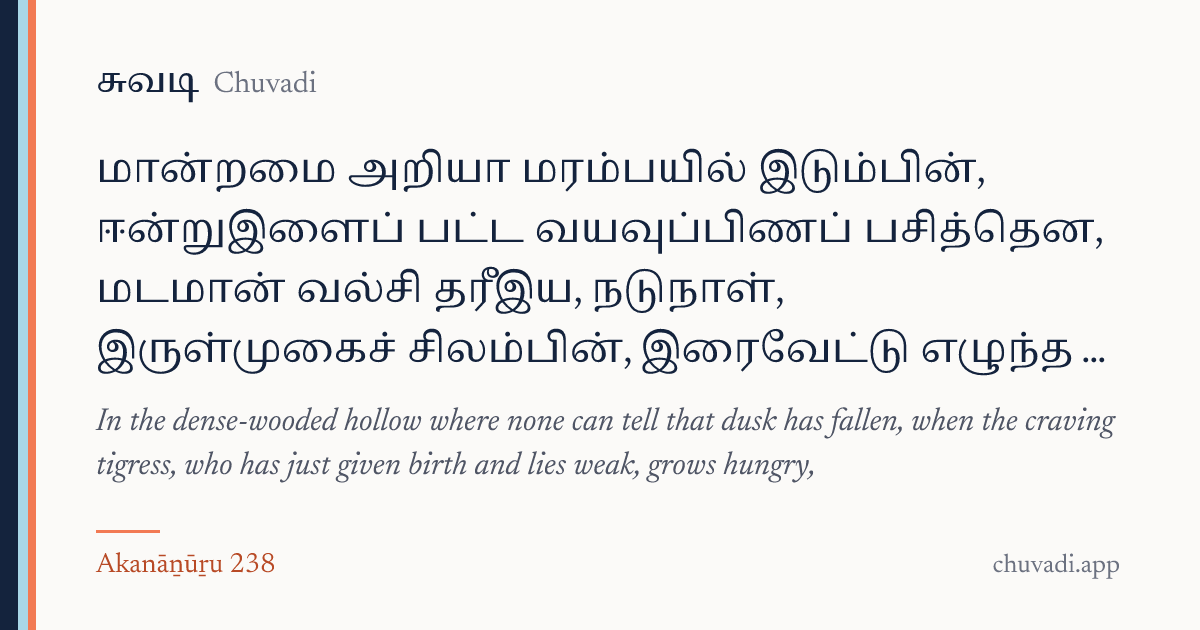
பாடல் · The poem
Tap a word to see where else it occurs.
பொருள் · Meaning in TamilAI
மாலை வந்ததை அறிய முடியாத அளவுக்கு மரங்கள் அடர்ந்த புதர்க்காட்டில், குட்டியை ஈன்று சோர்ந்து கிடக்கும் வேட்கையுடைய பெண்புலி பசித்ததால், அதற்கு இளமானின் இறைச்சியை உணவாகக் கொண்டு வரும்படி, நள்ளிரவில், இருள் நிறைந்த குகைகளையுடைய மலைச்சரிவிலிருந்து இரை தேடி எழுந்த, பறையைப் போன்ற கழுத்தும் பல வரிகளும் உடைய பெரிய ஆண்புலி, மென்மையான கண்களையுடைய பெண் காட்டுப்பசு எல்லாத் திசைகளிலும் அலறும்படி, பெரிய வளைந்த கொம்புகளையுடைய பெருமைமிக்க காட்டு எருதை, பரந்த காட்டில் வலப்பக்கம் விழும்படி கொன்று, அகன்ற கரிய பாறை சிவக்கும்படி இழுத்துச் செல்லும். அத்தகைய பெரிய மலைநாட்டின் தலைவனே! நீ அவளைப் பிரிந்தால், அவளுக்குரிய மருந்தும் உன்னிடம் உண்டோ? இரவலர்களுக்கு அணிகலன் பூட்டிய நெடிய தேர்களையும் யானைகளையும் எப்போதும் மழை பொழிவது போல வழங்கும் கொடையும், வள்ளன்மையும் மகிழ்வும், கழலும் தொடியணிந்த பெரிய கைகளும், செருக்கான குதிரைகளும் உடைய நள்ளியின், அடர்ந்த மொட்டுகள் மலர்ந்த மணமுள்ள கரிய மலைச்சரிவில், பனைமரத்தின் முழு அடியைச் சார்ந்து நிற்கும் காந்தளின் மெல்லக் கட்டிய மொட்டு அவிழ்ந்து மலர்ந்த குளிர்ந்த மணமுள்ள புதுமலரைப் போல மணக்கும் அவளுடைய நறுமண நெற்றிக்கு நீ மருந்து வைத்திருக்கிறாயா?
இது குறிஞ்சித் திணை; பிரியக் கருதும் தலைவனிடம் தோழி, அவன் பிரிந்தால் தலைவி வாடுவாள் என்று எச்சரிப்பது. ஈன்று சோர்ந்த பெண்புலிக்காக நள்ளிரவில் இரை தேடும் ஆண்புலி, துணையைப் பேண வேண்டிய தலைவனின் கடமையை உணர்த்தும் உள்ளுறை. நள்ளியின் பெயர் காந்தள் மலரும் மலையைக் குறிக்கவே வருகிறது.
ஆங்கிலம் · English translationAI
Translation
- In the dense-wooded hollow where none can tell that dusk has fallen,
- when the craving tigress, who has just given birth and lies weak, grows hungry,
- to bring her the flesh of a young deer for food, at midnight,
- on the slope where darkness gathers in the caves, rising, eager for prey,
- the great male tiger with many stripes, its neck like a drum,
- so that the soft-eyed cow of the wild cattle bellows in every direction,
- the noble bull of the wild cattle with great curved horns
- it kills, falling to its right, in the wide-spread forest,
- and drags it so that the broad dark rock turns red:
- man of that great mountain country! If you part from her,
- have you any medicine, then? For the suppliants,
- tall chariots decked with ornaments, with elephants, ever,
- giving like the pouring rain, of generous delight,
- with large hands wearing sliding bracelets, with proud horses, Naḷḷi:
- on his fragrant dark slope where thick buds have burst,
- the kāntaḷ that stands by the full trunk of the palmyra,
- its soft-bound buds loosening and opening,
- its cool fragrant fresh flowers: her brow smells of them; for that fragrant brow?
What the poem says
The heroine's friend speaks to the hero. The heroine's brow smells as sweet as kāntaḷ flowers on Naḷḷi's hill; if he leaves her, does he have a medicine to cure her? The question is a warning: separation will make her waste, and nothing he brings back will heal it.
The opening is a powerful kuṟiñci hunting scene. In a forest so dense no one can tell when dusk has fallen, a tigress has just given birth and lies weak and craving food. At midnight the great striped male, his neck thick as a drum, rises from the dark caves to find her meat. He kills a noble bull of the wild cattle, falling to the right as the auspicious kill, while the soft-eyed cow bellows in every direction; and he drags the carcass so that the broad rock turns red with blood.
The uḷḷuṟai is plain and pointed. Even the fiercest beast of the mountain goes out at midnight to feed his mate when she is weak; the hero, by contrast, is thinking of leaving his. The bellowing cow that loses her bull may also foreshadow the heroine's grief.
Naḷḷi is praised in the closing lines as a chief whose giving to suppliants is like pouring rain, with tall chariots and elephants, bracelets on his large hands and proud horses. The poem uses his name only to locate the kāntaḷ that grows by the palmyra on his slopes. 'Valampaṭa', 'falling to the right', is the conventional good omen for a tiger's kill.