



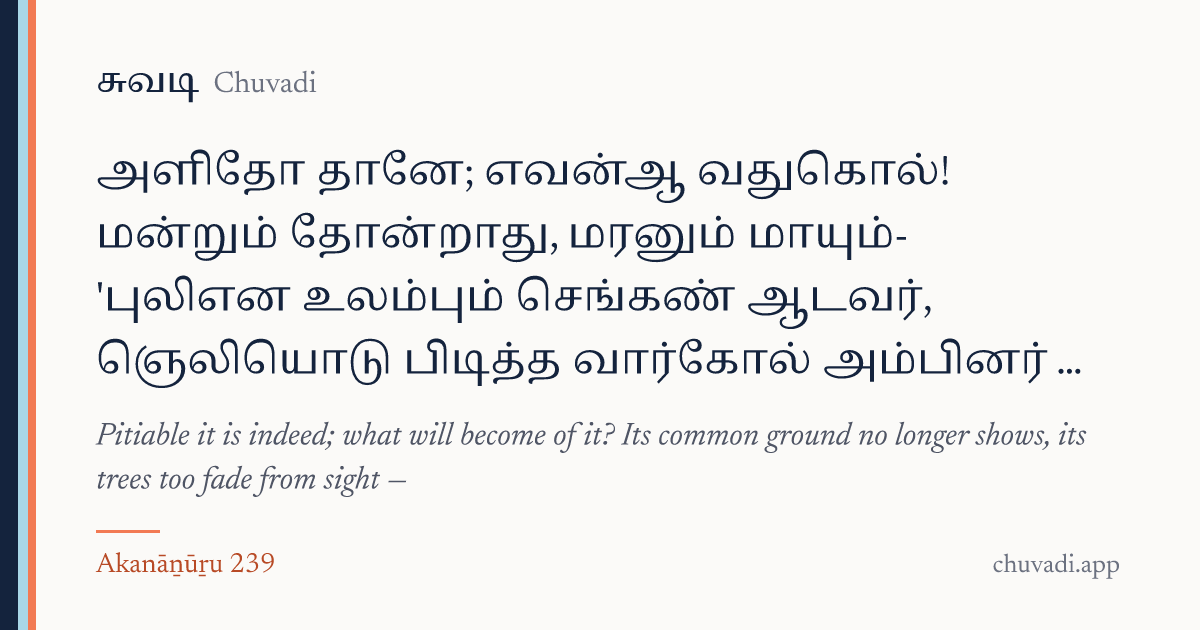

அகநானூறு 239
பாடல் · The poem
Tap a word to see where else it occurs.
பொருள் · Meaning in TamilAI
ஐயோ, இரங்கத்தக்கது அது! இனி அதற்கு என்ன ஆகுமோ! அதன் ஊர்மன்றம் இப்போது கண்ணுக்குத் தெரியவில்லை; அதன் மரங்களும் மறைந்து போகின்றன. "புலியைப் போல் முழங்கும் சிவந்த கண்களையுடைய ஆண்கள், தீக்கடைகோலோடு நீண்ட அம்புகளையும் பிடித்துக்கொண்டு, இரவில் ஓர் ஊரைத் தாக்கி, பல பசுக்களைக் கவர்ந்து செல்ல, அதனால் எழும் கூக்குரல் வெப்பமான பாலைவழியில் எதிரொலிக்கும். அத்தகைய வேறு வேறு நாடுகளின் பல வழிகளைக் கடந்து, புள்ளி வைத்த தொய்யிலும் பொறி போன்ற சுணங்கும் ஒளிரும் அணிகளும் உடைய பெண்கள் உயர்ந்த பிறையைத் தொழும் மங்கிய மாலைப்பொழுதில் நாங்கள் இங்கே தனித்திருக்க, சேர்ப்பதற்கு அரிய பொருளைத் தேடி நீங்கள் சென்றால், நெடுநாள் தங்கிவிட மாட்டீர்களோ, பெருமை உடையவரே?" என்று, சிறிதும் பெரிதுமான ஊடல் மொழிகளைச் சொல்லி, நேற்றும் நம்மிடம் பல இனிய சொற்களைப் பேசினாள் அந்தச் சிறிய நல்லவள். இதுதான் அவளுடைய பெரிய நல்ல ஊர்!
பாலைத் திணை; பொருள் தேடிப் புறப்பட்ட தலைவன் தனக்குள் சொல்லிக்கொள்வது. செல்லச் செல்லத் தலைவியின் ஊரின் மன்றமும் மரங்களும் கண்ணிலிருந்து மறைவதை அவன் காண்கிறான் என்று கொள்வது பொருந்துகிறது; இரண்டாம் அடியை மாலை இருளில் ஊர் மங்குவதாகவும் கொள்ளலாம். நேற்று அவள் சொன்ன சொற்களில் கொடிய பாலைவழியும் வீட்டின் தனிமையான மாலையும் எதிரெதிராக நிற்கின்றன.
ஆங்கிலம் · English translationAI
Translation
- Pitiable it is indeed; what will become of it?
- Its common ground no longer shows, its trees too fade from sight —
- "Red-eyed men who roar like tigers,
- holding long-shafted arrows together with their fire-drills,
- raid a town by night and, rounding up many cows,
- raise an outcry of shouts that echoes through the hot wasteland;
- if, crossing many paths in many different lands,
- while women with dotted toyyil and spotted beauty-marks,
- wearing bright jewels, bow in worship to the high crescent
- in the dim evening, and we are left behind here,
- you go after wealth that is so hard to gather,
- will you not stay away long, noble one?" — so saying,
- talking of sulks both short and long, to us
- only yesterday she spoke many sweet words,
- that small, good girl — and this is her great, good town!
What the poem says
The hero speaks, apparently to himself, after setting out on the journey for wealth. Looking back, he sees the town where his beloved lives slipping out of view: first its common ground (maṉṟu) can no longer be made out, then even its trees vanish. "Pitiable it is; what will become of it?" he says of the town, but the pity is really for her. The second line can also be taken as a picture of the town darkening at dusk; the edition's punctuation does not decide between the two, but the receding view suits a man on the road.
Most of the poem quotes what she said to him only the day before. She imagines the wasteland he must cross, where red-eyed robbers who roar like tigers, carrying arrows and fire-drills, raid a settlement at night and drive off its cattle while the cries echo across the dry land. She sets beside it the evening at home, when the young women, their breasts painted with dotted toyyil designs and marked with the golden spots of cuṇaṅku, bow to the new crescent moon. Left alone at that hour, she asks whether he will not stay away too long.
Her words are described as "sulks short and long" yet "many sweet words": the mild reproach of a woman who will not forbid the journey but makes its cost felt. The closing line, with its play on "small good one" and "great good town", sets the slight girl against the large place she makes precious to him. This edition names no poet.