




அகநானூறு 245
பாடல் · The poem
Tap a word to see where else it occurs.
பொருள் · Meaning in TamilAI
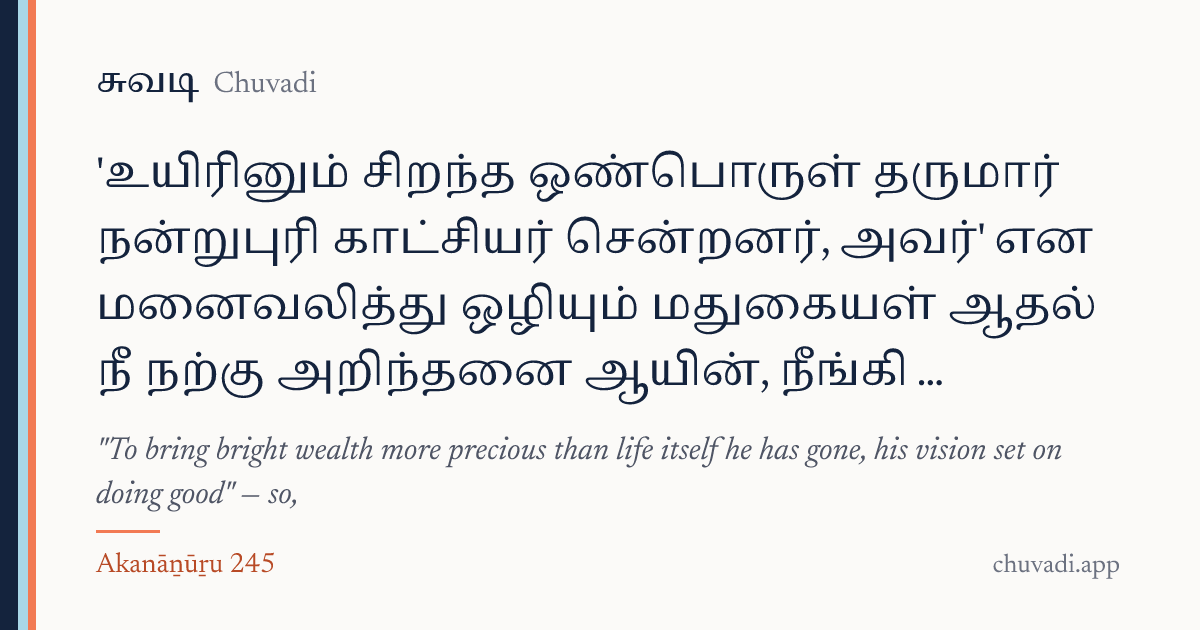
"உயிரைவிடச் சிறந்த ஒளிரும் பொருளைக் கொண்டுவருவதற்காக, நன்மையையே நாடும் அறிவுடையவராக அவர் சென்றார்" என்று சொல்லி, வீட்டை உறுதியாகப் பற்றி இங்கே தங்கியிருக்கும் மனவலிமை அவளுக்கு உண்டு என்பதை நீ நன்கு அறிந்திருந்தால், நெஞ்சே, நீ என்னை விட்டு நீங்கிச் செல்வாயாக. மழை பெய்ய மறந்ததால் மூங்கில் வாடிக் கிடக்கும் வழியில், செல்லும் வணிகக் கூட்டங்களைத் தாக்கும் இரக்கமற்ற வாழ்க்கையுடைய வலிய வில்லேந்திய இளைஞர்களின் தலைவர்கள், பொழுது விடிந்ததும், வரிகள் தோன்றும் பருத்த தோள்களும் வயிற்றில் திதலையும் உடைய கள் விற்கும் பெண்டிர் தங்கும் வீட்டு முற்றத்தில், களிப்பு தரும் கள்ளுக்குரிய விலை இல்லாததால் மதம் ஒழுகும் காட்டுயானையின் வெண்தந்தத்தைச் சுட்டிக்காட்டி, மன்றத்தில் ஓடும் சிறுவனின் மெல்லிய மயிருடைய தலையைத் தடவுவர். அத்தகைய கொடிய எல்லைப்புறச் சிற்றூரில் தங்கி இரவைக் கழித்து, நிழல் தரும் அழகிய நீண்ட அடிமரமுடைய இலவமரத்தின் அசையும் கிளைகளில் நெருப்புக் கொழுந்துவிட்டது போன்ற ஒளிரும் பூக்களில் குழலிசை போல வண்டுகள் ஒலிக்கும் இடத்தில், சிறிய குன்றுகளில் காயும் சிதறிய வெள்ளெலும்புகள் விரைந்து நடக்கும் ஒட்டகத்தின் பசியைத் தீர்க்கும் கற்கள் நிறைந்த கிளைவழிகளையுடைய காட்டைக் கடந்து, அழகிய மாமை நிறமுடைய இளமங்கையை இங்கே விட்டு, நெஞ்சே, நீ செல்வாயாக! நான் வரமாட்டேன்.
பாலைத் திணை; பொருள் தேடச் செல்லத் தூண்டும் நெஞ்சுக்குத் தலைவன் மறுத்துக் கூறுவது. வழியின் கொடுமையை விரிவாகச் சொல்லி, அவளைப் பிரிந்து செல்ல மாட்டேன் என்று முடிக்கிறான். எலும்பைத் தின்னும் ஒட்டகம் அந்நில வழியின் வறட்சியையும் அயன்மையையும் காட்டுகிறது; தலையைத் தடவப்படும் சிறுவன் யார் என்பதைப் பாடல் சொல்லவில்லை.
ஆங்கிலம் · English translationAI
Translation
- "To bring bright wealth more precious than life itself
- he has gone, his vision set on doing good" — so,
- that she has the strength to hold fast to the house and stay behind,
- if you know it well, then leave,
- and on the track where rain has forgotten to fall and bamboo withers,
- where they live a graceless life of attacking passing caravans,
- the chiefs of young men with strong bows, when daylight comes,
- in the house-yards where they lodge with the toddy women
- whose broad shoulders are striped, whose bellies are adorned with tittil spots,
- not having the price of the drink that cheers,
- point to the white tusk of a forest elephant with wet cheeks
- and stroke the scanty-haired head of a little son who runs in the common ground;
- lodging in a hamlet on the hard frontier and staying the night,
- where on the long-trunked ilavam, lovely as it casts its shade,
- bright flowers on swaying boughs, like fire leaping up,
- ring with bees humming like the music of a flute,
- the scattered white bones that dry on the low hills
- ease the lingering hunger of the swift-footed camel —
- crossing such forests, with long forked paths among the rocks,
- leaving behind the lovely young woman,
- go, heart! I am not coming!
What the poem says
The hero speaks to his own heart, which urges him to set out again for wealth. He quotes the reasoning his heart offers: she will say he has gone with good intent to bring back wealth dearer than life, and she has the strength to keep the house and wait. If the heart is so sure of that, he says, let it go on alone: "go, heart! I am not coming." Refusing the journey this way is a known pālai pattern, the man torn between ambition and love who finally sides with love.
Most of the poem pictures the road his heart would have him take. The rains have failed, the bamboo withers, and bands of young bowmen live by attacking passing caravans. Their chiefs, short of the price of toddy, point to an elephant tusk as payment in the houses of the women who sell drink, women with striped shoulders and the golden tittil spots on their bellies, and they stroke the head of a little boy running about the common ground. Who the boy's family is the poem does not say.
Further on, the red flowers of the ilavam (silk-cotton) tree blaze like fire while bees drone like flutes, and in the hills white bones lie drying, gnawed by camels to ease their hunger. The camel is unusual in Sangam poetry, and its eating of bones is stated plainly here; it adds to the sense of a harsh, foreign land. The robbers' easy domestic moments sharpen the contrast with the home the hero would be leaving. The quoted words of lines 1 to 3 may be the heart's argument or the hero's mocking repetition of it. This edition names no poet.