




அகநானூறு 246
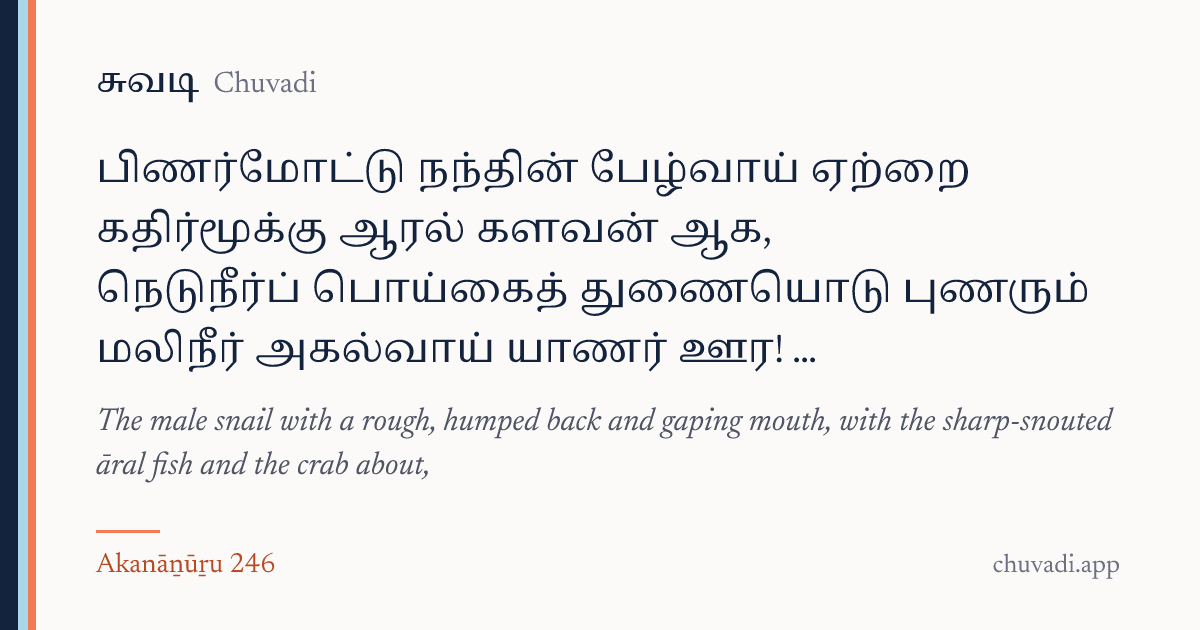
பாடல் · The poem
Tap a word to see where else it occurs.
பொருள் · Meaning in TamilAI
சொரசொரப்பான முதுகும் பிளந்த வாயும் உடைய ஆண் நத்தை, கூரிய மூக்குடைய ஆரல் மீனும் நண்டும் சுற்றிலும் இருக்க, ஆழமான நீருடைய பொய்கையில் தன் துணையோடு கூடுகிறது. அத்தகைய நீர் நிறைந்த அகன்ற நீர்வழிகளையுடைய வளமான ஊரின் தலைவனே! மலர் நிறைந்த கூந்தலையுடைய, நீ விரும்பும் பெண்ணோடு, தாது நிறைந்த காஞ்சி மரங்களின் குளிர்ந்த சோலையருகே உள்ள அகன்ற ஆற்றில் நேற்று நீராடினாய் என்று சொல்கிறார்கள். அதனால் எழுந்த பழிச்சொல், சினமும் வலிமையும் பெரும்புகழும் உடைய கரிகால் வேந்தன், கள் நிறைந்த ஆரவாரமுடைய வெண்ணிப் போர்க்களத்தில், சிறப்புமிக்க மன்னர்கள் எதிர்த்துப் போரிட்டபோது, அவர்களுடைய ஒலிக்கும் முரசுகள் களத்திலேயே கிடக்க, பதினொரு வேளிரோடு வேந்தரும் தோற்று வீழ, அவர்களுடைய செறிந்த வலிமையை அழித்த நாளில், சோர்வில்லாத அழுந்தூரில் எழுந்த ஆரவாரத்தைவிடப் பெரிதாக உள்ளது!
மருதத் திணை; பரத்தையோடு நீராடிய தலைவனிடம் தலைவி கூறுவது; தோழி கூற்றாகவும் கொள்ளலாம். பிற உயிர்கள் சூழ்ந்திருக்கக் கூடும் நத்தை, ஊரார் அறிய வெளிப்படையாகப் பரத்தையோடு திரியும் தலைவனைக் குறிப்பதாகக் கொள்ளலாம். வெண்ணிப் போரில் கரிகாலன் பெற்ற வெற்றி மரபில் புகழ்பெற்றது; அழுந்தூருக்கும் அப்போருக்கும் உள்ள தொடர்பைப் பாடல் விளக்கவில்லை.
ஆங்கிலம் · English translationAI
Translation
- The male snail with a rough, humped back and gaping mouth,
- with the sharp-snouted āral fish and the crab about,
- mates with its partner in the pond of deep water —
- lord of the prosperous town with wide waterways full of water!
- With her whom you desire, whose hair is full of flowers,
- in the wide river by the cool grove of kāñci thick with pollen
- you bathed, they say, yesterday; and the gossip
- is louder than when Karikāl, of fierce anger, strength and great name,
- at the gate of Veṇṇi, full of the roar of toddy,
- in the battle where glorious kings clashed,
- left their deep-sounding drums lying on the field of combat
- and the kings with the eleven Vēḷir chiefs fell,
- on the day he cut down their massed might,
- louder than the roar of tireless Aḻuntūr!
What the poem says
This is a marutam poem of the husband's unfaithfulness, spoken by the heroine, or possibly by her friend, to the hero. The opening image sets the tone: in the deep pond a rough-backed snail mates with its partner while the āral fish and the crab are all about. The pairing in full view of other creatures may hint, as uḷḷuṟai, at a man who takes his pleasure openly with a courtesan, careless of who sees. The exact force of "with the āral and the crab" is not certain.
The charge is specific. People say that yesterday he bathed in the broad river, beside a grove of kāñci trees, with a woman he desires, her hair full of flowers. River bathing with a parattai is a stock offence in marutam, and what wounds the speaker is that it is public talk.
She measures the gossip by a famous noise of battle. It is louder than the roar that went up from Aḻuntūr on the day Karikāl, the Cōḻa king, defeated the assembled kings at Veṇṇi together with eleven Vēḷir chiefs, leaving their drums abandoned on the field. The poem gives only these details: the fierce Karikāl, Veṇṇi "full of toddy", the eleven Vēḷir, the kings who fell. The battle of Veṇṇi is widely remembered in tradition as Karikāl's great victory, and Aḻuntūr is here the place whose cheering is the measure; the poem does not explain the link further. This edition names no poet.