



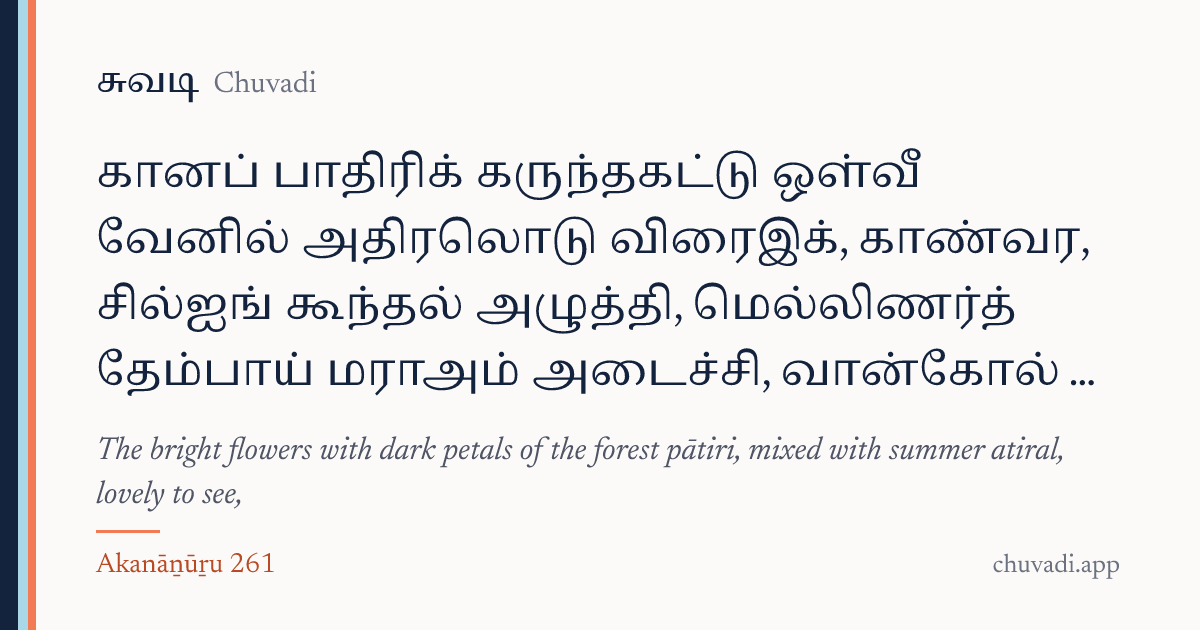

அகநானூறு 261
பாடல் · The poem
Tap a word to see where else it occurs.
பொருள் · Meaning in TamilAI
காட்டுப் பாதிரியின் கரிய இதழ்களையுடைய ஒளிரும் பூக்களை வேனில் காலத்து அதிரல் மலர்களோடு கலந்து, காண அழகாகத் தன் ஐம்பகுதியாக முடிக்கும் மெல்லிய கூந்தலில் அழுத்திச் சூடி, மென்மையான கொத்துகளையுடைய தேன் ஒழுகும் மராமலரையும் செருகி, நுண்ணிய வேலைப்பாடுடைய ஒளிரும் வளையல்கள் ஒலிக்கக் கைகளை வீசி, சிலம்பு சிரிப்பது போல ஒலிக்க, மெல்லிய சில அடிகள் வைத்து மெதுவாக நடந்தாள். "உன் அழகிய பின்புறத்தைப் பார்க்கிறோம்; சற்றே முன்னே நடந்து செல்" என்றோம். முன்னே செல்ல நாணி, உடனே மானையும் வெல்லும் பார்வையோடு, கள்ளமற்ற தன்மையால் சுருங்கி, தலைகுனிந்து நின்றாள். அதைக் கண்டு நாங்களும் முன்னே செல்லவில்லை. ஆதலால் இடையிலேயே கொடிய பாலைவழியில் தங்கிவிட்டோம்; பெரிய புலி யானையைக் கொன்று முழங்கும் ஓசையையும், வில்லேந்தியோரின் குறும்பில் களியாட்டத்தில் முழங்கும் வலிய வாயுடைய கடுந்துடியின் தாளத்தையும் கேட்டுக்கொண்டே!
பாலைத் திணை; உடன்போக்கின்போது வழியில் நிகழ்ந்ததைத் தலைவன் நினைவுகூர்வது; அவன் யாரிடம் கூறுகிறான் என்பது சொல்லப்படவில்லை. அவளுடைய நாணமும் மென்மையும் கொடிய காட்டின் அச்சத்தோடு எதிரெதிராக வைக்கப்பட்டுள்ளன. "மாகொல் நோக்கம்" என்ற தொடரின் பொருள் உறுதியாகத் தெரியவில்லை.
ஆங்கிலம் · English translationAI
Translation
- The bright flowers with dark petals of the forest pātiri,
- mixed with summer atiral, lovely to see,
- pressed into her fine five-part hair, and soft-clustered,
- honey-dripping marām tucked in, swinging her arms
- so her gleaming bangles of fine make jingled, as her anklets laughed,
- with a few soft steps she walked along slowly; "Your
- lovely little back, let us look at it; go a little
- ahead", we said, and she, too shy to go ahead, at once
- with a gaze that would put a deer to shame, drooping in her innocence,
- stood and bowed her head; seeing that,
- we too would not go on ahead; and so, in between,
- we spent the night in the hard wasteland — the great tiger
- roaring loud after killing a bull elephant, and, in the revelry
- that fills the bowmen's hill-fort,
- the beat of the loud-mouthed, fierce tuṭi drum, hearing them!
What the poem says
The hero recalls a moment on the journey of elopement with the heroine. Who he is speaking to is not stated; he may be telling someone back home, or simply remembering. She had decked her hair with flowers of the wasteland itself, the dark-petalled pātiri, summer atiral and honey-dripping marām, and walked along slowly with small soft steps, her bangles jingling and her anklets "laughing".
Teasingly, he and his companions asked her to walk a little ahead so that they could admire her from behind. She was too shy to do it. With a look lovelier than a deer's, she shrank and stood with her head bowed. Charmed, he would not go ahead either, and so, neither leading, they stopped and spent the night where they were in the wasteland.
The last lines say what that night was like: they could hear a great tiger roaring after it had killed an elephant, and from the bowmen's fort in the hills the fierce beat of the tuṭi drum at some revelry. The danger sets off the tenderness of the scene: for the lovers, her shyness weighed more than the fear of the road. The "we" may be the hero alone, using the plural of dignity, or the hero with his party. In line 9 the phrase mākol nōkkam has been read as "a gaze that defeats the deer"; the compound is not entirely certain. This edition names no poet.