




அகநானூறு 262
பாடல் · The poem
Tap a word to see where else it occurs.
பொருள் · Meaning in TamilAI
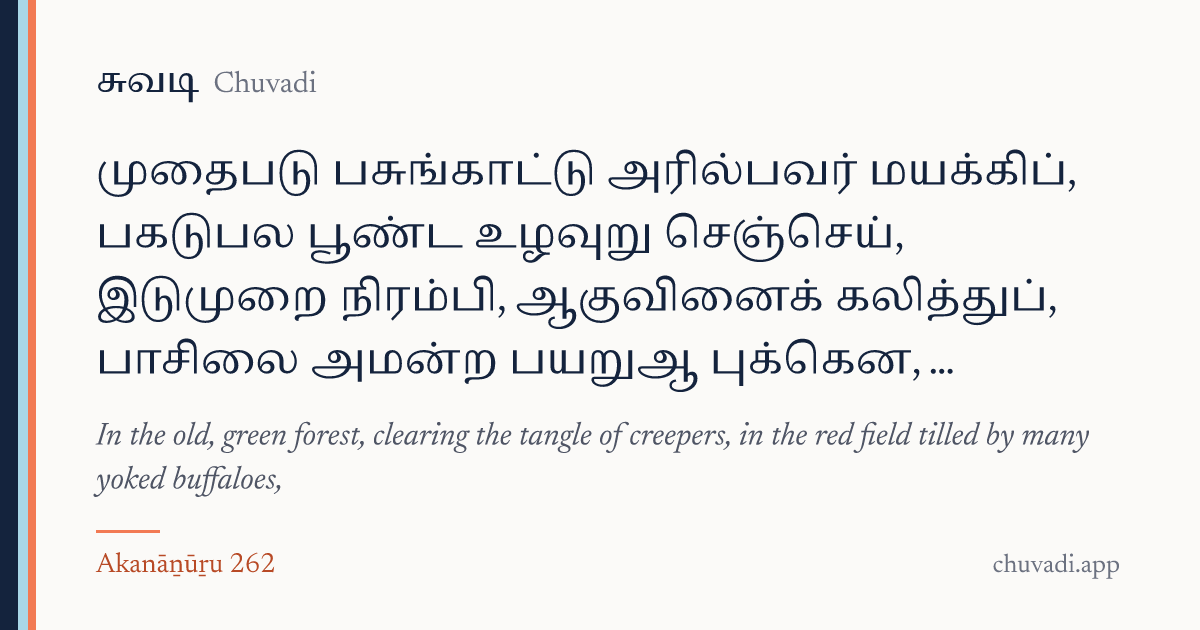
பழைய பசுமையான காட்டில் சிக்கலான கொடிகளை அகற்றி, பல எருமைக்கடாக்களைப் பூட்டி உழுத செம்மண் வயலில், முறைப்படி விதைத்து, நன்கு செழித்து, பசிய இலைகளையுடைய பயறு அடர்ந்து வளர்ந்திருந்தது. அதில் ஒரு பசு புகுந்துவிட்டது என்ற சிறிய குற்றத்துக்காக, ஊரிலிருந்த முதிய கோசர் வாய்மை தவறாத அவளுடைய தந்தையின் கண்களை இரக்கமின்றிப் பறித்துவிட்டனர். அதனால் அவள் கலத்தில் உண்ணாமலும், வெள்ளாடை உடுத்தாமலும், சினத்தால் மேற்கொண்ட நோன்பைக் கைவிடாமலும் இருந்து, வீரம் மிக்க படையுடைய வெற்றிக் குறும்பியனும் போரில் சிறந்த பெருமையுடையவனுமான திதியனிடம் அதைச் சொன்னாள். அவன் அவர்களுடைய இனிய உயிரை அழித்ததைக் கண்டு சினம் தணிந்த அன்னி மிஞிலியைப் போல, உடல் பூரித்து நாம் நீங்காத மகிழ்ச்சி அடைந்தோம். பூக்கள் நிறைந்து அருவிகள் முழங்கும், ஒளிரும் சுனைகளையுடைய சாரலில், நுண்ணிய நீர்த்துளிகள் புதர்களின் மேல் நனைக்கும், வண்டுகள் மொய்க்கும் கள்ளையும் வள்ளன்மை மிக்க மகிழ்ச்சியையும் உடைய பேகனின் மேகம் சூழ்ந்த பெருமலையின் மணத்தோடு அழகிய இனிய சொல் வந்ததால்!
குறிஞ்சித் திணை; தோழி, அல்லது தலைவி, மகிழ்ச்சியோடு கூறுவது. வந்த "இனிய சொல்" என்ன என்று பாடல் கூறவில்லை; தலைவன் மணம் புரிவதாகச் சொன்ன செய்தியாக இருக்கலாம். அன்னி மிஞிலியின் கதை பாடலில் உள்ளபடியே இங்கே தரப்பட்டுள்ளது; குறும்பியன் என்பது திதியனின் வேறு பெயரா என்பது உறுதியாகத் தெரியவில்லை.
ஆங்கிலம் · English translationAI
Translation
- In the old, green forest, clearing the tangle of creepers,
- in the red field tilled by many yoked buffaloes,
- sown in due order, flourishing as it should,
- where the green-leaved pulse grew dense, because a cow got in,
- her truthful father they blinded, without mercy,
- the old Kōcar of the town, for that small offence;
- she would not eat from a dish, would not wear white,
- would not break the vow she had taken in her anger,
- until to the victorious Kuṟumpiyaṉ with his valiant army,
- Titiyaṉ, noble in war, she told it, and their
- sweet lives she saw him take, and her anger left her —
- like Aṉṉi Miñili, our bodies swelling,
- we are filled with unending joy — where, full of flowers,
- waterfalls roar on the slopes with their shining pools,
- and their fine spray wets the tops of the bushes,
- of Pēkaṉ, generous in his gladness, with toddy where bees swarm,
- carrying the fragrance of his great cloud-capped mountain,
- because the lovely, sweet word has come!
What the poem says
The speaker, probably the heroine's friend speaking for both of them ("we"), or the heroine herself, is filled with joy because a "lovely, sweet word" has come. The poem does not say what it is. In kuṟiñci, such news is usually the hero's word that he will marry, and the joy that makes the body "swell" is the reverse of the wasting of love-sickness.
The joy is compared to that of Aṉṉi Miñili, whose story the poem tells in some detail. A cow strayed into a field of pulse that had been carefully sown, and for that small offence the old Kōcar of the town blinded her truthful father without pity. In her anger she took a vow: she would not eat from a dish or wear white cloth until she was avenged. She told Titiyaṉ, called the victorious Kuṟumpiyaṉ of the valiant army, and when she saw him kill the Kōcar, her anger left her. The poem gives no more, and nothing is added here; whether Kuṟumpiyaṉ is a second name or a title of Titiyaṉ is not certain.
The good news is said to carry the fragrance of the great mountain of Pēkaṉ, a generous chieftain whose hill country is full of flowers, roaring waterfalls and bees around the toddy. The line suggests that the word comes from the hero, who belongs to such a mountain, but it could also simply mean that the joy is as rich as that country. The final phrase "because the word has come" ties the long simile back to the present. This edition names no poet.