



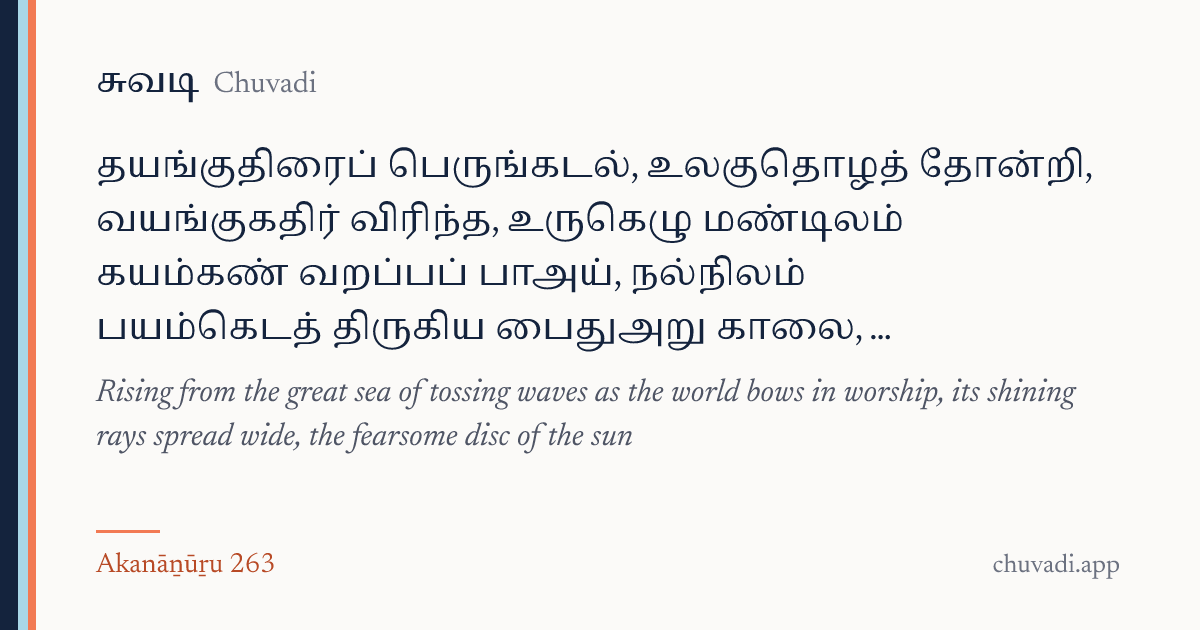

அகநானூறு 263
பாடல் · The poem
Tap a word to see where else it occurs.
பொருள் · Meaning in TamilAI
அலைகள் அசையும் பெருங்கடலிலிருந்து உலகமே தொழும்படி தோன்றி, ஒளிரும் கதிர்களைப் பரப்பிய அச்சம் தரும் கதிரவன், குளங்கள் அடிவரை வற்றும்படி வெப்பத்தைப் பரப்பி, நல்ல நிலம் பயன் கெடும்படி வாட்டும் இரக்கமற்ற இந்தக் காலத்தில், வேறு வேறு கிளைவழிகளையுடைய அச்சம் தரும் அகன்ற காட்டில், வழியே வரும் வழிப்போக்கர்களைக் காண்பதற்காக வில்வல்ல ஆடவர் உயர்ந்த யாமரங்களின் கிளைகளில் ஏறி மேலிருந்து பார்க்கும் கொடிய பாலைவழியில், அவளை அழைத்துக்கொண்டு சென்ற வன்னெஞ்சமுடைய அந்த இளங்காளைக்கு, அவளுடைய துணிவை முன்பே அறிந்திருந்தால், ஐயோ! ஒளிரும் வேலையுடைய கோதை காத்துப் போற்றும் வஞ்சி நகரைப் போன்ற என் வளமான வீடு விளங்கும்படி, இங்கேயே இனிதாக மணம் செய்து சேர்த்து வைத்திருப்பேனே! அழகிய நெற்றி பொலிந்த, கவலையற்ற என் பேதைப்பெண்ணின் வளரும் முலைகளாகிய முற்றத்தில் அவன் பாதுகாப்பான தூக்கம் பெறும்படி!
பாலைத் திணை; உடன்போக்கில் மகள் சென்ற பின் தாய் வருந்திக் கூறுவது. கொடிய வழியை எண்ணி அஞ்சுவதோடு, முன்பே அறிந்திருந்தால் வீட்டிலேயே மணம் செய்து வைத்திருப்பேனே என்று ஏங்குகிறாள். கோதை, வஞ்சி ஆகிய பெயர்கள் சிறப்புக்கு உவமையாக மட்டுமே வருகின்றன.
ஆங்கிலம் · English translationAI
Translation
- Rising from the great sea of tossing waves as the world bows in worship,
- its shining rays spread wide, the fearsome disc of the sun
- spreads its heat till the ponds dry to their hearts, and the good land
- is twisted so its yield is ruined; in this pitiless season,
- in the wide, fearful forest with many separate forks,
- to watch how travellers come along the path,
- bowmen keep a lookout from above
- from the tall yā trees whose branches they occupy — that hard wasteland
- he took her and went across; to that hard-hearted young bull of a man,
- had I known her resolve, alas!,
- so that my rich house, like Vañci that Kōtai of the gleaming spear
- guards and protects, should shine,
- I would have joined them sweetly, surely — the untroubled
- secure sleep of my simple girl, whose lovely brow was radiant,
- in the courtyard of her budding breasts!
What the poem says
A mother speaks after her daughter has eloped. Nothing in the edition says whether she is the natural mother (naṟṟāy) or the foster-mother, but "my rich house" and "my simple girl" suggest the mother of the household. She describes the season and the road with dread: the sun, rising from the sea as the world bows to it, dries the ponds and parches the land, and the forest the girl has entered is a place of forked paths where bowmen sit in the tall yā trees watching for travellers to rob.
Her grief turns into regret. Had she known of her daughter's resolve, she says, she would not have opposed the match. She would have given the girl to this "hard-hearted young man" (kāḷai, literally a young bull) in a proper wedding at home, so that her house would shine like Vañci, the city guarded by Kōtai of the gleaming spear. The poem names Kōtai and Vañci only as a measure of splendour; Vañci is usually taken as a Cēra capital and Kōtai as a Cēra name, which fits, but the poem itself adds nothing more.
The last lines are tender and frank. What she would have arranged at home is her daughter's "secure sleep" with her husband, untroubled, in the courtyard of her breasts. The word "courtyard" (muṟṟam) for the breast is a familiar Sangam image. The poem expresses a common theme of pālai elopement songs: the family's anguish turning into acceptance once it is too late. This edition names no poet.