




அகநானூறு 264
பாடல் · The poem
Tap a word to see where else it occurs.
பொருள் · Meaning in TamilAI
மழையில்லாத வானம் விண்மீன்களை அணிந்தது போல, இலைகள் அடர்ந்த முசுண்டைக்கொடி வெண்மையான மலர்களைப் பூத்துள்ளது; வரிகளையுடைய வெண்காந்தள் வளைந்த கொத்துகளில் வெண்பூக்களைத் தொங்கவிட்டுள்ளது. பெரிய துடியையும் கவைத்த கோலையும் உடைய கோவலர், மாலையில் பெய்த மழையில் வருந்திய பல பசுக்களையுடைய மந்தையோடு, நீர் சொட்டும் கண்ணிகளை அணிந்து, ஊருக்குத் திரும்புகின்றனர். தொலைவில் சென்றிருந்த மழை மீண்டும் பெருந்துளிகளாகப் பொழிகிறது; பெருகி ஓடும் வெள்ளம் தெருவெல்லாம் ஒழுகுகிறது; பெரிய முழக்கத்தோடு மிகவும் கலங்கி, கூதிர்க்காலம் நிலைகொண்டுவிட்டது; அவர் சொன்ன பருவம் இதுவே! நம் காதலர் நம் நிலையை அறியாவிட்டாலும், உயர்ந்த நடையுடைய கடுஞ்சின யானைகள் இரவில் சூழ்ந்து திரியும், அச்சம் தரும்படி படை தங்கியிருக்கும், கடுஞ்சினமுடைய வேந்தனின் பாசறையில் இருக்கும் அவர், தம் நிலையையாவது அறிந்திருக்கிறாரோ?
முல்லைத் திணை; வேந்தனின் போரில் பாசறையில் இருக்கும் தலைவன் குறித்த பருவத்தில் வாராததால் தலைவி தோழிக்குக் கூறுவது. "தம் நிலையை அறிந்தாரோ" என்பது, பருவம் வந்ததை உணர்ந்து அவரும் பிரிவால் வருந்துகிறாரோ என்ற கேள்வி. வேந்தனின் பெயர் சொல்லப்படவில்லை.
ஆங்கிலம் · English translationAI
Translation
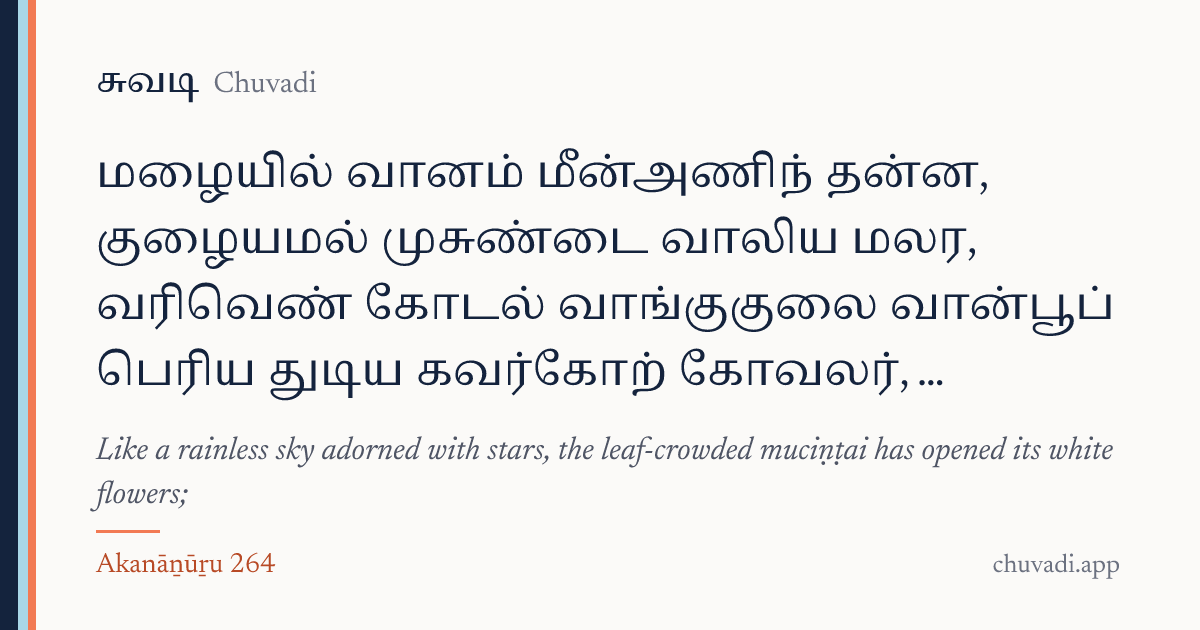
- Like a rainless sky adorned with stars,
- the leaf-crowded muciṇṭai has opened its white flowers;
- the striped white kōṭal hangs its bending clusters of bright blooms;
- the cowherds with large tuṭi drums and forked staffs,
- with their herd of many cows that toiled through the evening rain,
- wearing chaplets glistening with water, turn back towards the village;
- the rain that had gone far away pours down in heavy drops,
- the rushing flood runs through every street;
- with a great roaring, deeply tumultuous,
- the cool season has come to stay, the time is here! Our beloved,
- though he may not know how it is with us, his own state
- does he know at all — he who is, where with lofty gait
- furious elephants circle through the night,
- in the frightening camp where the army has halted,
- in the war camp of the fierce-angered king?
What the poem says
The heroine speaks, probably to her friend, at the coming of the cool season (kūtir), when her husband, away on a king's campaign, should have returned. The opening is a sharply drawn mullai evening. The white muciṇṭai flowers stud the leafy creeper like stars in a cloudless sky, the white kōṭal hangs its bent clusters, and the cowherds come home with their drums and forked staffs, their cattle soaked by the evening rain and their chaplets dripping.
Then the rain returns in force. Heavy drops fall, floods run down every street, and the noise is deafening. "The cool season has come, the time is here," she says: this is the season he promised to be back. Mullai is the tiṇai of waiting, and the moment when the promised season arrives without the man is its central situation.
Her question is subtle. He may not know her condition, but does he know his own? That is, does he realise that the season has come, and that he too must be suffering apart from her? He is in the camp of a fierce king, where war elephants circle through the night and the army is halted in a fearful encampment. The king is not named. The image of a cloudless starry sky for a flowering creeper has its own irony, since it is a rainy night, and the comparison is purely visual. This edition names no poet.