




அகநானூறு 265
பாடல் · The poem
Tap a word to see where else it occurs.
பொருள் · Meaning in TamilAI
புகையைப் போலப் பொங்கி எழுந்து அகன்ற வானில் உயர்ந்து, பனி படர்ந்த நெருப்புக் கொழுந்து போலத் தோன்றும் இமயத்தின் சிவந்த சிகரத்துக்கு இணையானதோ? அல்லது பல புகழ் நிறைந்த, போரில் வெல்லும் நந்தர்கள் சிறப்புமிக்க பாடலி நகரில் திரட்டி, கங்கையின் நீருக்கு அடியில் மறைத்து வைத்த செல்வமோ? தோழி, வாழ்வாயாக! அது என்னவோ? நிழலில் ஒளிரும் கரிய மணல் அலைகள் போல நெளிந்த கூந்தலையும் குழலிசை போன்ற குரலையும் உடைய இந்தப் பாவை வருந்தும்படி, நம்மைக் கைவிட்டு, ஒளிரும் வளையல்கள் கழல, நாம் மெலிந்து துயரத்தோடு கண்ணீர் பெருக்கி இங்கே தங்கியிருக்க அவர் சென்றார். மலையை அடைந்து, இனிய குரலுடைய அழகிய காளையை அறுத்து, கொழுப்பு மூடிய சிறந்த பெருந்துண்டுகளை நெருப்பில் வைத்து எடுத்து, அச்சம் தரும் இயல்புடைய பேய்களைப் போல வெள்ளிய ஊனைத் தின்ற ஆசை தீர, நன்கு விளைந்த தோப்பிக் கள்ளைப் பருகும், வளைந்த வலிய வில்லையும் கொடிய பார்வையையும் உடைய ஆடவர், புலால் நாறும் கையும் கழுவாத வாயும் உடையவராக இருக்கும் இடம் அது. ஓயாமல் குழறும் கொண்டையுடைய கூகையோடு, மராமரங்கள் நிறைந்த சிற்றூரின் அருகே சிவந்த நெற்றியுடைய யானை உறங்கும் வேங்கட மலையைச் சுற்றி, கொடிய எல்லைப்புறப் பாலைவழியைக் கடந்து சென்றவர், நம்மைவிடவும் கனமானதாக மதித்த அந்தப் பொருள்தான் என்ன!
பாலைத் திணை; பொருள்வயின் பிரிந்த தலைவனைப் பற்றித் தலைவி தோழிக்குக் கூறுவது. இமயமும் நந்தரின் புதையலும் மிகப்பெரிய செல்வத்துக்கு உவமைகளாக வருகின்றன. வேங்கடம் தமிழ்நாட்டின் வட எல்லை; அதற்கு அப்பாலுள்ள வழியின் கொடுமை அவள் கேள்வியை மேலும் கூர்மையாக்குகிறது.
ஆங்கிலம் · English translationAI
Translation
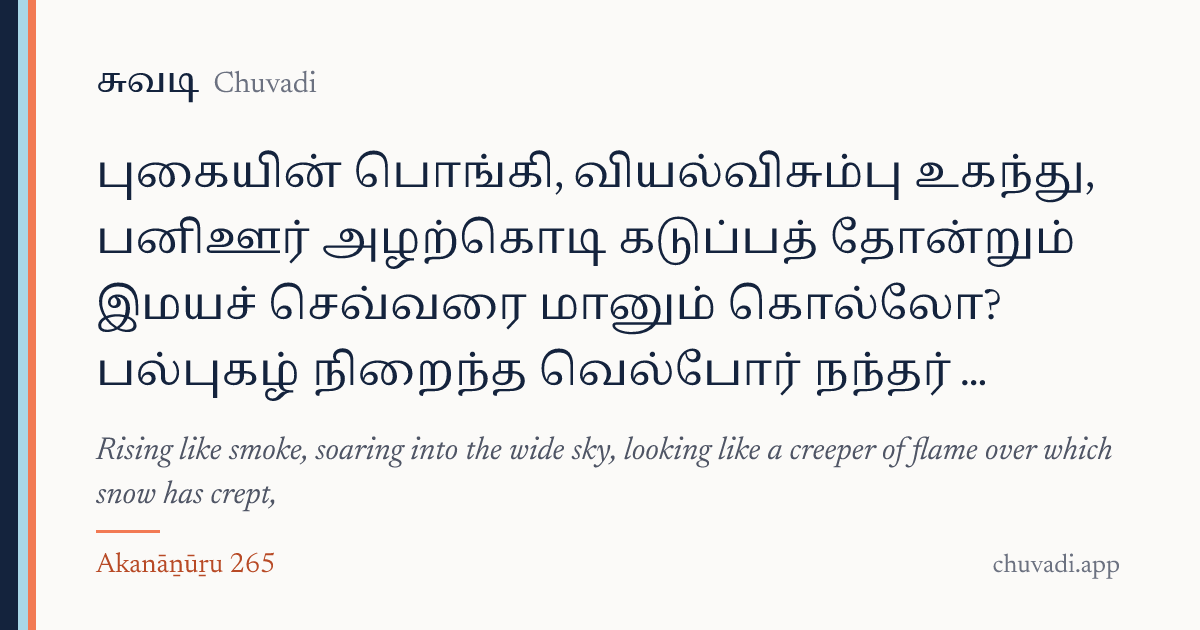
- Rising like smoke, soaring into the wide sky,
- looking like a creeper of flame over which snow has crept,
- is it equal to the red peak of the Himalaya?
- Or what the Nantar, of victorious wars and abundant fame,
- gathered in glorious Pāṭali and in the Ganges'
- waters hid at the bottom — is it that treasure?
- What is it — long may you live, friend! — so that, her hair
- set in waves like the dark shining ripples of sand in the shade,
- her voice like a flute, this doll grieves; abandoning us,
- with our bright bangles slipping, wasting, in sorrow,
- our eyes awash with tears, while we were left behind, reaching the hills,
- cutting up a handsome bull with a sweet bellow, the choice
- fat-wrapped chunks placed in the fire and taken out,
- like ghosts of fearsome kind,
- to slake the craving after eating pale flesh,
- drinking toppi brewed to perfection,
- the men with curved strong bows and cruel looks,
- with reeking hands and unwashed mouths, are there;
- where, with the tufted owl that hoots without pause,
- beside the small village among marām trees, there dozes
- the red-browed elephant — Vēṅkaṭam they went round,
- they crossed the hard wasteland of the fierce frontier,
- the wealth they weighed as heavier than us!
What the poem says
The heroine speaks to her friend about the wealth her husband has gone to seek. She asks, half in bitterness and half in wonder, what this wealth could be that he valued more than her. Is it as great as the red peak of the Himalaya, rising like smoke into the sky and looking like a flame streaked with snow? Is it the treasure of the Nantar, said to have been gathered at Pāṭali and hidden under the bed of the Ganges? The Nanda kings and their hidden hoard were proverbial in Sangam poetry (see akam.251); the poem names them only as the extreme of riches.
Between these questions she pictures herself: a "doll" with wavy hair and a flute-like voice, her bangles slipping, her eyes full of tears. Then she imagines the road. He has gone past Vēṅkaṭam, the northern hill that marked the edge of the Tamil country, through a frontier where rough bowmen slaughter a bull, roast the fat chunks, eat "like ghosts", and drink the rice-beer called toppi, their hands reeking of flesh and their mouths unwashed. Near a small village a red-browed elephant dozes while an owl hoots ceaselessly.
The violence and coarseness of the road sharpen the question with which the poem began and ends: what sort of wealth is worth that, and worth leaving her? The poem grows from the sublime images of Himalaya and Ganges to the crude feast of the bowmen. The construction of lines 7 to 11 is loose; "this doll grieves" refers to the speaker herself, and the plural "we" is her own voice. This edition names no poet.