




அகநானூறு 266
பாடல் · The poem
Tap a word to see where else it occurs.
பொருள் · Meaning in TamilAI
கரைகளைத் தொடும்படி உயர்ந்து பெருகிய நீண்ட அகன்ற பரப்பில் மாலையில் பரவிய புதுவெள்ளத்தில், நேற்று, வலிய யானையின் தலை வடிவிலான மிதவையைத் தழுவிக்கொண்டு, நரந்தம் மணக்கும் அடர்ந்த கரிய கூந்தலையுடைய இளம் தோழியரோடு, ஈரமான அணிகள் கலக்க, நீரில் நகர்ந்து நீராடிய ஒருத்தியின் உயர்ந்த அழகிய குளிர்ந்த கண்களைப் பார்க்கும்தோறும் பார்க்கும்தோறும் நிறுத்த முடியாமல், காமம் கட்டுக்கடங்காமல் மிகுந்ததால் நாணத்தை இழந்து நீ நீராடி விளையாடினாய் என்று சொல்கிறார்கள், மகிழ்நனே! யாழிசை ஒலிக்கும் தெருக்களையுடைய நீடூர்த் தலைவனும், தவறாத வாளையுடையவனுமான எவ்வியின் ஏவலை ஏற்காதவர்களின் பெருவலிமையைச் சாய்த்த, பசும்பூண் அணிந்த, பணியாதவர்களின் அரிமணவாயில் உறத்தூரில் நிகழ்ந்த கள்ளும் பெருஞ்சோறும் உடைய விருந்தின் மாலை ஆரவாரம் போல, அது பெரிய அலராகிவிட்டது. இனி அது எமக்குத் துன்பம் அன்று; பக்கத்து வயல்களில் உழவர்கள் மகிழ்ச்சியோடு எழுப்பிய பேரொலிக்கு அஞ்சிப் பறந்த மயில், தெய்வம் உறையும் இடம் பொலியும்படி வந்து தங்கும், அழகிய மணிவிளக்குகளையுடைய அலைவாயில், போரில் சிறந்த சேயோனாகிய முருகன் முன் நீ செய்த சூளுரைதான் எமக்குத் துன்பம்!
மருதத் திணை; பரத்தையரோடு புனலாடிய தலைவனிடம் தலைவி, அல்லது தோழி, கூறுவது. அலர் தனக்குத் துன்பமில்லை; முருகன் முன் செய்த சூளை அவன் மீறியதால் அவனுக்குத் தீங்கு நேருமோ என்பதே அவள் அச்சம். எவ்வி, நீடூர், உறத்தூர், அரிமணவாயில் பற்றிய அடிகளின் பொருள் இவ்வேட்டில் தெளிவாக இல்லை.
ஆங்கிலம் · English translationAI
Translation
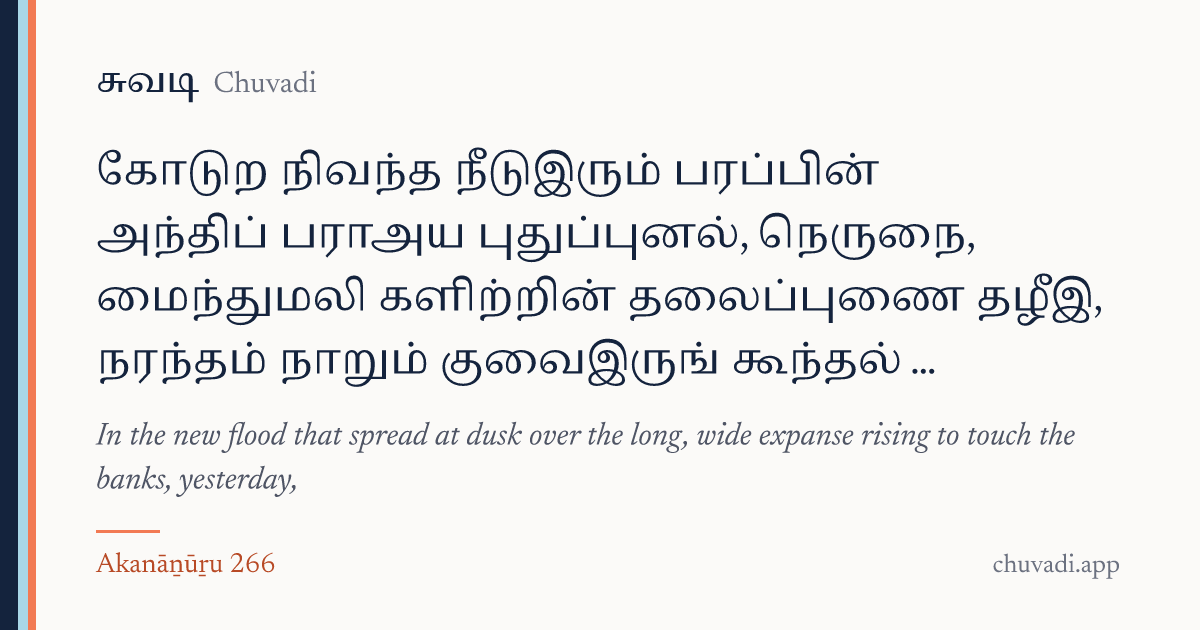
- In the new flood that spread at dusk over the long, wide expanse
- rising to touch the banks, yesterday,
- clasping the float shaped like the head of a mighty elephant,
- with young women companions whose heaped dark hair smells of narantam,
- their wet ornaments mingling,
- moving through the water as you bathed, her lovely raised rain-cool eyes —
- each time you looked, each time you looked, you could not stop,
- and as desire overflowed beyond measure, you lost all shame
- and played in the water, they say, man of pleasure! That —
- of the lord of Nīṭūr, whose streets ring with lute music,
- Evvi of the unfailing sword, those who would not accept the command,
- who brought down great strength, the fresh-jewelled ones who would not yield,
- at Uṟattūr with its gate called Arimaṇam, there
- like the evening din of the great feast of rice and toddy,
- it has become loud gossip indeed; now that
- would be no grief to us, were it not for — where nearby
- the farmers in the fields raise a great cheer,
- and the peacock, frightened by the sounding din, flies off
- and comes to rest, adorning the precinct where the god dwells,
- at Alaivāy of beautiful gem-lamps —
- the oath you swore before Cēy, mighty in war!
What the poem says
A marutam complaint, spoken to the hero by the heroine, or by her friend on her behalf. He was seen yesterday bathing in the river's new flood with a group of young women, holding a float shaped like an elephant's head, and gazing again and again at one of them, until desire overcame all shame. "They say" introduces the report, and the speaker adds that it has become loud public talk.
The gossip is compared to the din of a great evening feast at Uṟattūr, at the gate called Arimaṇam, connected with the enemies of Evvi, lord of Nīṭūr, whose sword never fails. Lines 10 to 13 are obscure in this edition. They seem to speak of those who refused Evvi's command and of a victory over them, but the exact relation of the names, and whether the feast celebrates a victory, cannot be settled from the text; it is translated literally.
The ending gives the poem its sting. The gossip itself, she says, would not grieve her; what troubles her is the oath he once swore to her before Cēy, that is, Murukaṉ, at Alaivāy, the shrine by the sea where gem-like lamps shine and a peacock, Murukaṉ's bird, startled by the farmers' shouts, flies in to settle within the sacred precinct. An oath sworn before a god and then broken was believed to bring punishment, so her real fear is for him. This edition names no poet.