



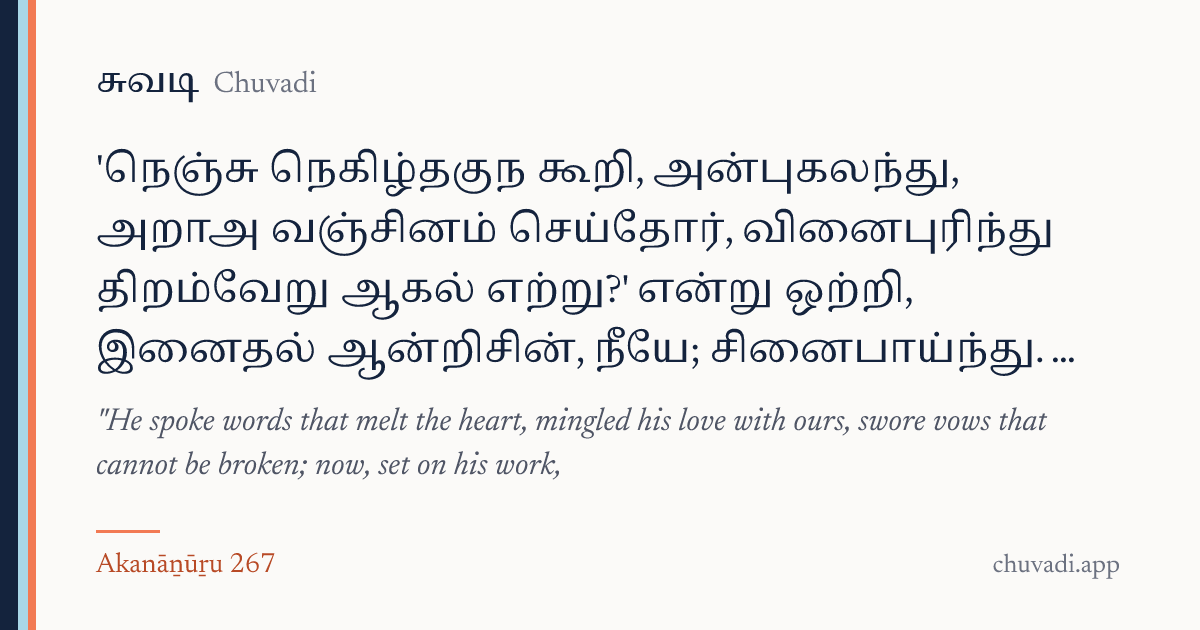

அகநானூறு 267
பாடல் · The poem
Tap a word to see where else it occurs.
பொருள் · Meaning in TamilAI
"நெஞ்சம் நெகிழும்படியான சொற்களைக் கூறி, அன்போடு கலந்து, உடைக்க முடியாத உறுதிமொழிகளைச் செய்தவர், இப்போது வினையையே விரும்பி வேறு இயல்புடையவராக ஆனது எப்படி?" என்று வற்புறுத்தி நீ வருந்துவதை நிறுத்துவாயாக. கிளைகளில் பாய்ந்து உதிர்த்த கோடைக்காற்று வீசும் அச்சம் தரும் பாலைவழியில், காட்டுப்பூனையின் பாதம் போலக் குவிந்த மொட்டுகளையுடைய இருப்பையின், கடைந்தெடுத்த தந்தம் போன்ற மிகுதியான வெண்பூக்களை மயிர் நிறைந்த கால்களையுடைய கரடிக்கூட்டம் கவர்ந்து உண்கிறது. மை பூசியது போன்ற கரிய முகமுடைய முசுக்குரங்குக் கூட்டம் பசிய நெடிய மூங்கிலில் பாய்வதால், திடீரென மூங்கில் நெல் வெப்பமான பாறையில் சிதறி, நகத்தை முறிக்கும் ஓசை போல ஒலித்துப் பொங்கிப் பொரிகிறது. இத்தகைய உயர்ந்த மலையின் பல பாலைவழிகளைக் கடந்து சென்றவர் பழிக்குரியவர் அல்லர். நாள்தோறும் தாம் விரும்பியவரைக் கட்டிவைக்கத் தெரியாமல், ஒளிரும் வெண்மையான அழகிய வளையல்களைக் கழலவிட்ட என் தோள்களே, தோழி, தவறுடையவை!
பாலைத் திணை; பிரிந்த தலைவனைப் பழிக்கும் தோழிக்குத் தலைவி மறுமொழி கூறுவது. அவனைப் பழிக்காமல் தன் தோள்களையே குற்றம் சாட்டுவது அன்பின் வெளிப்பாடாகவும் கசப்பான நகைப்பாகவும் கொள்ளத்தக்கது. கரடியும் குரங்கும் உண்டு களிக்கும் கொடிய வெயில் காட்சி பிரிவின் வறட்சியை நினைவூட்டுகிறது.
ஆங்கிலம் · English translationAI
Translation
- "He spoke words that melt the heart, mingled his love with ours,
- swore vows that cannot be broken; now, set on his work,
- how can he become different in his ways?" so you insist,
- but stop your grieving, you; leaping onto the branches,
- the summer wind has shaken them down; in the dreadful wasteland
- the iruppai's buds, closed up like a wild cat's paw,
- its masses of white flowers, like ivory turned on a lathe,
- the herd of bears with hairy legs carries off;
- the troop of langurs with black faces as if smeared with soot
- leap onto tall, fresh bamboo, so that all at once
- the white rice of the bamboo is scattered on the hot rock
- and swells and pops with a sound like cracking fingernails;
- he who crossed the many wastelands of the lofty mountain
- is not the one to blame; day after day
- unable to bind the one they loved, they let their gleaming
- bright white bangles slip —
- my shoulders — friend! — they are the ones at fault!
What the poem says
The heroine speaks to her friend, who has been grieving on her behalf and blaming the absent husband: how could a man who spoke such tender words and swore unbreakable vows change once he was set on his work? The heroine tells her to stop. He is not to blame, she says, turning the accusation on herself: it is her own shoulders that are at fault, for they could not hold him, and day by day they have let her bangles slip.
This reversal is the poem's point. Self-blame of this kind, in which the woman defends the man and accuses her own body, is a known turn in akam poetry; it can be read as genuine loyalty, as bitter irony, or as both at once. The friend's words in lines 1 to 3 show what the heroine is answering.
Between the two parts the poem places a vivid summer scene from the land he has crossed. The hot wind shakes down the iruppai (mahua) flowers, whose buds are shaped like a wild cat's paw and whose white petals look like carved ivory, and a herd of bears gathers them. Black-faced langurs leap onto the bamboo, shaking out its seeds, the "white rice" of bamboo, which fall on the scorching rock and pop like grain in a pan with a sound like nails being cracked. The animals feed and play while the lovers are apart, and the dry heat of the scene matches the pālai theme of separation. This edition names no poet.