



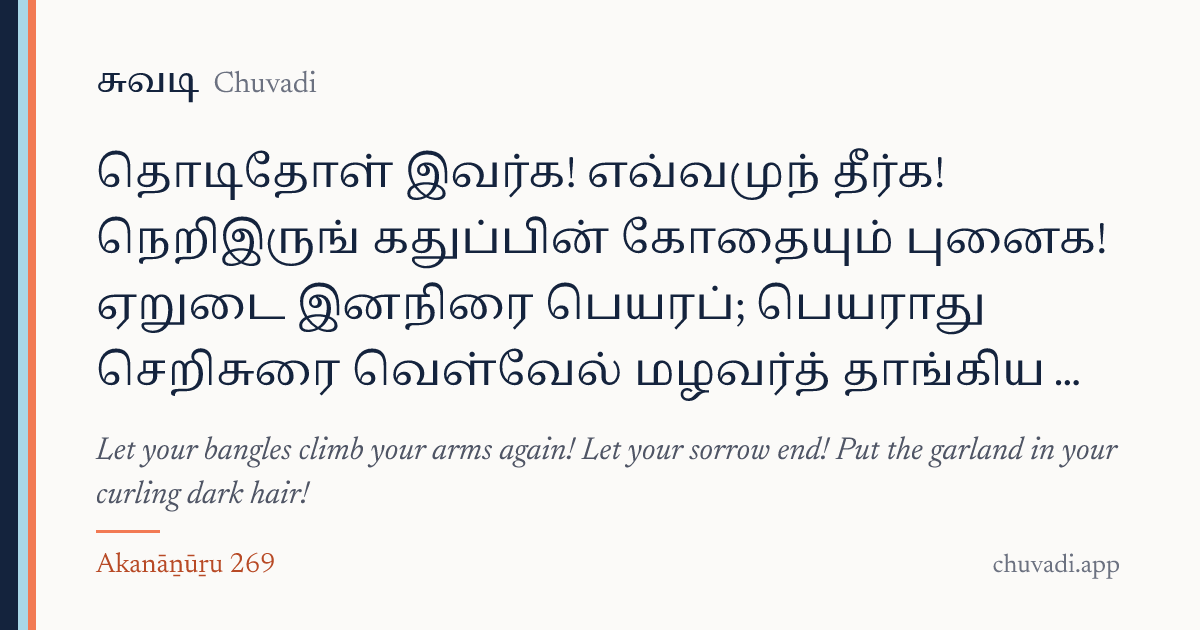

அகநானூறு 269
பாடல் · The poem
Tap a word to see where else it occurs.
பொருள் · Meaning in TamilAI
வளையல்கள் மீண்டும் தோளில் ஏறட்டும்! துன்பமும் தீரட்டும்! நெளிந்த கரிய கூந்தலில் மாலையையும் சூடுவாயாக! காளைகளோடு கூடிய ஆநிரைகள் கவர்ந்து செல்லப்பட்டபோது, பின்வாங்காமல், செறிந்த குழையுடைய வெள்வேல் ஏந்திய மழவரைத் தடுத்து நின்ற அஞ்சாத வீரர்களின் நல்ல புகழை நிலைநிறுத்துவதற்காக, பெண்யானை படுத்திருப்பது போன்ற சிறிய குன்றின் அருகே, நட்டது போலத் தோன்றினாலும் நடப்படாத நெடுங்கற்களின் அகன்ற பரப்பில் பொறித்த பல பெயர்களையும் கழுவி, மணமுள்ள மஞ்சள் பூசிய ஈரமான புறம் பொலிய, அம்பால் அறுத்த வலிய மரப்பட்டை நாரால் கட்டிய செங்கரந்தைப் பூக்கண்ணியை வரிவண்டுகள் ஒலிக்கச் சூட்டி, கழலணிந்த இளைஞர்கள் தம் ஊர்களுக்குத் திரும்பும் கொடிய பாலைவழியைக் கடந்து சென்றவர், தை மாதத்தில் நிலைத்த குளிர்ந்த மழையின் கடைசி நாளில், பொற்காசுகளைக் கோத்த மேகலையணிந்த உயர்ந்த அல்குலில் அழகிய கரிய கூந்தல் குழையோடு அசைய, ஒலித்து எழும் அகன்ற வாயுடைய பறையினிடையே கொம்பின் தெளிந்த ஒலி முழங்க, வண்டல் பாவையை நீர்த்துறைக்குக் கொண்டுவந்து அழகிய நெற்றியுடைய பெண்கள் குரவைக்கூத்து ஆடும், பெருநீர்க் கடற்கரைச் சோலையைச் சூழ்ந்த இருப்பிடமான வாணனின் சிறுகுடியில், வளைந்த கதிர்களையுடைய நெல் விளையும் வளமான குளிர்ந்த வயல்களில் மொட்டு வாய் அவிழ்ந்த ஒளிரும் செங்கழுநீர் மலர் போன்ற உன் கண்களின் கண்ணீரைத் துடைப்பதற்காக விரைந்து வந்துவிட்டார்!
பாலைத் திணை; பொருள்வயின் பிரிந்த தலைவன் திரும்பியதைத் தோழி தலைவிக்கு அறிவிப்பது. வழியில் வீரர்களுக்கு நட்ட நடுகற்களை இளைஞர் வழிபடும் காட்சியும், தை மாதத்தில் பெண்கள் குரவை ஆடும் விழாக்காட்சியும் இடம்பெறுகின்றன. "நட்ட போலும் நடாஅ நெடுங்கல்" என்ற தொடரின் பொருள் உறுதியாகத் தெரியவில்லை.
ஆங்கிலம் · English translationAI
Translation
- Let your bangles climb your arms again! Let your sorrow end!
- Put the garland in your curling dark hair!
- When the herds with their bulls were being driven off, not turning back,
- holding back the Maḻavar with white spears with tight-fitted sockets,
- to fix the good fame of the fearless men who did so,
- beside a low hill like a cow-elephant lying down,
- on tall stones that look as though set up, yet were never planted,
- washing the many names carved over the broad surface,
- so that its wet face shines with fragrant turmeric,
- with tough fibre of bark cut with arrows
- a chaplet of red karantai flowers is bound,
- crowning it while the striped bees hum, the young men with anklets
- go back to their villages — through that hard wasteland he went;
- on the last day of the cool rains that settled in Tai,
- when on the high mound of the waist strung with gold coins
- the lovely dark locks swing along with the ear-rings,
- and from the wide-mouthed round drum that rises in sound
- the clear call of the horn rings out in between,
- bringing the sand-doll to the drinking-water landing,
- the fair-browed women dance the kuravai —
- at the dwelling place set by the great waters' shore-grove,
- Vāṇaṉ's Ciṟukuṭi, rich in paddy with bending ears,
- in its cool, prosperous fields, the mouths of its buds opened —
- like the bright red kaḻunīr are your
- eyes; to wipe away their tears he has come, and fast!
What the poem says
The heroine's friend brings the good news that the husband has returned. Her first words are three joyful commands: let the bangles go back up your arms, let the sorrow end, put a garland in your hair again. All three reverse the signs of separation, when bangles slip from thin wrists and a waiting wife leaves her hair undressed.
She describes the road he crossed. In the wasteland, after a cattle raid in which brave men held off the spear-carrying Maḻavar and died, young warriors honour them at memorial stones beside a low hill shaped like a resting she-elephant. They wash the stones on which the many names are carved, smear them with turmeric and crown them with chaplets of red karantai flowers tied with bark fibre. These are the hero-stones (naṭukal) of Sangam warfare; the poem's phrase "stones that look as though set up, yet were never planted" is puzzling and may mean natural rocks used as memorials.
The return is set against a festival at home. On the last day of the cool rains in the month of Tai, the women of Vāṇaṉ's Ciṟukuṭi, a town of paddy fields by a great water, carry their sand-dolls (vaṇṭal) to the river landing and dance the kuravai to drum and horn, their locks swinging with their ear-rings. Ciṟukuṭi and its chief Vāṇaṉ are named only for their rich fields, from which the comparison for her eyes is drawn: red like the kaḻunīr lily. He has hurried home to wipe her tears. This edition names no poet.