




அகநானூறு 270
பாடல் · The poem
Tap a word to see where else it occurs.
பொருள் · Meaning in TamilAI
கரிய கழியில் மலர்ந்த பெரிய இதழ்களையுடைய நீலமலரை, புலால் நாறும் தெருக்களையுடைய சிற்றூரில் வாழும் மீன்வேட்டுவர் ஞாழல் மலரோடு சேர்த்துச் சூடும் மென்மையான கடற்கரை நிலத்தலைவனே! இவளுடைய தோள்கள் மெலிந்துவிட்டன. சிவந்த இறால்கள் கலக்கியதால் நுரை தெறிக்கும் அலைகள், பருத்த அடிமரத்தையுடைய புன்னையின் வளைந்த கிளைகளைத் தொடும் கடற்கரைச் சோலையின் பெருந்துறையைப் பார்த்துக்கொண்டு, கொய்த பிடரிமயிருடைய குதிரைகளையும் நல்ல தேர்களையும் உடைய கைவண்மை மிக்க வேந்தன் குட்டுவனின் கழுமலம் போன்ற, அழகிய மாமை நிறமுடைய தன் உடலின் பழைய அழகு அழிய, உறங்காத கண்களோடு இவள் கலங்குகிறாள். நீயோ, தெய்வம் உறையும் மரத்தில் முட்களால் பின்னிய கூட்டில் சேவலோடு கூடாத சிறிய கரிய பெண்பறவை துன்பத்தால் வருந்தும் இரவிலும், உன் ஊரையே நினைத்துக்கொண்டிருக்கிறாய். அதனால் நானே வருந்துகிறேன்!
நெய்தல் திணை; தலைவியின் நிலையைக் கூறித் தோழி தலைவனைக் கடிந்துகொள்வது. சேவலைப் பிரிந்து வருந்தும் பெண்பறவை தனித்திருக்கும் தலைவியைக் குறிக்கும் இறைச்சி. குட்டுவனின் கழுமலம் இழந்த அழகுக்கு உவமையாக மட்டுமே வருகிறது.
ஆங்கிலம் · English translationAI
Translation
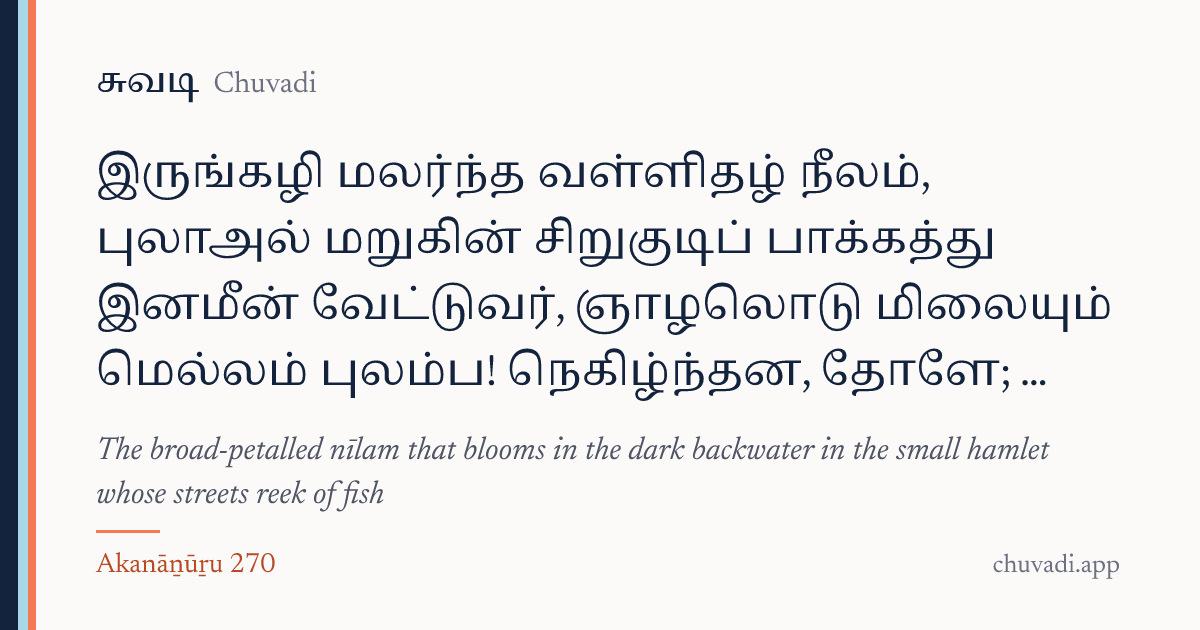
- The broad-petalled nīlam that blooms in the dark backwater
- in the small hamlet whose streets reek of fish
- the hunters of shoaling fish wear along with ñāḻal flowers —
- man of the soft shore! Her shoulders have grown slack;
- where the breaking waves, sprayed with foam churned by red prawns,
- touch the bending branches of the thick-trunked punnai,
- gazing at the great landing by the seaside grove, she,
- like the town of the generous-handed lord with horses of trimmed manes,
- Kuṭṭuvaṉ of good chariots, like his Kaḻumalam,
- her lovely dark body losing its old beauty,
- with sleepless eyes, is distraught; and you,
- when in the thorn-woven nest on the god's tree
- the small dark hen-bird, not joined with her mate,
- suffers in pain, even on such a night,
- you think of your own town; and I, I grieve!
What the poem says
The heroine's friend reproaches the hero, the lord of a gentle seashore. The opening shows the fishermen of a small, fish-smelling hamlet wearing the blue nīlam of the backwater together with ñāḻal flowers. The plain, slightly coarse village life of neytal frames the complaint.
The heroine has wasted: her shoulders are slack, and her once lovely dark skin has lost its beauty. She stares at the great landing by the grove, where the waves churned by prawns touch the low branches of the punnai, watching for him to come. Her lost beauty is compared to Kaḻumalam, a town of Kuṭṭuvaṉ, a generous king with fine chariots and horses with trimmed manes. The poem says no more about Kaḻumalam or Kuṭṭuvaṉ than this; Kuṭṭuvaṉ is a name borne by Cēra kings, and the comparison implies that her beauty was once as splendid as that town.
The man, meanwhile, thinks only of his own town, even on a night when, in a thorny nest in a sacred tree, a small dark hen-bird suffers alone without her mate. The lonely bird is a clear iṟaicci for the heroine. "It is I who grieve," says the friend at the end, sharing the pain and pressing him to act. This edition names no poet.