



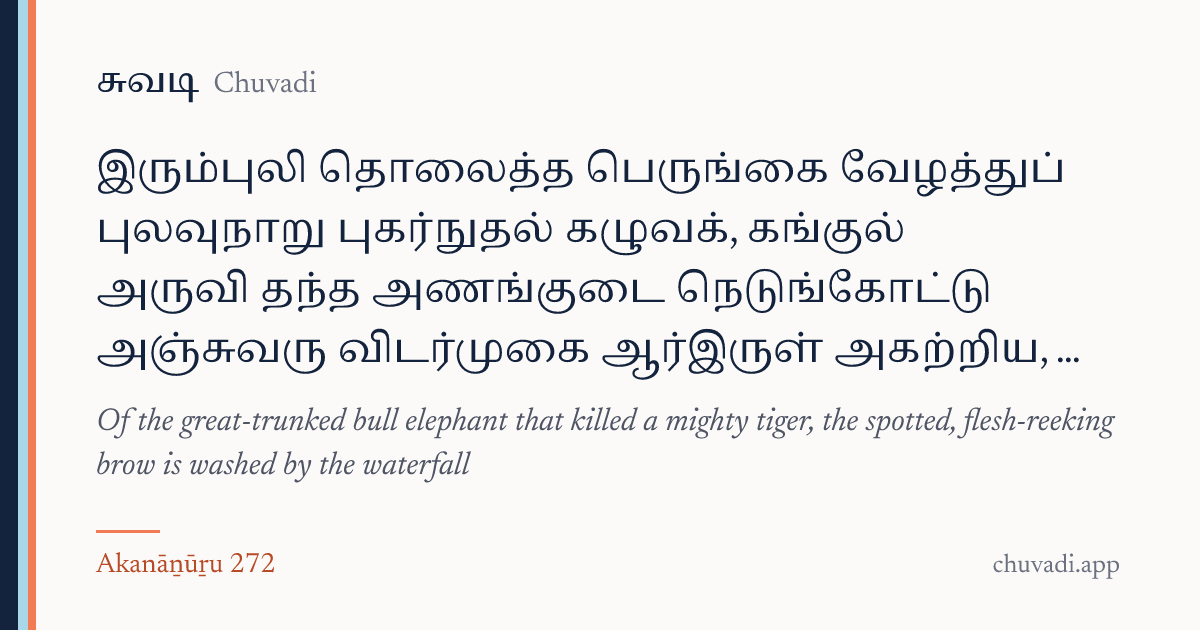

அகநானூறு 272
பாடல் · The poem
Tap a word to see where else it occurs.
பொருள் · Meaning in TamilAI
பெரிய புலியைக் கொன்ற நீண்ட துதிக்கையுடைய ஆண்யானையின் புலால் நாறும் புள்ளிகளையுடைய நெற்றியை, இரவு கொண்டுவந்த அருவி கழுவுகிறது. தெய்வம் உறையும் உயர்ந்த சிகரத்தில், அச்சம் தரும் மலைப்பிளவுகளின் குகைகளிலுள்ள அடர்ந்த இருளை, அவன் செல்லும் வழியை ஒளியூட்டும் மின்னல் போல் ஒளிரும் வேல் நீக்க, குளிர்காற்றின் வருத்தத்தைப் பொருட்படுத்தாமல் அவன் தனியாக வந்தான். நீர் விழும் பக்கத்தில் அரிய இடத்தில் அடர்ந்து வளர்ந்த குளவியோடு கலந்து கட்டிய கூதளங்கண்ணியின் மாறாத மணத்தை அசையும் காற்று கொண்டுவர, பெரும்பாறையை அடுத்த மிளகுக்கொடி படர்ந்த தோட்டத்திலுள்ள தாழ்ந்த இறப்புடைய குடிசையாகிய நம் வீட்டுக்கு அவன் உடல் பூரிக்கும் மகிழ்ச்சியோடு வருகிறான். அந்த நிலையைக் கண்டு, "இது முருகன்" என்று உணர்ந்து, வரவேற்புச் சொற்களைக் கூறி, அழகிய செந்தினையை நீரோடு தூவி, அன்னை நெடுவேளைப் போற்றுகிறாள். ஐயோ! பொன் போல மலர்ந்த வேங்கையின் அசையும் கிளைகள் பொலிய நீலமணி நிற மயில் அகவும் அழகிய மலைநாடனோடு நமக்கு அமைந்த தொடர்பு இனி என்ன ஆகுமோ?
குறிஞ்சித் திணை; தோழி தலைவிக்குக் கூறுவது; தலைவி கூற்றாகவும் கொள்ளலாம். தலைவனின் கண்ணி மணத்தையோ தலைவியின் மாற்றத்தையோ கண்டு அன்னை முருகன் வந்ததாக எண்ணி வழிபடுவது, களவு வெளிப்படும் நிலை நெருங்குவதைக் காட்டுகிறது. "மெய்ம்மலி உவகையன்" என்பது யாரைக் குறிக்கிறது என்பது உறுதியாகத் தெரியவில்லை.
ஆங்கிலம் · English translationAI
Translation
- Of the great-trunked bull elephant that killed a mighty tiger,
- the spotted, flesh-reeking brow is washed by the waterfall
- that night has brought; on the tall peak where a goddess dwells,
- the dense darkness of its fearsome cleft-caves dispelled
- by the lightning-bright spear that lights the path he goes,
- he came alone, not shrinking from the cold wind's lash;
- from his chaplet of kūtaḷam mixed with kuḷavi
- that grows thick in the hard place beside the falling water,
- the unwavering fragrance is carried by the moving wind
- into our house, the hut with low eaves
- in the pepper-vine garden by the boulder; he enters
- full of bodily joy; seeing that state,
- thinking "It is Murukaṉ", speaking words of welcome,
- scattering fine red millet with water,
- mother praises Neṭuvēḷ — alas!
- What will come of it, then — gold-like
- the flowering vēṅkai, its swaying boughs made lovely
- as the sapphire-coloured peacock cries —
- our bond with the man of that beautiful mountain country?
What the poem says
The heroine's friend speaks to the heroine, though the poem could equally be the heroine's own words to her friend. The hero comes to their hut by night, alone, through country where a waterfall washes the blood from the brow of an elephant that has killed a tiger, and where the darkness of fearsome caves near a goddess's peak is lit only by the gleam of his spear. He does not mind the cold wind.
His chaplet of kūtaḷam and kuḷavi flowers, gathered by the falling water, gives off a strong fragrance that the wind carries into the low-eaved hut in the pepper garden. Lines 11 and 12 say that "he enters full of bodily joy"; whether this means that the hero comes in or close, or the fragrance itself, is not entirely clear. What follows is the familiar comedy and danger of kuṟiñci: the mother notices "that state", perhaps the unexplained wild fragrance or the girl's own changed look, and decides that Murukaṉ has possessed the house. She welcomes the god, scatters red millet with water, and praises Neṭuvēḷ, another name of Murukaṉ.
"Alas!" says the speaker. The mother's mistaken worship shows how close the secret is to being found out, and the closing question asks what will become of the bond with the hill man. The final image of the peacock calling in the flowering vēṅkai, golden against its sapphire blue, belongs to the hero's land and to Murukaṉ, so that the god the mother praises and the lover she does not know about are quietly joined. This edition names no poet.