




அகநானூறு 273
பாடல் · The poem
Tap a word to see where else it occurs.
பொருள் · Meaning in TamilAI
வானத்தில் விசையோடு வீசி எறிந்த கூதளமாலை போல, பசிய கால்களையுடைய வெண்ணாரைகள் அகன்ற சிறகுகளை விரித்து வளைந்து பறந்து, ஆரவாரம் மிக்க வளமான வயல்களில் மலர்களோடு பரவுகின்றன. நிலம் தன் இளம் பசுமை நீங்கிய, புதிதாக வந்த முன்பனிக்காலம் இது. அழகைக் கவரும் பசலை என்னை வருத்தினாலும், நம் துன்பத்தை அவர் அறியாரோ? அறிந்தாலும், நம் மனத்தில் உள்ளது போன்ற மென்மை அவருக்கு இல்லாததால் நம் உலகத்தையே நினைக்கமாட்டாரோ? நான் அவருக்கு எப்படி உணர்த்துவேன்? எல்லையும் அளவும் அறியாமல் பெருகி வீசும் வாடைக்காற்றோடு முலைகளுக்கு இடையே தோன்றிய நோய் என்னும் இளமுளை, கலங்கும் நெஞ்சில் வருத்தம் என்னும் திரண்ட அடிமரமாக நீண்டு வளர்ந்து, ஊரார் எழுப்பிய அம்பல் என்னும் அழகிய கிளையோடு, தீராத காதல் என்னும் ஒளிரும் தளிர்களைப் பரப்பி, புலவர் புகழ்ந்த நாணமில்லாத அந்தப் பெருமரம் உலகெல்லாம் நிழல் பரப்பி, அலர் என்னும் அரும்புகள் மலரும் நிலையிலும் அவர் வரவில்லை!
பாலைத் திணை; முன்பனிப் பருவம் வந்தும் தலைவன் வாராததால் தலைவி தோழிக்குக் கூறுவது. காதல்நோயை நோய் முளையாகவும், வருத்தம் அடிமரமாகவும், அம்பல் கிளையாகவும், அலர் அரும்பாகவும் உருவகித்த பெருமரம் இப்பாடலின் சிறப்பு. மூன்றாம் அடியின் பொருள் சற்றுத் தெளிவில்லாதது.
ஆங்கிலம் · English translationAI
Translation
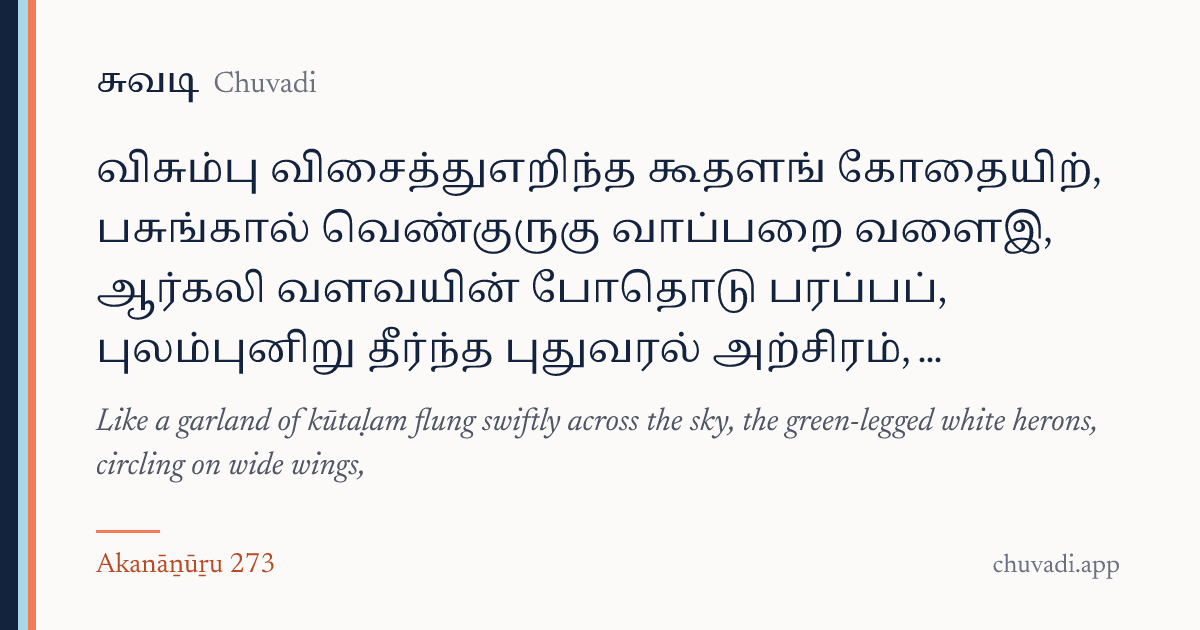
- Like a garland of kūtaḷam flung swiftly across the sky,
- the green-legged white herons, circling on wide wings,
- spread along with the flowers over the rich, loud-sounding fields;
- it is the new-come early dewy season, when the land has lost its fresh green;
- though the pallor that steals my beauty torments me, our grief
- does he not know? And even if he knows,
- since he lacks a softness like that of our heart,
- does he not think of our world at all?
- How shall I make him understand? — swelling up,
- with the onrushing north wind that knows no boundary or limit,
- its sprout of sickness, budding from between my breasts,
- its cluster of distress grown tall in my troubled heart,
- its lovely branch the whispering the townsfolk started,
- spreading bright tender leaves of love that is never sated,
- the great tree without shame that poets have praised
- casts its shade over all the earth,
- and even as its buds of gossip open, he has not come!
What the poem says
The heroine speaks, probably to her friend, in aṟciram, the early dewy season after the rains, when the fields have ripened and white herons fly in looping lines across the sky like a flung garland of kūtaḷam flowers. It is a season in which a man ought to come home, and he has not.
She asks two questions. Does he not know her suffering? And if he knows, does he not care, since his heart has none of the softness of hers? "How shall I make him understand?" leads into the poem's remarkable closing image: her love-sickness is a great tree growing in her. Its sprout appeared between her breasts, swollen by the cold north wind; its stem of anxiety grows tall in her troubled heart; its branches are the whispers of the townsfolk; its bright young leaves are her unsatisfied longing; and now its buds of open gossip (alar) are bursting into flower. The tree spreads its shade over the whole earth.
The image turns the vocabulary of gossip into botany: ampal (whispering) becomes a branch, and alar (open talk, literally "blossom") becomes the buds. The "shameless tree praised by poets" is love itself, which poets have always celebrated and which has no regard for modesty. The ending, "he has not come", is all the more bare after this elaborate figure. Line 3 is compressed and "rich, loud-sounding fields" is an approximate rendering. This edition names no poet.