



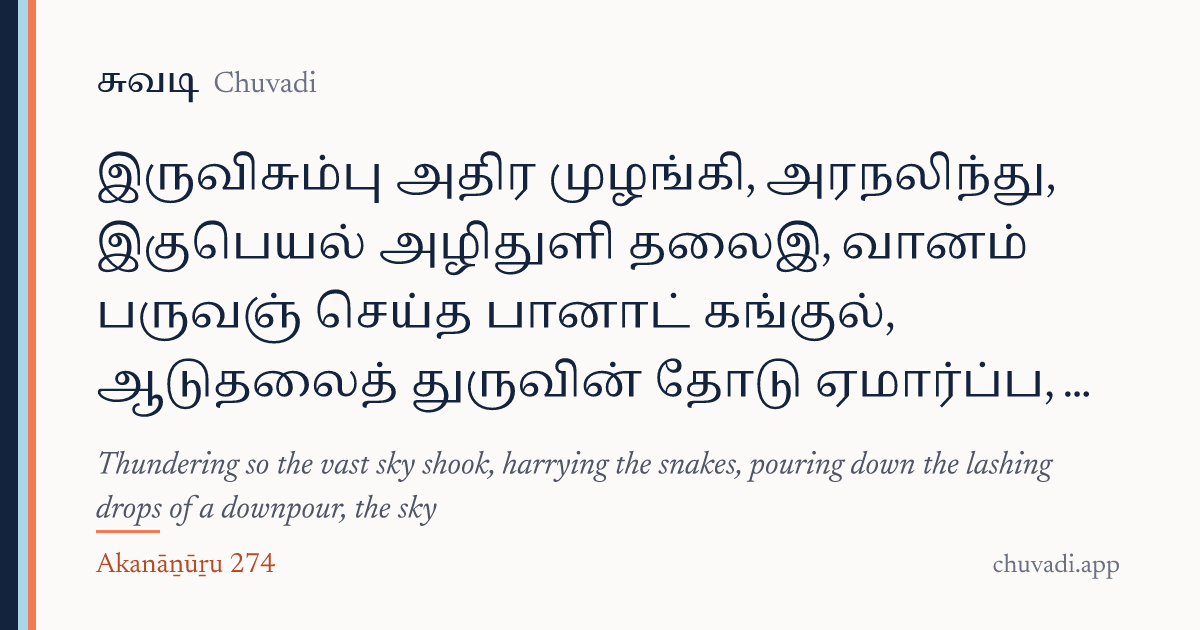

அகநானூறு 274
பாடல் · The poem
Tap a word to see where else it occurs.
பொருள் · Meaning in TamilAI
பெரிய வானம் அதிரும்படி இடிமுழக்கமிட்டு, பாம்புகளை வருத்தி, பொழியும் பெருமழையின் வீழும் துளிகளைப் பெய்து, வானம் தன் பருவத்தைச் செய்த நள்ளிரவில், அசையும் தலைகளையுடைய ஆட்டுக்கூட்டம் பாதுகாப்பாக உணர்ந்து கத்த, கடைகோலால் சிறிய தீயை மூட்டி அதை மூடிக் காத்து, வலிய கால்களையுடைய உறியும் பானையும் தோலும் உடையவனாய், நுண்ணிய நீர்த்துளிகள் உடம்பின் ஒருபக்கத்தை நனைக்க, கோலை ஊன்றித் தனியாக நிற்கும் இடையன், வாயை மடித்து எழுப்பும் சீழ்க்கையொலி தொலைவுவரை சென்று ஒலிக்க, துள்ளும் ஆட்டுக்குட்டிகளைக் கவரக் காத்திருக்கும் சிறிய நரி அஞ்சி, முள்ளுடைய சிறிய புதருக்குள் ஓடி ஒளியும் குளிர்ந்த மணமுள்ள முல்லைநிலத்தில் இருக்கிறது, நறுமணமுடைய முல்லைமலர் போன்ற கற்பையுடைய மென்மையான இயல்புடைய இளமங்கை வாழும் ஊர்!
முல்லைத் திணை; தலைவியின் ஊரைப் பற்றித் தலைவன் கூறுவதாகக் கொள்ளலாம். மழையிரவில் விழிப்போடு ஆடுகளைக் காக்கும் இடையன், கற்போடு காத்திருக்கும் தலைவியின் உறுதியை நினைவூட்டுகிறான். "அரநலிந்து", "ஏமார்ப்ப", "மடிவிடு வீளை" ஆகியவற்றின் பொருள் உறுதியாகத் தெரியவில்லை.
ஆங்கிலம் · English translationAI
Translation
- Thundering so the vast sky shook, harrying the snakes,
- pouring down the lashing drops of a downpour, the sky
- has made its season; in the midnight of the night,
- as his flock of sheep with tossing heads bleat, reassured,
- kindling a small fire with a fire-drill and shielding it,
- with his sturdy-legged sling, his pot and his hide,
- one side of him wet with fine, thick spray,
- leaning on his staff, standing alone, the shepherd
- lets go a lip-whistle that carries far and loud,
- and, frightened, the little jackal watching for the frisking lambs
- flees into the low thorny bush —
- it is in this cool, fragrant pastureland: fragrant-flowered
- as the mullai is her chastity,
- the soft young woman — the town where she lives!
What the poem says
A mullai poem of the rainy season, spoken in praise of the heroine's home; the speaker is probably the hero, returning, or perhaps simply describing the place he longs for. The sky thunders, the downpour falls in lashing drops, and at midnight the rains have truly "made their season". Thunder was thought to torment snakes, a common Sangam belief.
In the dark a shepherd stands alone, leaning on his staff. He carries his sling with its pot, a hide to cover himself, and keeps a small fire alive with a fire-drill. Fine rain soaks one side of him. When his sheep bleat, he lets out a piercing whistle, and a little jackal that has been eyeing the lambs runs off into a thorny bush. It is a plain, exact picture of pastoral life, with no great events, only watchfulness and care.
The final lines reveal that this is the countryside where she lives: a cool, fragrant pastureland, and a town where a gentle young woman dwells whose chastity (kaṟpu) is as fragrant as the mullai flower. Mullai is the flower of patient fidelity, and the vigilant shepherd guarding his flock through the stormy night mirrors the steady waiting wife. The phrase in line 1, "harrying the snakes", depends on reading ara as aravu, "snake"; line 4 and line 9 also contain words whose exact sense is not certain ("reassured", "lip-whistle"). This edition names no poet.