




அகநானூறு 275
பாடல் · The poem
Tap a word to see where else it occurs.
பொருள் · Meaning in TamilAI
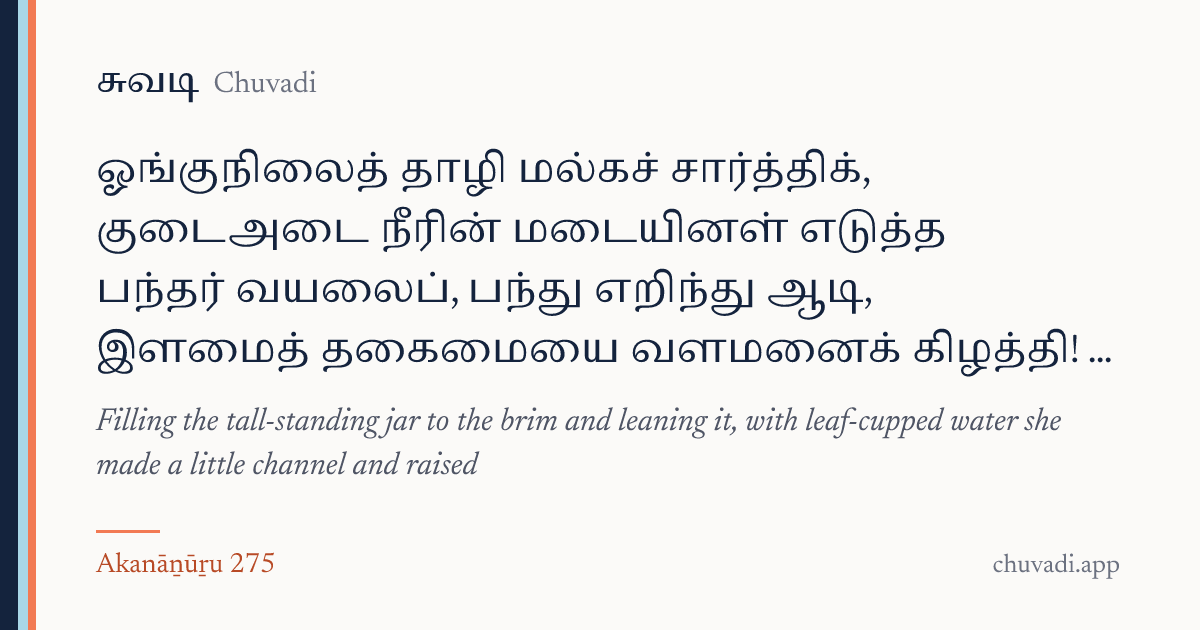
உயர்ந்து நிற்கும் தாழியை நீரால் நிறைத்துச் சாய்த்து, இலைக்குடையால் அள்ளிய நீரைக் கொண்டு சிறு வாய்க்கால் அமைத்துப் பந்தலில் படர்ந்த வயலைக்கொடியை வளர்த்தாள்; பந்தை எறிந்து விளையாடினாள்; இளமையின் அழகோடு வளமான வீட்டின் தலைவியைப் போலவே இருந்தாள்! "நீரைச் சிதறுகிறாய்; அது வெண்புழுதி ஆகட்டும்!" என்று நாம் அவளைக் கடிந்துகொண்டபோது, அவள் திருப்பிக் கடிந்து பேசாமல், தன் மழலை இனிய சொற்களால் நம் உயிரோடு கலக்கும்படி பேசினாள். அந்த நல்ல நெற்றியுடையவள், மிகுந்த உணவுடைய இந்த வீட்டில் நம்மோடு சேர்ந்து இருக்கவில்லை. அயலான் ஒருவனின் காதலை நம்பி, திரண்ட அடிமரமுடைய இருப்பையின் பொந்துகளிலுள்ள வெண்பூக்களைக் குட்டிகளோடு கூடிய கரடியின் பெருங்கூட்டம் கவர்ந்துண்ணும் வெப்பமான மலையின் கொடிய வழியில், நாம் இங்கே தனித்திருக்க, பெருநிலமே மூச்சுவிட்டுத் தவிக்கும் இன்னாத காட்டுக்குள் நேற்றுச் சென்றுவிட்டாள் மிகவும் கள்ளமற்ற என் சிறுமி. அவளுடைய மெல்லிய அகன்ற அல்குலுக்குத் தழையாடை தொடுக்கும் குட்டையான நொச்சியின் கீழே, என் மகள் சிவந்த பக்கங்களையுடைய தன் சிறுவிரல்களால் கோடிட்டு அமைத்த மணல்வீட்டை, கண் உள்ளவர்களே, நீங்கள் காண்கிறீர்களா?
பாலைத் திணை; உடன்போக்கில் மகள் சென்ற பின் தாய் வருந்திக் கூறுவது. அவள் விளையாடிய வயலையும், பந்தும், நொச்சியின் கீழ் அவள் கட்டிய மணல்வீடும் அவள் இன்னும் சிறுமியே என்பதை நினைவூட்டித் துயரை மிகுவிக்கின்றன. ஐந்தாம் அடியின் பொருள் உறுதியாகத் தெரியவில்லை.
ஆங்கிலம் · English translationAI
Translation
- Filling the tall-standing jar to the brim and leaning it,
- with leaf-cupped water she made a little channel and raised
- the vayalai of the arbour; she played at tossing the ball,
- in her youthful grace, the mistress of the rich house!
- "You splash the water about — let it turn to white dust!"
- when we scolded her so, she, in turn,
- with her sweet, lisping words, never scolding back,
- spoke words that mingled with our very life; she of the fine brow
- will not stay together with us here in this house of plentiful food;
- trusting the love of a stranger,
- where the dark herd of bears with cubs carries off
- the white flowers from the hollows of the thick-trunked iruppai,
- on the hot mountain's hard wasteland, leaving us here,
- into the cruel forest where the great earth gasps,
- she went away yesterday, my very innocent girl;
- for her slender, wide waist the leaf-skirt is gathered
- from the short nocci; beneath it, my daughter
- with her small fingers reddened at the sides drew
- a sand-house — do you see it, you who have eyes?
What the poem says
A mother speaks after her daughter has eloped; the edition gives no speaker, but "my daughter" and "this house" make it clear she is the girl's mother or foster-mother. She remembers the girl at play in the house: watering the vayalai creeper in the arbour from a big jar, guiding the water with leaf cups, tossing a ball, already behaving with the grace of a mistress of the household.
She recalls scolding her, and the girl's response: no answering back, only sweet, lisping words that went straight to her mother's heart. The scolding itself, in line 5, is obscure; it has been taken as a complaint about splashing water, but the words could be read in other ways. Now this girl has trusted the love of a stranger and gone, only yesterday, into the hot mountains and the cruel forest, where bears with their cubs strip the iruppai of its flowers and "the great earth gasps".
The ending is among the most moving in this group. Beneath the nocci shrub, whose leaves were gathered to make the girl's leaf-skirt, is the sand-house (vaṇṭal) she drew with her little fingers. "Do you see it, you who have eyes?" the mother asks, perhaps of neighbours or passers-by, or of no one. The child's toy that remains points to how young the girl still is, and how recently she was a child at home. This edition names no poet.