



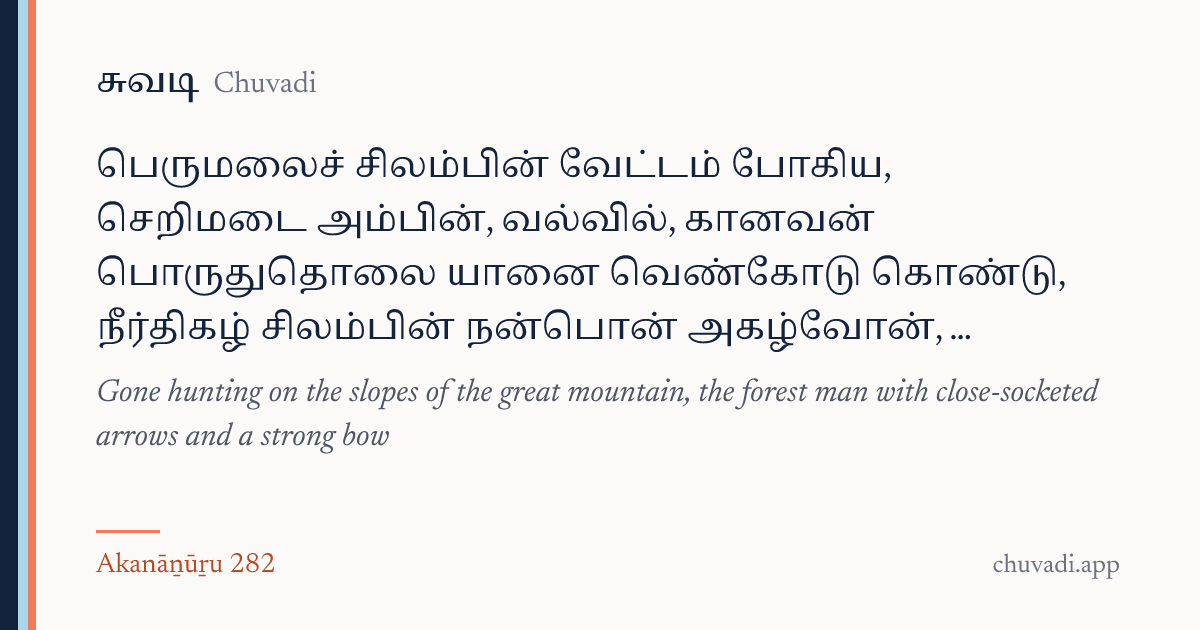

அகநானூறு 282
பாடல் · The poem
Tap a word to see where else it occurs.
பொருள் · Meaning in TamilAI
பெரிய மலைச்சாரலில் வேட்டைக்குச் சென்ற, இறுக்கமாகப் பொருத்திய அம்பும் வலிய வில்லும் உடைய கானவன், போரிட்டு வீழ்ந்த யானையின் வெண்மையான தந்தங்களை எடுத்துக்கொண்டு, நீர் ஒளிரும் சாரலில் நல்ல பொன்னை அகழ்ந்து, கண்ணைக் கூசும்படி மின்னும் உறுதியான மணிகளைக் கிளறி எடுத்து, கூரிய நுனியுடைய வெண்தந்தங்கள் ஒடிந்தபோது சிதறிய, தெளிந்த நீரின் ஆலங்கட்டி போன்ற முத்துக்களோடு மூன்று வகைச் செல்வங்களையும் ஒன்றாகச் சேர்த்து, சந்தனமரத்தையே காவுதடியாகக் கொண்டு, நறைக்கொடி நாரால் கட்டிய வேங்கைப்பூ மாலையை அணிந்து இறங்கி வருகிறான். அத்தகைய நாட்டுக்குரியவனுக்கு, இனிய பலாப்பழங்களின் அழகிய செல்வம் உடைய நம் தந்தையும் உன்னைக் கொடுக்க உடன்பட்டான். பழிச்சொல் பேசிய ஊரும் இப்போது உன்னை அவனோடு சேர்த்துப் பேசுகிறது. சரிந்த மூட்டுகளுடன் திரண்ட உன் தோள்களைப் பாராட்டி அன்னையும் «அவனே தக்கவன்» என்கிறாள். நாமும் «மணநாள் விரைவில் வருக» என்று, அழகிய மூட்டுகளுடைய மெல்லிய விரல்களைக் கூப்பி, வீட்டில் உறையும் தெய்வத்துக்குப் பலி செலுத்துவோம்.
இது குறிஞ்சித் திணை; மணம் உறுதியான செய்தியைத் தோழி தலைவியிடம் கூறியது. ஒரே வேட்டுவன் தந்தம், பொன், முத்து என மூன்று செல்வங்களையும் பெறும் நாடு என்பது தலைவனின் நாட்டு வளத்தைப் புகழ்கிறது. யானைத் தந்தத்தில் முத்து பிறக்கும் என்பது பாடல் கொள்ளும் நம்பிக்கை.
ஆங்கிலம் · English translationAI
Translation
- Gone hunting on the slopes of the great mountain,
- the forest man with close-socketed arrows and a strong bow
- takes the white tusks of an elephant that fought and fell,
- digs fine gold on the slopes where water gleams,
- turns up hard gems that flash and strike the eye,
- and with pearls that spilled when the sharp-tipped white tusks broke,
- like hailstones of clear water,
- he gathers all three kinds of treasure together,
- with sandalwood for his carrying pole, and a garland of vēṅkai
- tied with naṟai fibre, he comes down: to the man of that country,
- in the lovely wealth of his sweet, sweet jackfruit,
- our father too has agreed to give you. The gossiping,
- slandering town now names you along with him;
- praising your rounded shoulders with their sloping joints,
- mother too says, 'He is the one'; and we too,
- saying, 'Let the day fixed for the wedding come soon,'
- folding our soft fingers with their fine joints,
- offer worship to the god who dwells in the house!
What the poem says
The heroine's friend speaks to the heroine with good news: the family has agreed to the marriage. This edition names no speaker, but the praise of 'your' shoulders and the 'we' who pray point to the friend.
Most of the poem describes the hero's country through one of its hunters. Going out with bow and arrows, he takes the tusks of an elephant killed in a fight, digs up gold and gems on the wet slopes, and collects pearls that fell from the broken tusks like hailstones. With all three treasures slung on a pole of sandalwood and a vēṅkai garland on his head, he comes down the hill. The picture of a land so rich that a single hunter gathers ivory, gold and pearls at once is a compliment to the hero, and the vēṅkai, whose flowering marks the season of weddings in kuṟiñci, quietly hints at the outcome. That pearls come from elephant tusks is a belief the poem takes for granted.
Now the father has consented, the town that once spread slander links her name with the hero's in a different spirit, and the mother approves. The friend and the heroine pray to the household god that the wedding day come quickly. This is the happy close of a kuṟiñci courtship, and the label fits well.