



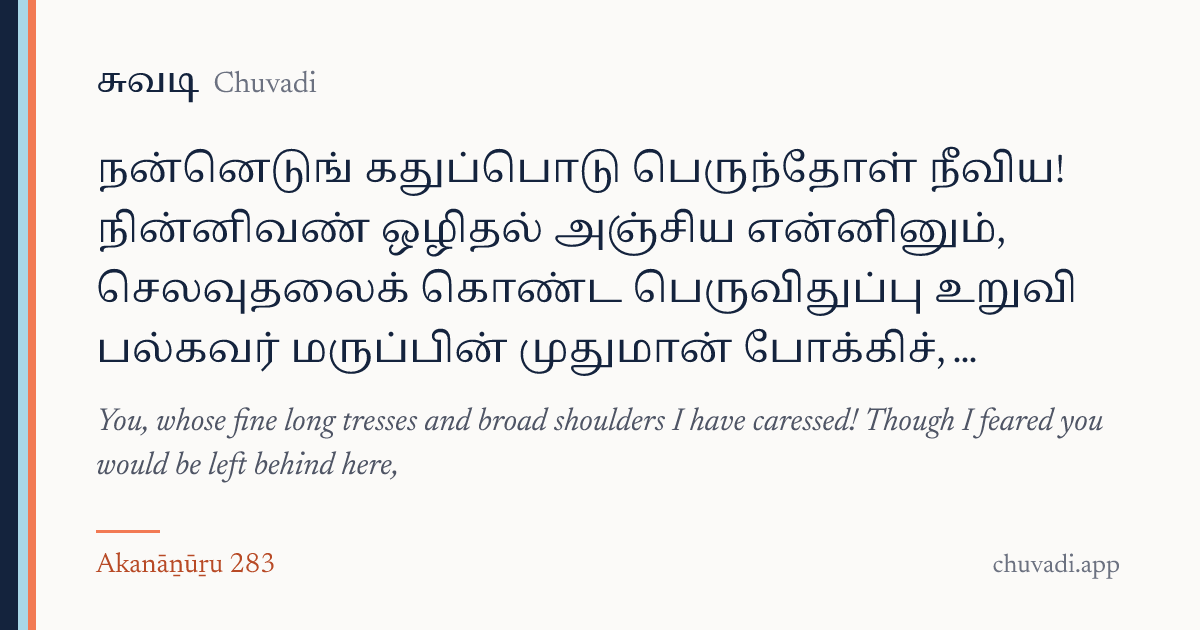

அகநானூறு 283
பாடல் · The poem
Tap a word to see where else it occurs.
பொருள் · Meaning in TamilAI
நல்ல நீண்ட கூந்தலையும் பெரிய தோள்களையும் நான் தடவிக்கொடுத்த பெண்ணே! நீ இங்கே தனியாக இருந்துவிடுவாயோ என்று அஞ்சினேன்; ஆயினும் பயணத்தில் பெரும் விருப்பம் கொண்டவன் நான். பல கிளைகள் உடைய கொம்புகளுள்ள முதிய கலைமானை விரட்டி, சிறு உணவையே தரும் சிற்றூர்ப் பெண்கள் திரியும் இடங்களில், தொலைவான நிலத்தில் குடிஞைப் பறவை கூவும்; அதன் வருத்தமான மெல்லிய குரல் மெதுவாக வந்து ஒலிக்கும் போதெல்லாம் வழிப்போக்கர் வருந்துவர்; அவ்வழிகள் செல்வதற்கு அரியவை என்று நீ சொல்ல வேண்டாம். கருகிய மரங்கள் கணுக்களில் இளந்தளிர் விட்டு அடிமுதல் அழகு பெற்றன. வானம் முழுவதும் இருண்டு வெப்பம் நீங்கியது. பசுமையான முகில்கள் மழையைப் பொழிந்தன. புல் குருத்து எழுப்பிய நல்ல நீண்ட காட்டில், சாயம் ஊட்டிய பஞ்சின் துகள்கள் சிதறியது போலச் செம்மூதாய்ப் பூச்சிகள் குளிர்ந்த நிலத்தில் கோலம் இடுகின்றன. கொடுமை நீங்கி, உன்னோடு நான் செல்வதற்கு அவ்வழிகள் தணிந்து இனியவை ஆகுக!
இது பாலைத் திணை; தலைவன் தலைவியைத் தன்னோடு அழைத்துச் செல்ல நினைத்துக் கூறியதாகக் கொள்ளலாம். மழைக்குப் பின் தளிர்க்கும் மரமும் செம்மூதாயும் வறண்ட பாலைநிலம் இனிமையாக மாறியதைக் காட்டுகின்றன. «தெவுட்டும்», «இன்னா நீப்பின்» ஆகிய சொற்களின் பொருள் உறுதியாகத் தெரியவில்லை.
ஆங்கிலம் · English translationAI
Translation
- You, whose fine long tresses and broad shoulders I have caressed!
- Though I feared you would be left behind here,
- I, seized by a great eagerness to set out —
- so that you need not say, 'Where the old stag with many-branched antlers
- is driven off, and women of the small village who give little food
- wander about, the kuṭiñai owl of the far country hoots,
- and whenever its sad, soft call comes faintly and sounds,
- travellers grieve: the roads are hard
- to go' — see: the charred trees
- have grown lovely from root up, young shoots bursting from their nodes,
- the sky has darkened all over, the heat is gone,
- the green-eyed clouds have poured down showers,
- and in the fine long forest where grass has lifted its spikes,
- as if fluff of dyed cotton were scattered,
- bright velvet mites streak the cool earth:
- may the roads be sweet now, cooled,
- for my going with you, their harshness gone!
What the poem says
The hero speaks to the heroine. He had meant to travel and feared she would be left behind, but now he proposes to take her with him. This edition names no speaker; the voice is inferred from the opening address and the closing 'going with you'.
He anticipates her fear. The wilderness, she might say, is a place where the old stag is chased away, where the village women have little food to offer, and where the owl's soft sad call makes travellers lonely. Against this he sets the change brought by rain: burnt trees put out fresh shoots, the sky darkens, heat leaves, grass springs up, and red velvet mites dot the ground like scattered tufts of dyed cotton. The harsh pālai has turned gentle, fit for two to cross together.
The red velvet mite (mūtāy) appearing after the first rains is a familiar Sangam sign of the wet season. The kuṭiñai is an owl, a bird of desolate places. Lines 4–7 are compressed; who drives off the old stag is not stated, and teuṭṭum in line 6 is taken loosely as 'hoots' or 'calls in a crowd'. Iṉṉā nīppiṉ in the last line is read as 'with the harshness removed'; it could also be 'if we leave hardship behind'. The poem has the outward setting of pālai but the mood of an elopement proposal.