




அகநானூறு 290
பாடல் · The poem
Tap a word to see where else it occurs.
பொருள் · Meaning in TamilAI
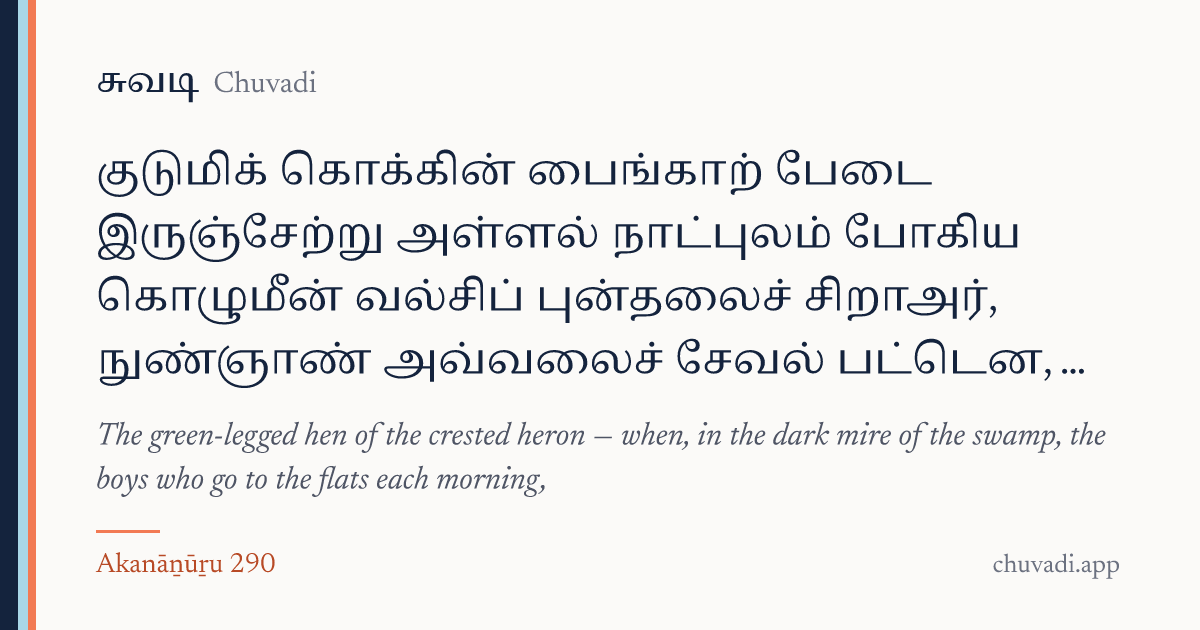
கொண்டையுடைய கொக்கின் பசுமையான கால்களையுடைய பெண்பறவை, கரிய சேறு நிறைந்த சதுப்பில் காலைதோறும் செல்லும், கொழுத்த மீனை உணவாகக் கொள்ளும், பரட்டைத் தலையுடைய சிறுவர்களின் நுண்ணிய நூலால் ஆன அழகிய வலையில் தன் ஆண்பறவை அகப்பட்டதால், இருப்பிடம் சேரும் பொழுதில் மென்மையான இரையையும் உண்ணாமல், வருந்தும் தன் குஞ்சைத் தழுவிக்கொண்டு, அழகிய நடுப்பகுதியுடைய பனைமரத்தில் இருந்து திடீரென அன்போடு கதறுகிறது. அத்தகைய, சிறிய பல பழங்குடிகளையுடைய பெருங்கடற்கரைத் தலைவன், உப்பங்கழியை அடுத்த, புன்னைப்பூக்கள் உதிர்ந்த கடற்கரைச் சோலைக்கு, மாறாத நெஞ்சத்தோடு தனியாக வந்தான். அவன் நம்மை மணப்பதற்கு முன்பே, தோழி, இது என்ன? வெண்மையான தந்தமுடைய யானைகளும் வெற்றிப்போரும் உடைய குட்டுவனின், தெற்கே அலை பரந்த தொண்டித் துறையின் முன்னே, வண்டுகள் உண்ணும்படி மலர்ந்த பெரிய குளிர்ந்த நெய்தல் மலரைப் போன்ற, நீலமணி போன்ற என் கண்களின் சிறந்த அழகு நீங்கி, அவை பொன்னிறம் கொண்டுவிட்டனவே!
இது நெய்தல் திணை; களவுக்காலத்தில் தலைவி தோழியிடம் கூறியது. வலையில் சிக்கிய துணைக்காகக் குஞ்சோடு கதறும் பெண்கொக்கு, பிரிவை அஞ்சும் தலைவியின் நிலையைக் காட்டும் இறைச்சி. குட்டுவன், தொண்டி என்ற பெயர்களைப் பாடல் உவமைக்காகவே சுட்டுகிறது; கண் பொன்னிறம் கொள்வது பசலையைக் குறிக்கும்.
ஆங்கிலம் · English translationAI
Translation
- The green-legged hen of the crested heron —
- when, in the dark mire of the swamp, the boys who go to the flats each morning,
- the rough-haired boys who feed on fat fish,
- have caught her mate in their lovely net of fine cord —
- at the hour of roosting will not eat the soft prey,
- but, clasping her sorrowing chick, all at once
- cries out with love from the lovely-hearted palmyra:
- the man of the great sea-shore, with its many small, ancient settlements,
- to the grove by the backwater, where the punnai's flowers fall spent,
- came alone, with a heart that never wavered; and even before he
- has made us his, why is it, friend,
- that like the great, cool neytal of Kuṭṭuvaṉ,
- he of white-tusked elephants and mighty battles, in the southern-waved expanse
- before the harbour of Toṇṭi, opened for bees to feed on,
- they have shed their fine beauty, bright as sapphire,
- and taken on the colour of gold — my eyes?
What the poem says
The heroine speaks to her friend; this edition names no speaker, but 'my eyes' and the address 'friend' make the voice clear. The hero of the shore has been coming to meet her secretly in the punnai grove, and though he has not yet married her, she already shows the pallor of lovesickness: her eyes, once dark and lovely as a neytal flower, have turned a golden yellow.
The opening scene is the iṟaicci of the poem. Fisher boys have caught a male heron in their net. At nightfall his mate will not eat; she clasps their chick and cries out from a palmyra. The image of a bird left alone, grieving for a partner taken from her, carries the heroine's fear of losing the hero and of a separation she is already suffering.
The comparison in lines 12–16 names Kuṭṭuvaṉ, a king with white-tusked elephants and famous victories, and Toṇṭi, a harbour on the western sea where cool neytal flowers bloom and bees feed. Kuṭṭuvaṉ is a name borne by Cēra rulers and Toṇṭi is known as a Cēra port; the poem itself gives no more than the names and the flowers.
The question 'even before he has made us his' expresses the unfairness she feels: the marks of separation have come before union has been made secure. The neytal label fits.