



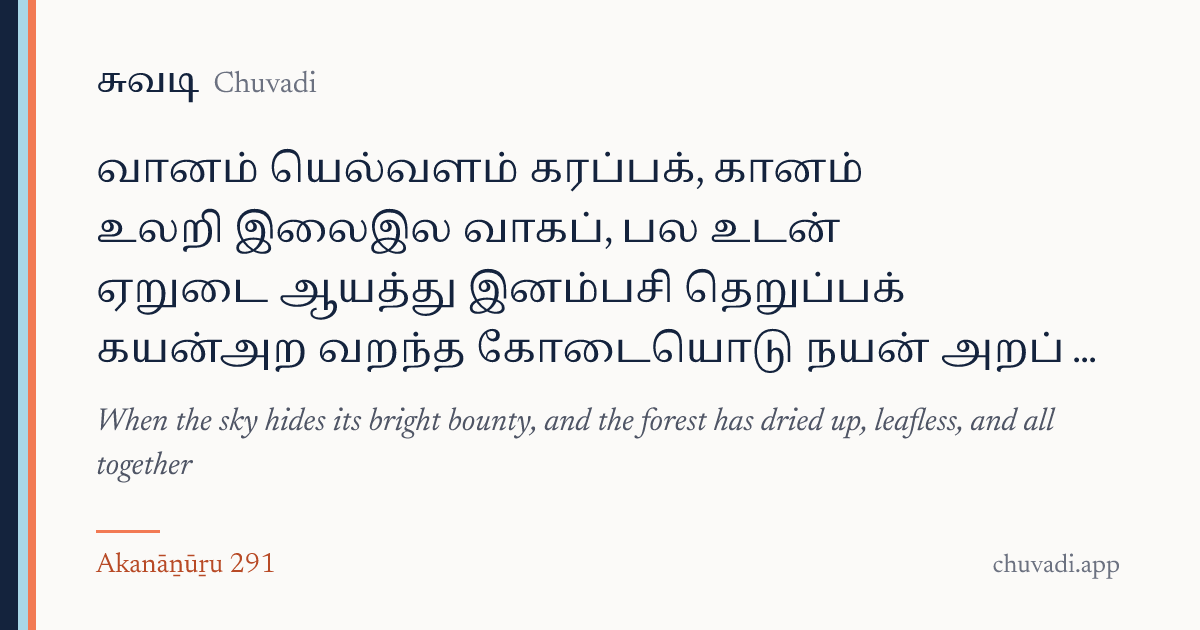

அகநானூறு 291
பாடல் · The poem
Tap a word to see where else it occurs.
பொருள் · Meaning in TamilAI
வானம் தன் ஒளிமிக்க வளமாகிய மழையை மறைத்துக்கொண்டது; காடு காய்ந்து இலையற்றுப் போனது; காளைகளோடு கூடிய ஆநிரைகள் எல்லாம் பசியால் வாடின; குளங்களை முற்றிலும் வறளச்செய்த கோடைக்காலம் இனிமையே இல்லாமல் இருந்தது. பெரிய மலை உயர்ந்த பக்கத்தில், வளைந்த வரிகளுடைய புலியோடு போரிட்டுச் சினத்தால் சிவந்து, தன் வலிமையோடு பெரிய களிறு ஒதுங்கிய இடத்தில், பருமனான பரற்கற்கள் சிறிய பல மின்மினிப்பூச்சிகளைப் போல எங்கும் நிறைந்து மின்னும் முடிவில்லாத நீண்ட வழி அது. பருந்தின் கரிய இறகு பொருத்திய, விரிந்த பூங்கொத்தின் தாதை உண்ணும் வண்டின் இசை போல ஒலித்துக்கொண்டு விரைந்து பாயும் அம்புகளை உடையவர்களும், அஞ்சத்தக்க தழை சூடிய தலையுடையவர்களும் ஆகிய ஆறலைப்போர் கவர்வழிகளில் ஆரவாரித்து அரிய பொருள்களைப் பறித்துக்கொள்வதால், வணிகக்கூட்டம் சிறிதும் செல்லாத, தொலைவான சிகரங்களுடைய வழி அது. சிறிய இலையுடைய நெல்லியின் இனிய சுவையுள்ள திரண்ட காய்கள் உதிர்ந்து பரவிய பாலைநிலத்தில், ஓய்வின்றி, புள்ளிகளுடைய அழகிய பெண்மானுக்கு ஊட்ட எண்ணி, ஒடிந்த கொம்பை உதிர்த்த தலையுடைய கலைமான், தோல் மூடிய இளங்கொம்பு அதிரக் கூவும். வெயில் சுட்டு வருந்தச் செய்யும் அந்த அரிய சுரத்தைக் கடந்த பின், அங்கே நீ நினைத்துவிட்டாயே, நெஞ்சே, நீ வாழ்க! அரும்பு போல நிலமெங்கும் மணக்கும் மணமுடைய கரிய அடர்ந்த கூந்தலும், நல்ல அழகும், குளிர்ந்த கண்களும் உடைய நம் காதலியின் மென்மையான மூட்டுகளுடைய மூங்கில் போன்ற தோள்களில் ஒளிரும் சிறந்த அழகை!
இது பாலைத் திணை; பொருள்வயின் பிரிந்த தலைவன் சுரத்தைக் கடந்தபின் தன் நெஞ்சிடம் கூறியது. பெண்மானுக்கு உணவூட்ட நினைக்கும் கலைமான், அவனுக்குத் தன் காதலியை நினைவூட்டுகிறது. முதல் அடியில் அச்சான «யெல்வளம்» என்பதை «எல்வளம்» என்று கொண்டுள்ளோம்.
ஆங்கிலம் · English translationAI
Translation
- When the sky hides its bright bounty, and the forest
- has dried up, leafless, and all together
- the herds with their bulls are seared by hunger,
- with the summer that has parched the pools to nothing, joylessly,
- on the flank where the great mountain rises, where, having fought
- the curve-striped tiger, red with rage, with all its strength
- the mighty bull elephant has drawn aside — on that flank coarse pebbles,
- like many small fireflies, everywhere
- crowd and glitter along the endless long way;
- fitted with the dark feathers of the vulture, like the humming
- of bees that drink the pollen of spreading clusters,
- their arrows breathe as they speed; terrifying,
- their heads crowned with leaves, at the forking paths
- they shout, and seize rare wealth all at once, so that not at all
- do caravans pass on that path of far-off peaks;
- the sweet, plump fruits of the small-leaved nelli
- fall and spread over the wasteland; without rest,
- thinking to feed his lovely spotted doe,
- the stag, whose head has dropped its broken antler,
- calls, so that the young new horn in its sheath of skin quivers:
- having crossed that hard waste scorched by the sun, there
- you have remembered — long may you live, my heart! — like a flower bud
- filling the land with fragrance, her many dark tresses,
- her fine beauty, her rain-cool eyes, our beloved,
- and the shining loveliness of her soft-jointed, bamboo-like shoulders!
What the poem says
The hero speaks to his own heart; this edition names no speaker, but the closing address 'long may you live, my heart' and 'our beloved' make the situation plain. He has set out on a journey for wealth and has crossed a terrible stretch of wasteland, and only now, on the far side, his heart turns back to the heroine.
The poem is one long sentence building the road. The rains have failed; the forest is leafless; cattle starve; the pools are dry. An elephant has fought a tiger and withdrawn on the mountainside, and the coarse gravel glitters like fireflies. Bands of men with leaf-crowned heads and arrows fletched with vulture feathers, which hum in flight like bees, shout at the crossroads and seize travellers' goods, so that no caravan dares take the path. The robbers are not named; the subject of lines 12–15 is understood from the description.
Within this harsh scene the stag with a new, skin-covered horn calls out, wanting to feed his doe on the fallen nelli fruits. Like many pālai animals that care for a mate, he brings the absent beloved to mind. The heart, having remembered her fragrant hair, cool eyes and graceful shoulders, may be tempted to turn back; the poem stops at the memory.
Line 1 prints yelvaḷam; the reading taken is el-vaḷam, 'bright bounty', that is, rain. Atira in line 20 is read as 'so that it quivers'; the exact sense is uncertain.