



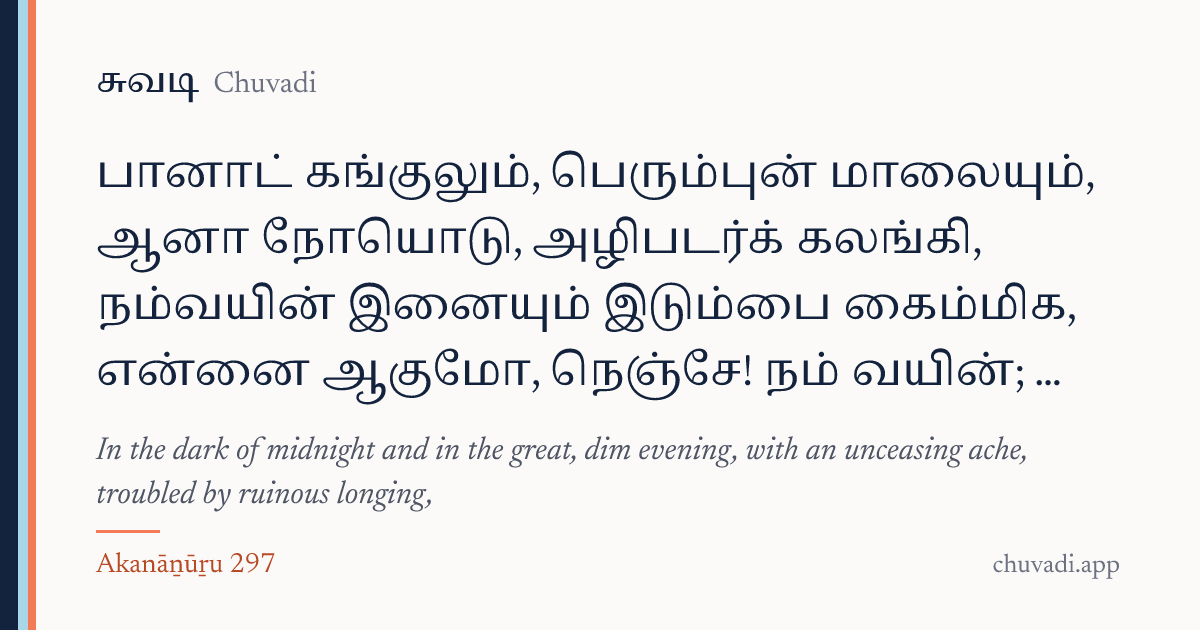

அகநானூறு 297
பாடல் · The poem
Tap a word to see where else it occurs.
பொருள் · Meaning in TamilAI
நள்ளிரவு இருளிலும், ஒளிமங்கிய பெரிய மாலைப்பொழுதிலும், தீராத நோயோடு, அழிக்கும் துயரத்தால் கலங்கி, நம்மை நினைத்து அவள் வருந்தும் துன்பம் எல்லை மீறுகிறது. நெஞ்சே! நம்மால் அவளுக்கு என்ன ஆகுமோ? அழகில்லாத பெரிய முரட்டுத் தாடியுடைய கொடிய கண்ணுடைய வீரர்கள் அம்பால் மாண்டதால் நட்ட, பக்கங்கள் தேய்ந்த, அச்சம் தரும் பழைய நடுகல்லில், அவர்களுடைய பெயரும் புகழும் பரவும்படி பொறித்த எழுத்துக்கள் தோன்றும். வழிச்செல்லும் வழிப்போக்கர் களைப்போடு அவற்றை முழுமையாகப் படிக்க முடியாமல் விட்டுவிட்டுக் கடந்துபோவர். அடிமரத்தில் அச்சம் தரும் தெய்வம் உறையும் ஓமைமரக் காட்டில், நீர்முள் வேலியிட்ட, புலால் நாறும் முற்றத்தில், ஓவியம் போன்ற வரிகளுடைய காட்டுப்பூனையின் பூளைப்பூப் போன்ற பொங்கிய மயிருடைய குட்டி, நிலவைச் சூழும் விண்மீன் போலத் தாயின் பின்னே செல்லும். சிற்றூர் வீரர்கள் ஆநிரை கவரச் செல்லும்போது முழக்கும் தண்ணுமைக்கு, ஆண்பருந்து தன் கரிய சிறகுகளை அசைக்கும். அத்தகைய அஞ்சத்தக்க காட்டுக்கு, «நும்மோடு வருவேன்» என்று சொன்னவளின் மகிழ்ச்சியான அப்பாவிப் பார்வை!
இது பாலைத் திணை; பிரியும் தலைவன் தன் நெஞ்சிடம் கூறியது. உடன்வர விரும்பிய தலைவியை அழைத்துச் செல்ல முடியாத கொடிய காட்டை விரிவாகக் காட்டுகிறான். நடுகல்லில் பெயர் எழுதப்பட்டிருந்தது என்பதைப் பாடலே சொல்கிறது. தாயைப் பின்தொடரும் பூனைக்குட்டி இளம் தலைவியை நினைவூட்டலாம். «நீர்முள்» எந்தச் செடி என்பது உறுதியாகத் தெரியவில்லை.
ஆங்கிலம் · English translationAI
Translation
- In the dark of midnight and in the great, dim evening,
- with an unceasing ache, troubled by ruinous longing,
- her grief for us grows beyond all bounds:
- what will come of it, heart, because of us? —
- where, after the fierce-eyed warriors with great, coarse beards
- that lack all grace have died by arrows,
- the old, dread hero-stone, worn thin at its sides,
- shows letters carved so that their names and deeds may spread,
- but, unable to read them through, weary,
- the travellers on the road leave them and pass by;
- in the forest of ōmai trees, where a demon dwells at the root,
- in front yards hedged with water-thorn, reeking of flesh,
- the wild cat, its stripes as if painted, has a kitten
- with fur fluffed out like pūḷai flowers,
- that follows its mother as the stars ring the moon;
- at the drum of the small hamlet's warriors setting out to raid cattle,
- the male vulture shifts its dark wings —
- that fearful forest! 'With us
- I will come,' she said, with her glad, innocent look!
What the poem says
The hero speaks to his own heart; this edition names no speaker. He has left, or is about to leave, on a journey through wild country, and the heroine had begged to come along. He imagines her grieving through the midnight hours and the long evening, and asks what will become of her because of him. The last lines bring back her eager look as she said 'I will come', set against the terror of the forest she would have had to cross.
The forest is described in some of the most concrete detail in Sangam poetry. There is an old hero-stone raised for bearded warriors killed by arrows, with their names and deeds carved on it; but the letters have worn and tired travellers pass without reading them. That a naṭukal bore an inscription is said by the poem itself. Ōmai trees are believed to harbour a cūr, a frightening spirit. Hamlets with thorn hedges smell of meat; a wild cat leads her fluffy kitten, which follows her 'as stars ring the moon'; the drums of village warriors setting out on a cattle raid make the vulture stir its wings in expectation.
The kitten trailing its mother, a tender image within the harshness, may recall the dependent young heroine whom he could not bring.
Nīrmuḷ in line 12 is a thorny plant used for hedges; its exact identity is uncertain. Whether the hero has already set out or is only deciding not to take her is not fully clear. The pālai label fits.