




அகநானூறு 298
பாடல் · The poem
Tap a word to see where else it occurs.
பொருள் · Meaning in TamilAI
பயன் தரும் செல்வமும் பல கதிர்களும் உடைய ஞாயிறு, ஒளிமிக்க பகல்வேலைகளைக் கொண்டுவருவதற்காக வலப்பக்கமாக எழுந்து விளங்கி, நிறைந்த கடலிலிருந்து தோன்றுவது போல, வளமான மலைச்சாரலில், மணிபோன்ற மாலைப்பொழுதில், மலர்ந்த வேங்கையின் ஒளிமிக்க தளிர்கள் ஒலிக்கும் பெரிய கிளைகளில் ஒளிர, குளிர்ந்த துளிகளோடு அசையும் காற்று அவற்றைத் தடவும் நாட்டை உடையவனே! கொன்றும் சினம் தணியாமல், வென்றும் பகை குறையாமல், பெரிய பிடிகளின் கூட்டத்தோடு சேராமல், பெருமழையால் பெருகிய மதத்தால் செருக்குற்ற வளமலையின் கரிய களிறு உலவும் பெரிய காட்டுவழியில், அடர்ந்த இருளைப் பிளக்க வெண்மையான வேலை ஏந்தி, பூமாலையில் ஊதும் வண்டுகள் தங்க, மெல்லிய மொட்டுகள் மலரும் நள்ளிரவில் நீ இங்கே வருவதைவிட இது இனிது. தெளிக்கும் கள்ளை உண்ணத் துணை தேடும் எம் தந்தையின் காவலுடைய அகன்ற வீட்டைக் காத்து அன்னை வாழ்கிறாள். அவள் அறிந்துவிடுவாளோ என்று அஞ்சி, நள்ளிரவில் காவல் கொண்ட நெஞ்சோடு காதலைப் பற்றி நான் பேசமாட்டேன். ஆயினும் உன் கொடுமையை நான் சொன்னபோது அவள் அதை எண்ணி வருந்த, «வருந்தாதே தோழி, நீ வாழ்க! நம்மைப் பிரிந்தவர் நீட்டிக்காமல் விரைவில் வருவார்» என்றேன். இரவில் என் துன்பத்துக்குத் துணையாகித் துயிலாமல் இருப்பவள் அதைக் கேட்டு மகிழ்ந்தாள்!
இது குறிஞ்சித் திணை; இரவில் வரும் தலைவனிடம் தோழி கூறியதாகக் கொள்ளலாம். மதம் கொண்ட தனிக்களிறு உலவும் இருள்வழியைச் சுட்டி, இரவுக்குறியை விட்டு விரைவில் மணம் செய்யத் தூண்டுகிறாள். பிற்பகுதியின் தொடரமைப்பு சிக்கலானது; «தூவல் கள்» என்பதன் பொருள் உறுதியாகத் தெரியவில்லை.
ஆங்கிலம் · English translationAI
Translation
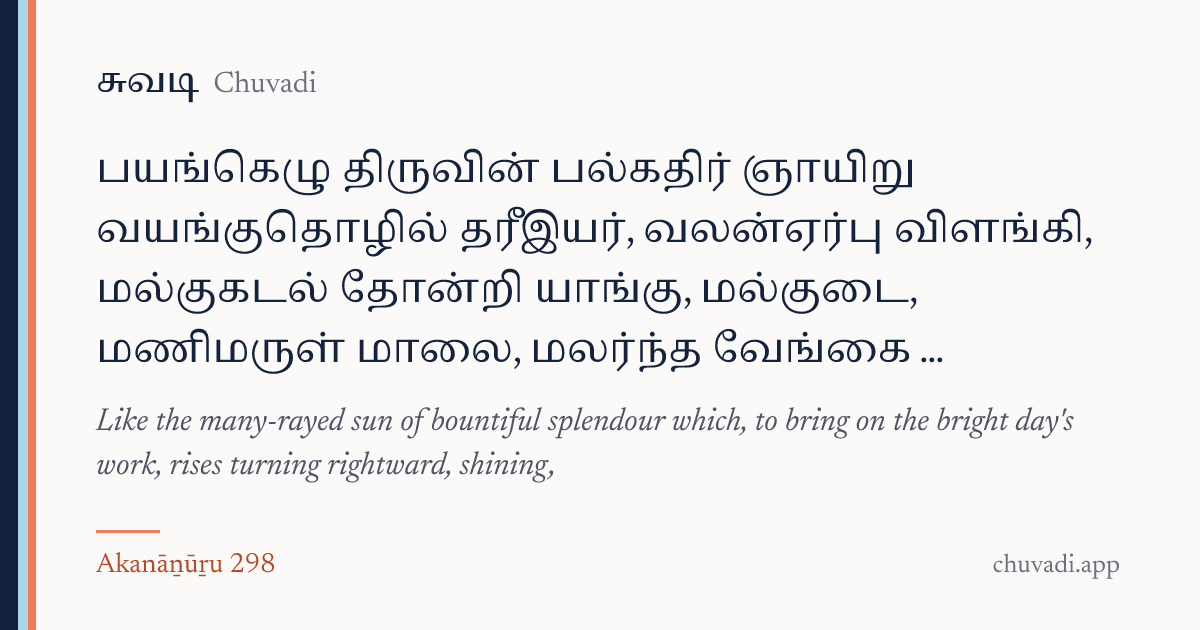
- Like the many-rayed sun of bountiful splendour
- which, to bring on the bright day's work, rises turning rightward, shining,
- and appears out of the brimming sea, on the rich ridge,
- in the evening lovely as gems, the flowering vēṅkai's
- bright young leaves glow on its great, rustling boughs,
- and the swaying wind, laden with cool drops, strokes them — man of that country!
- His rage not cooled by killing, his hostility not wilting with victory,
- not mingling with the herd of great cow elephants,
- swollen with musth from the heavy rains, the dark bull of the rich mountain
- roams the paths of the great forest; there,
- holding a white spear to cut through the thick darkness,
- with humming bees settled on your flowered garland,
- at midnight, when the soft-bound buds open — rather than your
- coming here, this is sweeter to us:
- our father, who seeks companions to drink the sprinkled toddy, has a
- wide and guarded house, and mother dwells in it, watching over it;
- fearing she might come to know, at midnight
- with a guarded heart I would not speak of love;
- but when I spoke of your cruelty, as she brooded there,
- 'Do not grieve; long may you live, friend! He who has left us
- will not delay; he will come, and soon,' I said;
- and she who has been my companion in pain through the nights,
- she who stays sleepless, rejoiced at that!
What the poem says
The heroine's friend speaks to the hero, who has been coming at midnight for secret meetings; this edition names no speaker, and the reading here is one of several possible. She addresses him as the man of a country where vēṅkai shoots glow in the evening like the sun rising from the sea.
She describes the danger of his route: a bull elephant in musth, still raging after a kill, roams the forest paths, and the hero comes through the dark with only a white spear, bees humming on his garland. Better than such visits, she says, is what follows. In the house guarded by the mother, she has not dared to speak of the love; but when she spoke to the heroine of his cruelty in staying away, she added, 'Do not grieve: he will not delay, he will come quickly', and the sleepless heroine rejoiced. The hint is that he should come not as a night visitor but openly, to ask for her hand.
The elephant, rageful and solitary, separated from the herd of cows, may be read as an image of the risks of the night path, and perhaps of the hero's own restless impetuosity.
Lines 13–23 are difficult. The comparison 'rather than your coming here, this is sweeter' can be read in more than one way, and who 'brooded' in line 19 is unclear. Tūval kaḷ in line 15 is taken as 'sprinkled' or 'poured' toddy; the sense is uncertain. The kuṟiñci label fits.