



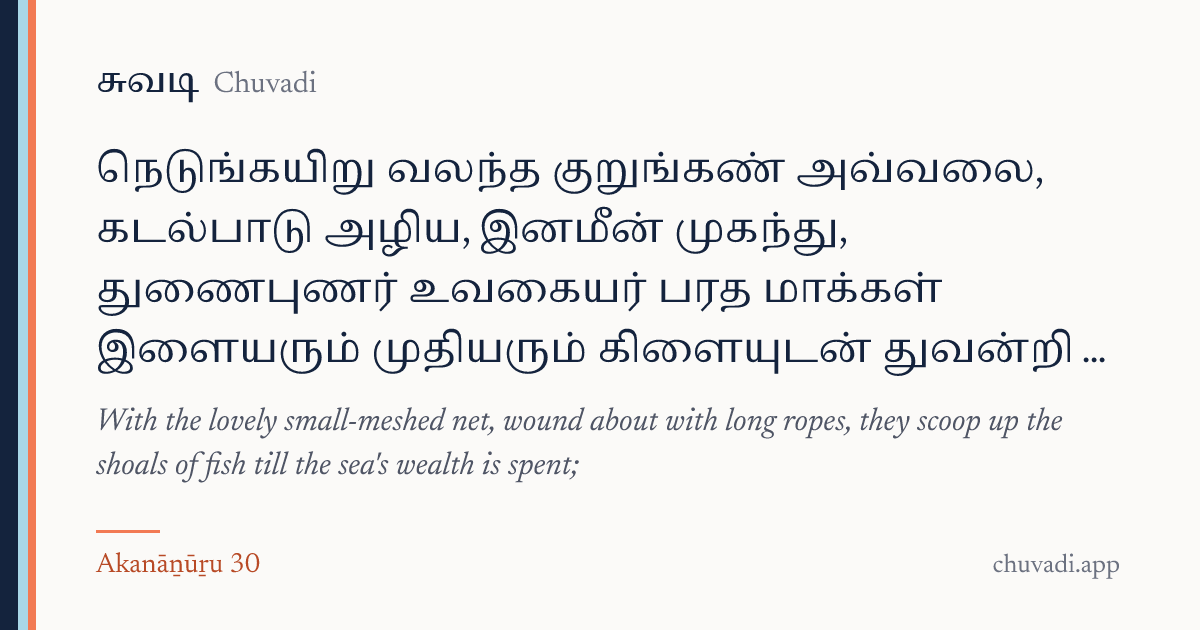

அகநானூறு 30
பாடல் · The poem
Tap a word to see where else it occurs.
பொருள் · Meaning in TamilAI
நீண்ட கயிறுகளால் சுற்றிய சிறுகண்களை உடைய அழகிய வலையால், கடலின் வளம் குறையும்படி மீன் கூட்டங்களை அள்ளிக்கொண்டு, துணையோடு கூடியவர்போல மகிழ்ச்சியுடைய பரதவர், இளையவரும் முதியவரும் சுற்றத்தோடு திரண்டு, உப்பு ஏற்றிய வணிகர் அரிய துறைகளைக் கடக்கச் செலுத்தும் வண்டித்தொடரின் வலிய எருதுகளைப் போல ஒன்றுகூடி, நுண்மணல் செறிந்த கரை ஒலிக்கும்படி வலையை இழுக்கிறார்கள். பெரிய களத்தில் நெல்லைக் குவித்த உழவரைப் போல, இரந்து வந்தோரின் வெறும் பாத்திரங்கள் நிறையும்படி மீன்களை வீசிக் கொடுத்து, பல பங்குகளைப் பிரித்து வைத்து, கிடைத்த மீனின் அளவை அறிவித்துவிட்டு, உயர்ந்த மேடுகளை உடைய செறிந்த மணலில் உறங்கும் துறையின் தலைவனே! ஒருநாள், கழுவாத முத்துப் போல அரும்பிய புன்னை மரங்கள் உள்ள குளிர்ந்த நறுமணக் கடற்கரைச் சோலைக்கு வந்து, 'நீ எப்படி இருக்கிறாய்?' என்று கேட்டுவிட்டுப் போனால், உன் பெருமை என்பது கெட்டுவிடுமோ?
இது நெய்தல் திணை; வராமல் இருக்கும் தலைவனிடம் தோழி கூறுவது. இரந்தோர்க்கு மீனை வாரிக் கொடுக்கும் பரதவரின் கொடைக்காட்சி உள்ளுறை: எல்லோருக்கும் வழங்கும் வளமான துறையின் தலைவன், தலைவிக்கு ஒரு சொல்லைக்கூடத் தரவில்லை என்பது குறிப்பு. இரண்டாம் அடியில் 'கடல்பாடு' என்பது கடலின் வளமா ஒலியா என்பது உறுதியாகத் தெரியவில்லை.
ஆங்கிலம் · English translationAI
Translation
- With the lovely small-meshed net, wound about with long ropes,
- they scoop up the shoals of fish till the sea's wealth is spent;
- glad as men who are joined with their mates, the fisherfolk,
- young and old, crowding together with their kin,
- like the strong oxen that the salt-carrying merchants drive
- in trains of carts through hard fords, they gather together
- and with a loud din haul it in on the shore of packed fine sand;
- like farmers who have heaped up a great threshing floor,
- they toss out fish to fill the empty pots of those who beg,
- set aside many shares, proclaim the size of the haul,
- and sleep on the high-ridged packed sand — lord of the shore!
- Would your greatness be ruined if, one day,
- to the cool, fragrant seaside grove of the puṉṉai, budding like unwashed pearls,
- you came and said, 'How are
- you?' and then went on your way?
What the poem says
The heroine's friend speaks to the hero, the lord of the shore (tuṟaivaṉ). He has been staying away, and the friend asks him for something very small: just to come to the grove one day and ask how the heroine is. Would that diminish him?
Most of the poem is one long picture of the fishing village after a good catch, and it is the uḷḷuṟai. The fishermen haul in a net full of fish, pulling together like oxen dragging the salt-merchants' carts through a ford, rejoicing like men with their mates. Like farmers with a heaped threshing floor, they throw fish freely into the empty pots of beggars, divide the shares, announce the haul, and lie down to sleep on the sand. The village is generous to everyone who comes asking. The implied contrast is sharp: the lord of this generous shore gives freely to all, yet will not give the heroine even a word.
The request itself (lines 12–15) is modest on purpose. The friend does not ask him to marry her or even to meet her, only to come to the puṉṉai grove, whose buds look like unwashed pearls, and ask 'how are you?' The smallness of the request is a reproach: refusing it would show a lack of the very greatness he is proud of.
'Kaṭalpāṭu aḻiya' (line 2) is taken as the sea's wealth being spent by the catch; pāṭu may also mean the sea's sound, which the hauling drowns out. The edition's quotation marks around 'how are you' are its own.