




அகநானூறு 31
பாடல் · The poem
Tap a word to see where else it occurs.
பொருள் · Meaning in TamilAI
நெருப்பைப் போலச் சிவந்து வெப்பம் வீசும் கதிரவன், தொலைவில் உள்ள நிலங்களும் சுருங்கும்படி சுடுவதால், வாடி, 'இன்று நிலமே இடம் பெயர்கிறதோ?' என்று மக்கள் வியக்கும்படி, உயிர்கள் மடியும் மழை பொய்த்த காலத்தில், இலையில்லாமல் உயர்ந்து நிற்கும் யா மரத்தின் மேல்கிளைப் பிரிவில் இருக்கும் குஞ்சுகளுக்காக — கல் நிறைந்த குறும்பின் வீரர்கள் வில்லால் எய்ததால், கொழுப்புக் கோடுகளால் நிறம் மங்கிய வழிகள்தோறும், எறிந்துவிட்டுச் சென்ற செவ்வலரி மாலைபோலப் புண்களிலிருந்து குருதி வழியக் கிடப்பவர்களின் கண்களைப் பிடுங்கும் கழுகுகள் உள்ள — அந்தக் காட்டை அவர் நீந்திக் கடந்தார். தோழி! 'அவர் போய்விட்டார்' என்று சொல்லப்படுபவர் அல்லர் அவர். வெற்றியோடு வில்லால் உண்டு வாழும் வலிய ஆண்மை வாழ்க்கையுடைய தமிழ் மூவேந்தர் காக்கும், மொழி மாறும் நாட்டின் பல மலைகளைக் கடந்தே அவர் சென்றார்.
இது பாலைத் திணை; பிரிந்த தலைவனைப் பற்றித் தலைவி தோழியிடம் கூறுவதாகக் கொள்ளலாம். கழுகுகளும் வீழ்ந்த வழிப்போக்கர்களும் உள்ள காட்சி அவன் சென்ற வழியின் கொடுமையைக் காட்டுகிறது. 'சென்றார் என்பு இலர்' என்பது 'அவர் நிலையாகப் பிரிந்து போகிறவர் அல்லர், திரும்புவார்' என்று இங்கே கொள்ளப்பட்டது; 'அவர் கடந்து சென்றார் என்று சொல்ல யாரும் இல்லை' என்றும் பொருள்கொள்ள இடமுண்டு; இது உறுதியாகத் தெரியவில்லை.
ஆங்கிலம் · English translationAI
Translation
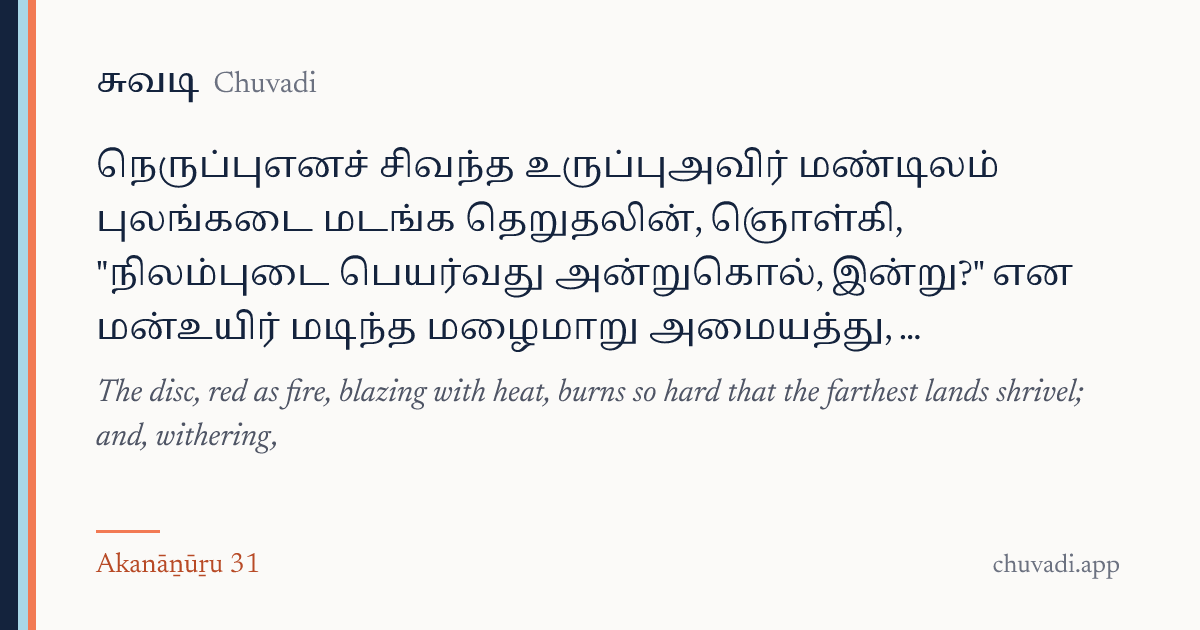
- The disc, red as fire, blazing with heat,
- burns so hard that the farthest lands shrivel; and, withering,
- 'Is the earth not shifting from its place today?' they ask,
- at the time when the rains have failed and living things have died;
- on the tall yā tree, standing high and leafless,
- for the brood of nestlings perched in its upper fork,
- where the fighting men of the stony hill-fort have loosed their bows,
- on every path, their colour dimmed by streaks of fat,
- like a garland of kaṇavīram flung down and left behind,
- those who lie there, their wounds spilling blood that flows,
- their eyes plucked out by vultures — through that forest he swam;
- 'He has gone away' — that is not said of such as him — friend! — with victory
- living the strong man's life of feeding by the bow,
- the three kings of the Tamil land guard it,
- and beyond its many mountains, in the land where the language changes, he went.
What the poem says
This poem is spoken by a woman to her friend about the man who has left; she is most likely the heroine, though the words could also be the friend's. The setting is the pālai at its harshest, in the season when the rains fail.
The first eleven lines are one of the grimmest landscapes in the anthology. The sun burns until people wonder whether the earth itself is moving. On a leafless yā tree a vulture's nestlings wait, and their food is the eyes of travellers shot down on the paths by the bowmen of a hill-fort. The bodies lie with blood flowing from their wounds, streaked with fat, like discarded garlands of red kaṇavīram (oleander). Through this, she says, he has 'swum', a common word in these poems for crossing something vast and dangerous.
Line 12 is the crux. 'Ceṉṟār eṉpu ilar' is taken here as 'he is not one of whom it is said "he has gone"', that is, he is not a man who leaves for good; he will come back. It could also mean that no one has brought word that he passed safely, which would make the poem one of anxiety rather than reassurance. The text does not settle this.
The last lines say where he has gone: beyond the many mountains of the 'land where the language changes' (moḻipeyar tēem), the border country beyond Tamil speech, which is guarded by 'the three of Tamil', the three crowned kings, described as living a strong man's life by the bow. The poem names no particular king.