




அகநானூறு 312
பாடல் · The poem
Tap a word to see where else it occurs.
பொருள் · Meaning in TamilAI
அவர் நெஞ்சம் உடன்பட்டதால், ஒரே எண்ணத்தில் முழுமையாக அடங்கி, இரவில் வருவதால் உண்டாகும் துன்பம் நீங்கும்படி நம்மை மணக்க எண்ணினால், பெரிதும் மகிழ்ந்து, உயர்ந்த மலையிலிருந்து இறங்கும் பெருமழை வெள்ளத்தில், காந்தள் நிறைந்த சிற்றூரின் பழிச்சொல்லைப் பொருட்படுத்தாமல், செவ்வரி படர்ந்த மயக்கும் குளிர்ந்த கண்கள் சிவக்க, நாளை பெருமலைநாட்டுத் தலைவனின் மார்பையே தெப்பமாகக் கொண்டு நீராடுவோம், அன்புத் தோழி, வா! மூங்கில் அடர்ந்த சாரல் மறையும்படி தாரைகளாக இறங்கி, இனிய ஓசையுடைய முரசு போல முழங்கி, பகைவர் புறமுதுகிட்டு ஓடுவதைக் கண்ட, முழங்கால் வரை நீண்ட பெரிய கைகளையுடைய வெற்றிப்போர் வழுதி தான் சென்ற போர்க்களத்தில் உயர்த்திய கொல்லும் புகழுடைய வேலைப் போல, கொடிகொடியாக மின்னிப் பரவுகிறது மழை!
இது குறிஞ்சித் திணை; தலைவன் வரைவுக்கு உடன்பட்டான் என்ற செய்தியால் மகிழ்ந்த தலைவி தோழியிடம் கூறியதாகக் கொள்ளலாம்; தோழி கூற்றாகவும் கொள்ள இடமுண்டு. முன்பு இரவுவழியை அச்சமூட்டிய மழை இப்போது மகிழ்ச்சிக்குரியதாகிறது. வழுதி என்ற பெயர் மின்னலுக்கு உவமையாக மட்டுமே வருகிறது.
ஆங்கிலம் · English translationAI
Translation
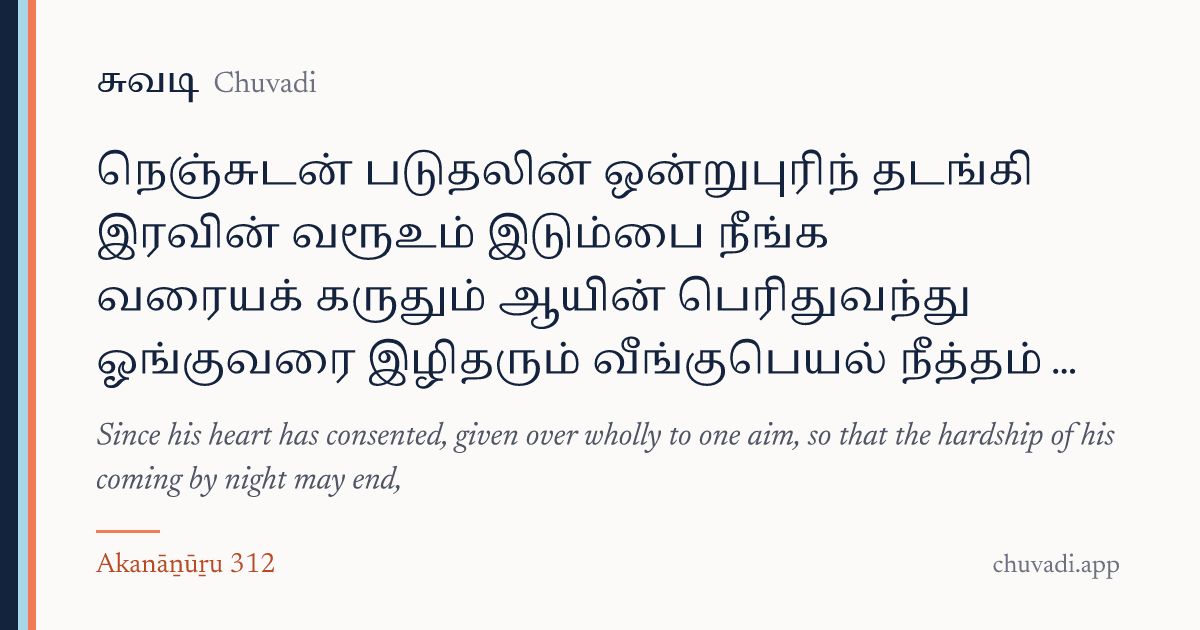
- Since his heart has consented, given over wholly to one aim,
- so that the hardship of his coming by night may end,
- if he means to marry us, then, rejoicing greatly,
- in the swollen flood of rain that pours down the high mountain,
- heedless of the gossip of the small kāntaḷ village,
- our intoxicating, red-lined, rain-cool eyes reddening, tomorrow,
- with the chest of the man of the great mountain as our float,
- let us bathe — come, dear friend!
- Hiding the bamboo-thick slopes, letting down its streams,
- rumbling like a sweet-voiced drum: he who saw the backs
- of his enemies in flight, whose great arms reach to his knees,
- Vaḻuti, victorious in war, raised in the battle he went to
- his slaughter-famed spear: like that,
- flashing in streaks, the rain has spread!
What the poem says
The heroine speaks to her friend, or possibly the friend to the heroine; this edition names no speaker. There is news that the hero, tired of the dangers of coming by night, has set his heart on marriage. If so, the speaker says, let us not care any more for the gossip of the village; tomorrow let us play in the flood that comes down from the mountain, with his chest for our raft.
The rain itself closes the poem. It hides the bamboo slopes, lets down its streams like legs, rumbles like a festival drum and flashes with lightning. The flash is compared to the spear of Vaḻuti, a victorious king whose long arms reach his knees and who has seen his enemies' backs as they fled. Vaḻuti is a name of the Pāṇṭiya kings; the poem gives only these heroic epithets.
The joyous storm suits the mood. The hard rains that once made night visits perilous are now a source of play, and the open bathing in the flood, 'heedless of gossip', is a picture of love that no longer needs hiding.
Bathing with the lover as a float (puṇai) is a recurring image of shared pleasure in water. Whether the marriage is already promised or only hoped for depends on how one takes the conditional 'if he means to marry'. The kuṟiñci label fits.