




அகநானூறு 313
பாடல் · The poem
Tap a word to see where else it occurs.
பொருள் · Meaning in TamilAI
«இனி வேறு என்ன இருக்கிறது? அஞ்சாதே; உன்னைக் காத்துக்கொள்» என்று சொல்லி, உன் அழகு வளரும்படி தழுவி, உன் நெஞ்சைக் கட்டிவைத்தவர் சென்ற வழியை நாள்தோறும் நினைத்து, மூழ்கிப் போரிடும் கயல்மீன்களைப் போன்ற கண்களில் கண்ணீர் நிறைய, மெல்லிய வெப்பமான பெருமூச்சுவிட்டு, இரவும் பகலும் துயரம் வாட்ட வருந்தி, பாம்பு விழுங்கும் நிலவு போல நெற்றியின் ஒளி மறைய, அவரைத் தவிர வேறு துணை இல்லாத நம்மை இங்கே விட்டுவிட்டுப் பொருளை விரும்பி அவர் பிரிந்து சென்றாலும், அருள் கொண்டு திரும்பி வருவார், தோழி, நீ வாழ்க! பெரும் செல்வத்தைக் கொட்டித் தீர்த்த பணப்பை போல வெறுமையான, பாம்புகளும் இரையின்றி மெலியும் வறட்சி மிகுந்த பாலைவழியில், திரும்பாமல் சென்ற வழிப்போக்கர் அம்பால் வீழ்ந்தனர். அவர்களுடைய பிளந்த புண்ணின் குருதியைக் குடித்து, ஒற்றுச் செல்வோரைப் போல அடங்கிய குரலோடு, வீடுகள் இல்லாத இடங்களுக்குச் செல்லும் காகங்கள் உள்ள, கற்கள் உயர்ந்து குவிந்த மலையைக் கடந்து சென்றவர் அவர்.
இது பாலைத் திணை; பொருள்வயின் பிரிந்த தலைவன் விரைவில் வருவான் என்று தோழி தலைவியைத் தேற்றியது. பாம்பு நிலவை விழுங்குவது என்பது கிரகணம் பற்றிய பழைய நம்பிக்கை. «ஐய ஆக» என்பதன் பொருளும், பணப்பை உவமையின் பொருத்தமும் உறுதியாகத் தெரியவில்லை.
ஆங்கிலம் · English translationAI
Translation
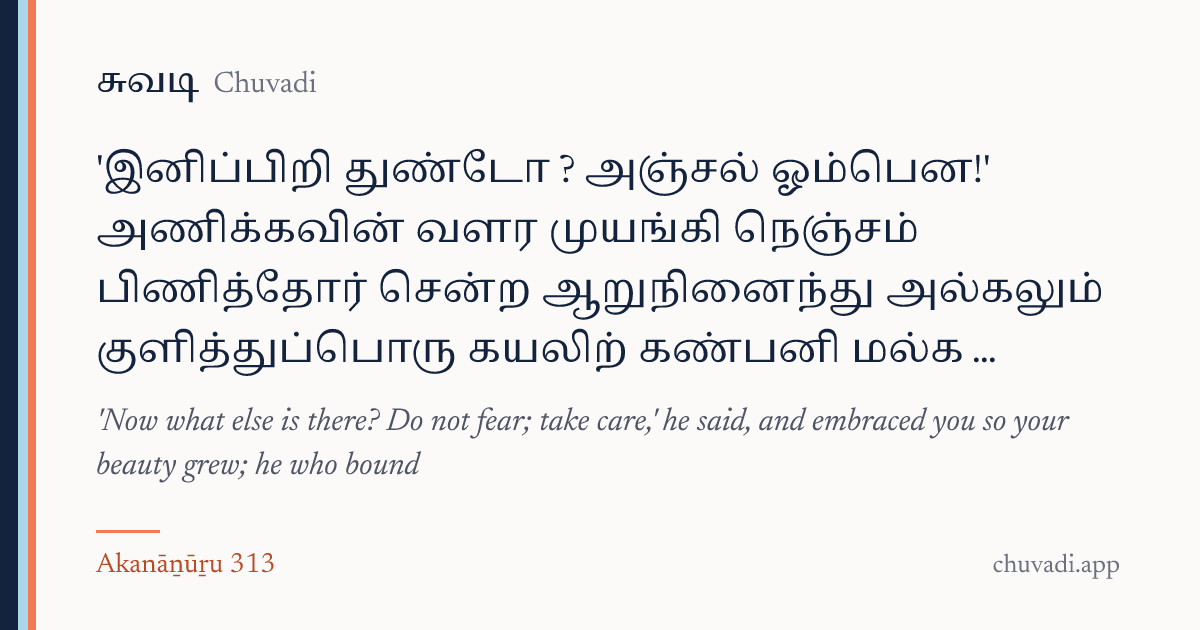
- 'Now what else is there? Do not fear; take care,' he said,
- and embraced you so your beauty grew; he who bound
- your heart — thinking every day of the road he took,
- your eyes brimming with tears like carp that dive and fight,
- breathing out hot sighs, faint and fine,
- suffering night and day as grief wears you down,
- the light of your brow hidden like the moon a snake swallows,
- we who have no one but him are left here;
- and though he went away bent on wealth, bent on grace
- he will come — long may you live, friend! Like a great
- purse that has poured out all its treasure
- is the drought-heavy wasteland where snakes waste for want of food;
- travellers who would not turn back were felled by arrows,
- and, drinking the blood from their gashed wounds,
- with voices hushed like men who go as spies,
- the crows go off where no homes are:
- he who has crossed the hills with their high-heaped rocks!
What the poem says
The heroine's friend speaks to the heroine to console her; this edition names no speaker, but 'long may you live, friend', the description of 'your' tears and the promise that he will return fit the friend. Before leaving, the hero embraced the heroine and said, 'What else is there now? Do not be afraid; take care.' Since then she has thought every day of his road, her eyes full of tears that dart like fighting carp, her brow dimmed like the moon swallowed by a snake.
That image refers to the belief that an eclipse is a serpent swallowing the moon; the poem uses it only as a picture of lost light.
The friend insists: he has left for wealth, but he will come back out of kindness (aruḷ). She describes the country he crossed in grim terms. The land is like an emptied purse; even snakes go hungry; travellers who pressed on have been shot by robbers, and crows drink the blood of their wounds and slip quietly away like spies. The darkness of the road makes the friend's confidence a deliberate act of comfort.
Line 5, aiya āka veyya uyirā, is taken as 'breathing hot sighs, faint and fine'; aiya is uncertain here. The comparison in lines 10–12 is compressed: it is read as describing the bare land as a purse emptied of its riches. Il vaḻi in line 16, 'where no homes are', is also uncertain. The pālai label fits.