



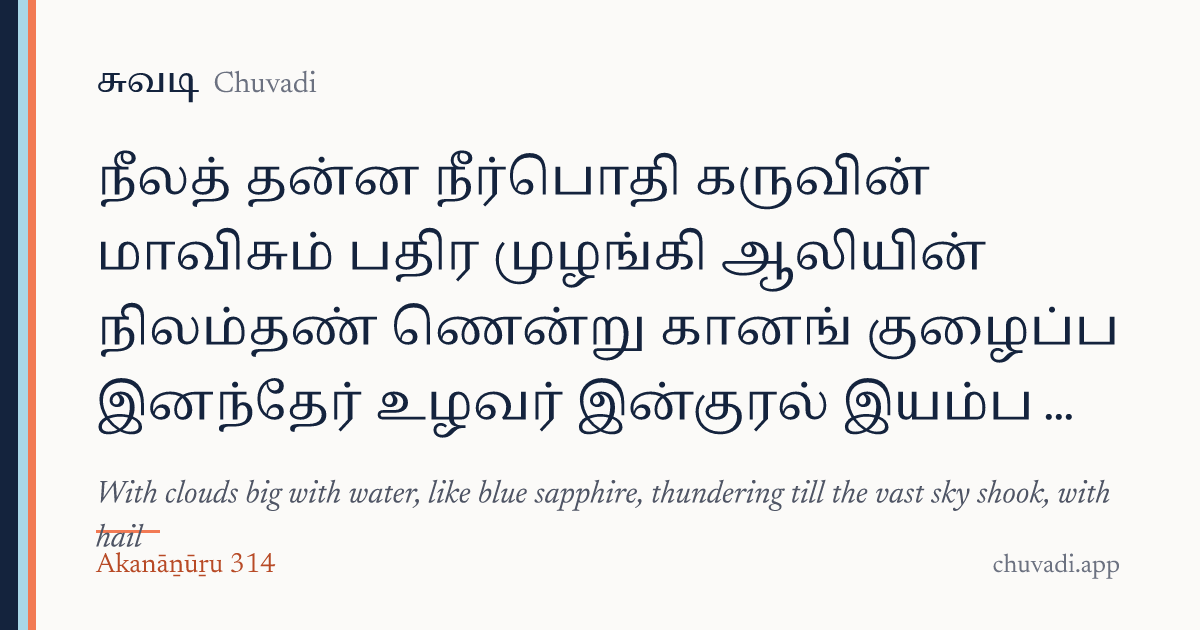

அகநானூறு 314
பாடல் · The poem
Tap a word to see where else it occurs.
பொருள் · Meaning in TamilAI
நீலமணி போன்ற, நீரைச் சுமந்த கருவுடைய மேகங்கள் பெரிய வானம் அதிரும்படி முழங்கின; ஆலங்கட்டி மழையால் நிலம் குளிர்ந்தது; காடு தளிர்த்தது; ஆநிரைகளைத் தேடும் உழவர் இனிய குரலில் கூவினர்; குட்டியுடைய இளம்பெண்மானைத் தழுவிக்கொண்டு, காட்டுநிலத்தில் திரிந்த கொம்புடைய கலைமான் பசும்பயிரில் துள்ளியது. நிறைந்த மழை உதவிய இக்கார்காலக் காலையில், நூல்முறைப்படி நுட்பமாகப் பயிற்றப்பட்ட, விரைந்து செல்லும் குதிரைகளின் மணிகள் கல்லென ஒலிக்க, வல்லவனான தேர்ப்பாகன் வாய்ச்சொல்லால் அடக்கிய, தாவிச்செல்லும் குதிரைகள் பூட்டிய நீண்ட தேர் ஈரமான காட்டில் வழியைப் பிளந்து வந்தது; இனிய நரம்புகளுடைய துயர் இசைக்கும் நல்ல யாழ் செவ்வழிப் பண்ணை எழுப்பியது. «இப்பருவத்தில் அவர் வாராவிட்டால் அவர் நிலை என்னவாக இருக்குமோ? பாணனே, சிறிது சொல்» என்று தெய்வம் போன்ற கற்புடைய அந்த இளம்பெண் கேட்க, செயலற்று மயங்கிய அவள் நெஞ்சின் வெறுப்பும் துயரமும் தீரும்படி நீ வந்தாய்! இனிது செய்தாய்; உன் மாலை வாழ்க! வேலியைச் சுற்றிப் படர்ந்த வெண்ணிறப் பூக்களுடைய முல்லையின் பெரிய மாலை மணக்கும், புதிதாகத் தழைத்த கூந்தலையும் இனிய புன்னகையையும் உடைய இளம்பெண் தழுவ, பெருமானே, உன் அகன்ற மார்பு நிலைபெறுக!
இது முல்லைத் திணை; கார்காலத்தில் வாக்களித்தபடி திரும்பிய தலைவனைத் தோழி வாழ்த்தியதாகக் கொள்ளலாம். குட்டியோடும் பெண்மானோடும் துள்ளும் கலைமான், மீண்டும் ஒன்றுசேரும் குடும்பத்தைக் காட்டுகிறது. «கானவில்» என்ற சொல்லின் பொருள் உறுதியாகத் தெரியவில்லை; விரைந்து செல்லும் என்று கொண்டுள்ளோம்.
ஆங்கிலம் · English translationAI
Translation
- With clouds big with water, like blue sapphire,
- thundering till the vast sky shook, with hail
- the land grew cool and the forest put out shoots;
- the ploughmen seeking their herds called out sweetly;
- embracing his innocent doe with her fawn, in the forest land
- the stag with twisting horns frisked in the green crops;
- on this morning of the rains, aided by abundant showers,
- the horses finely trained by the rules of the art, swift of foot,
- with bells clanging loudly, sounding out; the long chariot
- with leaping steeds, held to the voice's command by the skilful driver,
- cut through the wet forest along its way; and with sweet strings
- the fine yāḻ of sorrow brought forth the cevvaḻi mode;
- 'If he does not come at such a time, what can his
- state be? Bard, tell me a little,' so
- the innocent girl of godlike chastity said;
- and to her bewildered heart, which had lost the will to work,
- you have come, so that her grieving distress might end!
- Sweetly have you done; long live your garland!
- Fragrant with the great garland of white-flowered mullai that twines on the hedges,
- lush and fresh is the hair of the sweet-smiling
- young woman: may she embrace it, and so
- may it endure, great one, your broad, blossoming chest!
What the poem says
Someone in the household, most likely the heroine's friend, greets the hero on his return; this edition names no speaker, and the bard (pāṇaṉ) mentioned in the poem could also be the speaker. The rains have come, the season he promised, and he has arrived just as the heroine was asking the bard what could have happened to him.
The first part is a full picture of the first rains in mullai country: sapphire-dark clouds, thunder, hail, cool earth, new shoots, the stag frisking in the green crops with his doe and fawn. Through this landscape his chariot comes, drawn by well-trained horses with jangling bells and guided by a skilful driver, while a yāḻ plays the cevvaḻi mode, the melody of evening and longing.
Then the heroine's words are quoted: 'If he does not come now, what can have happened to him? Bard, tell me.' She is called 'the innocent girl of godlike chastity' (kaṭavuḷ kaṟpiṉ), praise for her faithfulness through the waiting. The speaker thanks the hero for coming in time and blesses him: may his chest endure in the embrace of the sweet-smiling girl whose hair is fragrant with mullai garlands.
Kāṉavil in line 8 is uncertain; it is taken here as 'swift of foot' (perhaps kāl navil). Iṉam tēr uḻavar in line 4 is read as 'ploughmen seeking their herds'. The mullai label fits exactly.