




அகநானூறு 328
பாடல் · The poem
Tap a word to see where else it occurs.
பொருள் · Meaning in TamilAI
வழை மரங்கள் அடர்ந்த மலைச்சரிவில் வலப்பக்கமாக எழுந்து, இசைக்கலைஞர்களின் முழவு அதிர்வது போன்ற முழக்கத்தோடு இடி இடித்து, பெருமழை பொழிந்த அமைதியான நள்ளிரவில், பாம்பின் பசிய தலைகளை இடறிக்கொண்டு, அவர் இரவில் வந்து எம் மார்புகளுக்கு இடையே தழுவினார்; எம் கண்களிலிருந்து ஊடல் நீங்கும்படி அணைத்துக்கொண்டார். அந்த இரவில் இனிமையாக எம்மோடு இணைந்த நண்பர் பின்பு எம்மை வெறுத்துவிடுவார் என்பதை முன்பே தெளிவாக அறிந்திருந்தால், ஒளிரும் வளையல்கள் நெகிழ்ந்தாலும், பெருகும் துயரம் எம்மை அலைக்கழித்தாலும், ஒவ்வொரு தழுவலிலும் அவர் களைத்துப் போகும் அளவுக்கு அவரை அள்ளி இறுக அணைத்து வைத்திருப்போமே, தோழி! மேகம் தவழும் மலையில் இளம் பெண்யானை நிறைசூலில் கன்றை ஈன்று, மூங்கிலைத் தின்னும் உடலுடைய, அவளை விரும்பும் களிறு அவளைத் தடவிக்கொடுக்க, வாழை மரங்கள் நிறைந்த மலையில் அவள் உறங்குகிறாள். அத்தகைய மலைநாட்டுத் தலைவனின் மென்மையான மார்பை அப்படி அணைத்து வைத்திருப்போமே!
குறிஞ்சித் திணை. தலைவி தோழியிடம் கூறுகிறாள். களவுக் காலத்தில் இரவில் வந்த தலைவன் இப்போது அன்பு குறைந்தவன் போலத் தோன்றுவதால் வருந்துகிறாள். ஈன்ற பெண்யானையைக் களிறு பேணும் காட்சி உள்ளுறையாக நிற்கிறது: விலங்கும் தன் துணையைக் காக்கும்போது அவன் தன்னைக் கைவிடலாமா என்பது குறிப்பு.
ஆங்கிலம் · English translationAI
Translation
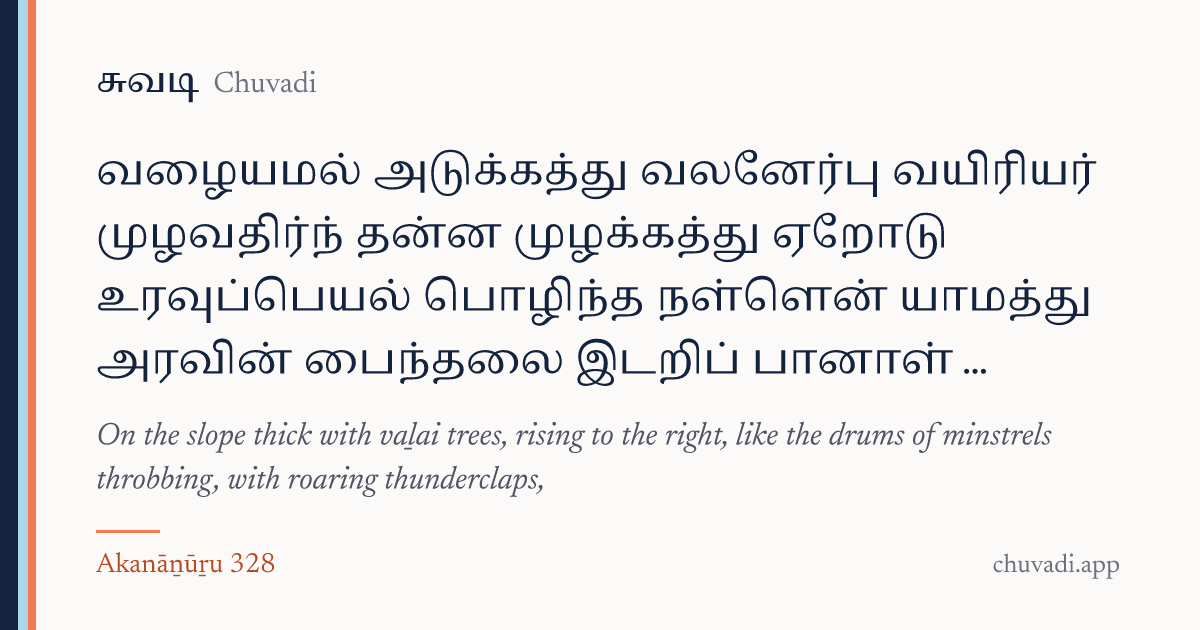
- On the slope thick with vaḻai trees, rising to the right, like the drums
- of minstrels throbbing, with roaring thunderclaps,
- in the hushed hour when heavy rain had poured,
- stumbling on the green heads of snakes, at midnight
- he came in the night and embraced us between the breasts,
- and held us close so that sulking left our eyes; that in the dark
- the man who joined us so sweetly in friendship would grow weary of us —
- if we had known clearly that this would happen,
- even as our bright bangles slipped, as spreading grief tossed us, we
- at every embrace, every embrace, until he tired, would have gathered up
- and held it fast — friend! — where the young cow-elephant
- on the cloud-crawling hill bears her calf in heavy pregnancy,
- and the loving tusker, whose body feeds on bamboo, strokes her,
- and she sleeps on the hill grown with plantains —
- the soft chest of the man from that slope country!
What the poem says
The heroine speaks to her friend. Her lover has been coming to her at night in secret, braving storms and snakes, and now he seems to be cooling, or staying away. She looks back on one visit in particular: thunder rumbling like minstrels' drums, rain pouring, and he came through it all, held her and coaxed her out of her sulk. If she had known he would grow tired of her, she says, she would have held on to him far more fiercely while she could.
Lines 9–11 are her wish. Even with her bangles slipping, which is the usual sign of a lover's thinning arms, she would have clung to him at every embrace until he himself was worn out. The doubled muyaṅkutoṟum, 'at every embrace', gives the urgency of the line.
The closing picture describes his country, and it carries an implied meaning (uḷḷuṟai). There a young cow-elephant gives birth on the cloudy hill, and the tusker that loves her strokes her gently while she sleeps among the plantains. The hill animals look after their mates when it matters most. The heroine leaves the contrast with her own lover unspoken. The poem is plainly kuṟiñci: hills, night visits and a secret love.