




அகநானூறு 329
பாடல் · The poem
Tap a word to see where else it occurs.
பொருள் · Meaning in TamilAI
பூப்போன்ற என் கண்களும் நெற்றியும் பசலை படர, நோய் மிகுந்து நான் இங்கே வருந்திக்கொண்டிருக்கும்போதும், என்னைப் பிரிந்து செல்வதற்குத் துணிந்து, அவ்வாறு வாழ்வதற்கு வல்லவராக இருந்தால், என் காதலர், நெருங்கிய குடிசைகளையுடைய அழகிய சிற்றூர்களைக் கடந்து, ஒலிக்கும் மணிகள் ஒலிக்கப் பகலில் பயணம் செய்யும் உமணர்களின், வளைந்த நுகத்தைச் சிவந்த கயிற்றால் கட்டிய வண்டிகளை இழுக்கும் எருதுகள் களைக்கும் வெப்பமான எல்லைப்புறத்தில், வீசும் காற்று புழுதியைத் திரட்டிச் சுழற்றும் வழியில், சிறிது ஓய்வெடுத்துக்கொண்டு போவாரோ? அங்கே, பாய்ந்து முதுகுகளை முறிக்கும் சிறிய வரிகளையுடைய புலிக்குட்டி, நீர் வேண்டி நீட்டிய உயர்ந்த யானையின் கையைக் கடித்து முழங்கும்; இருள் தொங்கும் புதர்க்காட்டில், வறண்ட சுனையருகே, பெண்புலி புகுந்து குட்டி ஈனும்; பனி படரும் சிகரங்களையுடைய அத்தகைய பல மலைகளைக் கடந்து அவர் போவாரோ?
பாலைத் திணை. பிரியத் துணிந்த தலைவனை நினைத்துத் தலைவி கூறுகிறாள். அவள் கற்பனை செய்யும் வழியின் கொடுமை அவளுடைய அச்சத்தையும் அன்பையும் ஒருங்கே காட்டுகிறது; 'சிறிது அசைந்து ஏகுவர் கொல்லோ' என்பது அவள் கவலையின் மென்மை. ஒன்பது முதல் பன்னிரண்டு வரையுள்ள அடிகளில் யார் யாரைக் கடிக்கிறது என்பது உறுதியாகத் தெரியவில்லை.
ஆங்கிலம் · English translationAI
Translation
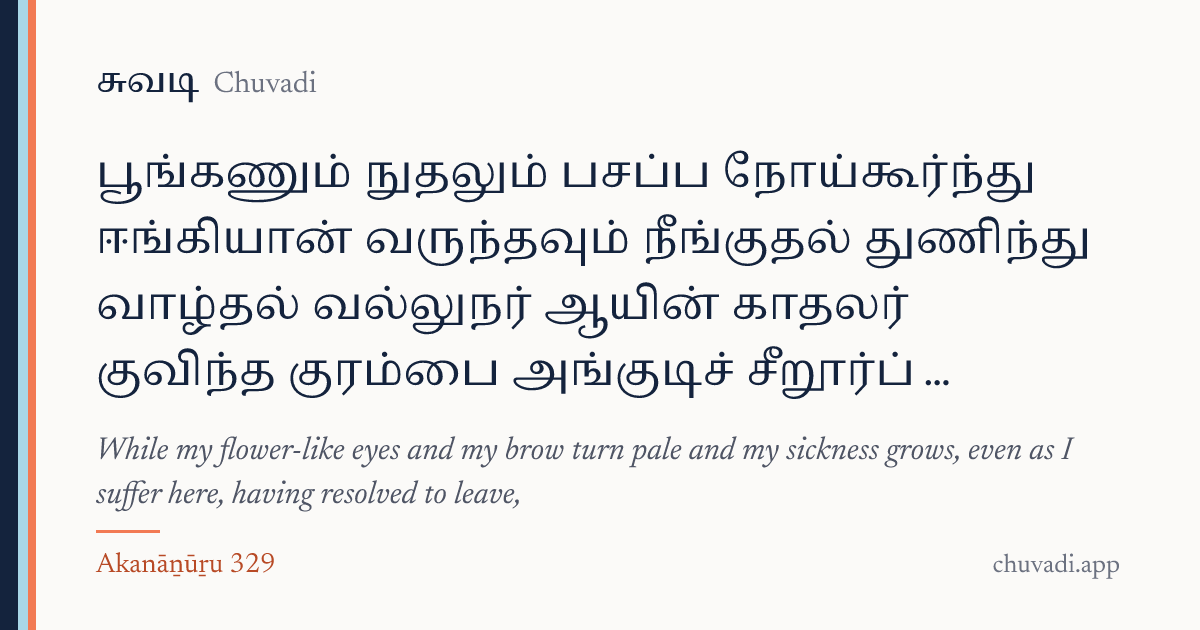
- While my flower-like eyes and my brow turn pale and my sickness grows,
- even as I suffer here, having resolved to leave,
- if he is able to go on living so, my lover —
- past the small village of lovely homes with huddled huts,
- where, with sounding bells ringing, travelling by day, the salt-merchants'
- carts with red ropes binding the curved yokes
- tire their bullocks, on that hot frontier, where the dust is gathered
- and whirled by the striking wind, on that road — resting a little,
- will he go on, then? Where, leaping,
- breaking backs, the small-striped cub
- bites the trunk the tall fine elephant stretched out, longing for water,
- and roars; in the thicket hung with darkness
- where the tigress goes in to whelp, by the dry spring,
- crossing the many mountains with their dew-laden peaks?
What the poem says
The heroine asks, perhaps of her friend, perhaps of no one, whether her lover will really go. Her eyes and forehead have turned pale with the sickness of love. He has decided to leave her anyway, and she wonders how anyone can bear to live like that. Then she pictures the road he will take, so the poem moves between her anxiety and the dangers she imagines.
There are two landscapes. First come the dusty frontier tracks where the salt-merchants (umaṇar) drive their bullock-carts by day, bells ringing, and a hot wind whirls the dust. Then come mountains with misty peaks and dry springs, where a tigress goes into a dark thicket to give birth and a young tiger leaps at an elephant reaching out its trunk for water. Line 9 asks whether he will rest a little along the way, a small tender concern placed among the fears.
Lines 9–12 are hard to construe. They are taken here to mean that the striped cub leaps, 'breaking backs' (its prey's, or in general as a sign of its strength), and bites the trunk of a thirsty elephant. Another reading could make the elephant the one that roars in pain. The poem fits pālai well: a separation not yet made, and a fearful road.