



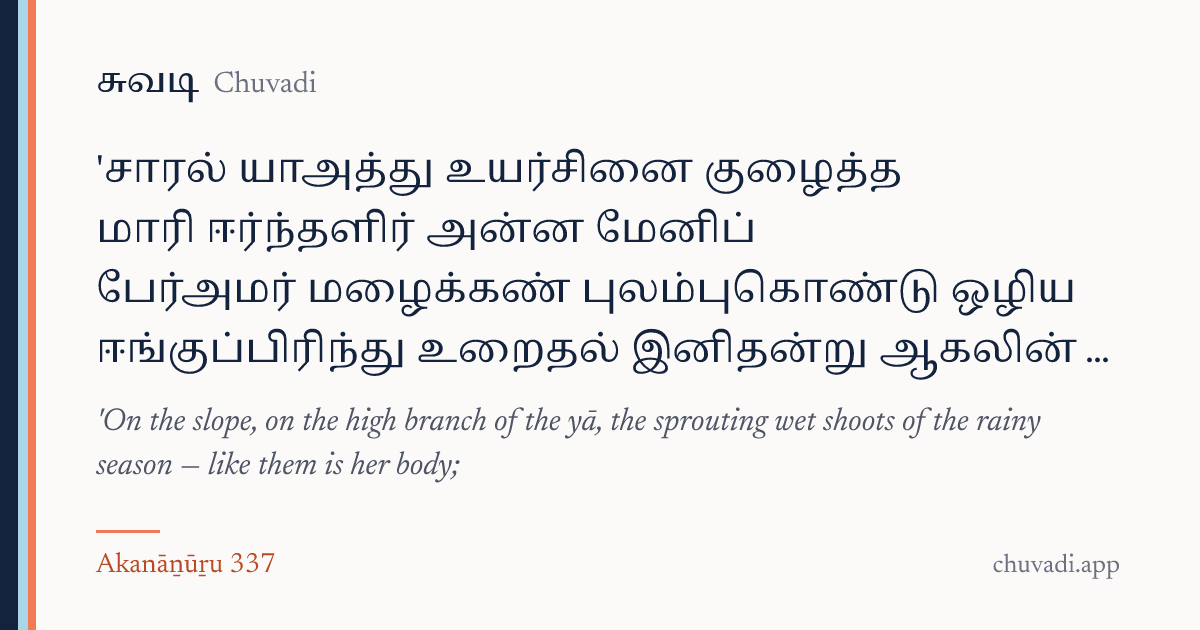

அகநானூறு 337
பாடல் · The poem
Tap a word to see where else it occurs.
பொருள் · Meaning in TamilAI
'மலைச்சரிவில் உள்ள யா மரத்தின் உயர்ந்த கிளையில் தளிர்த்த, மழைக்காலத்து ஈரமான தளிரைப் போன்றது அவள் மேனி; போர்புரிவது போன்ற அவளுடைய பெரிய குளிர்ந்த கண்கள் தனிமையில் வாடுகின்றன. இங்கே அவளைப் பிரிந்து வாழ்வது இனிமையானது அன்று; ஆதலால் பொருள் அங்கேயே இருக்கட்டும்' என்று நீ சொன்னாய். அந்த வழியில், உமணர்களின் மாட்டுக்கூட்டம் வரிசையாக நிற்பது போலப் பல அடிகளுடைய சிறு குன்றுகள் உள்ளன. மடித்த வெள்ளை ஓலையைக் கொண்டு தூது செல்லும் பார்ப்பானை, ஆயுதம் தாங்கிய கையுடைய கொடிய மழவர், அவன் வரும் விதத்தைப் பார்த்து, 'உணவில்லாமல் ஒட்டிய இவனுடைய இடுப்பில், கையில் பொன் இருக்கக்கூடும்' என்று எண்ணி, வீணாக வெட்டி வீழ்த்தினர். பின்னர் அவனுடைய பயனற்ற கந்தலையும் வறுமையையும் கண்டு, சிவந்த அம்புகளை உடைய அவர்கள் கைகளைச் சொடுக்கிக்கொண்டு திரும்பிப் போகிறார்கள். குருதி ஒழுகத் தொங்கும் அவன் குடலைக் கடித்து இழுத்த ஓர் ஆண்நரி, வரியுடைய மரல் வளரும் வழியில், வெண்பரல்கள் மின்னிக் கண்ணைக் கூசச் செய்யும் கவர்வழியில், கள்ளிச் செடியின் நிழலில் ஊளையிட்டுப் படுக்கிறது. மழை பொய்த்த அந்த வெப்பமான காட்டின் கடுமையான வழியில், 'குளிர்ந்த இருளில் பெருமுழக்கமுடைய வானம் மழை பொழிய, கடுங்குளிர் வாடைக்காற்றில் அவள் வருந்துவாள்' என்று எண்ணி, நெஞ்சே, நீ என்னைத் தனியாக அழைத்து வந்துவிட்டாயே!
பாலைத் திணை. பொருள் தேடச் சென்ற தலைவன், தலைவியை நினைத்துத் திரும்பிய தன் நெஞ்சிடம் கூறுகிறான். ஏதுமில்லாத தூதனை வீணாகக் கொன்ற கொடுமை, பொருளுக்காகச் செல்லும் வழியின் பயனற்ற ஆபத்தைக் காட்டுகிறது. 'கைந்நொடியா' என்பதைக் கை சொடுக்குதல் என்று கொள்ளப்பட்டது.
ஆங்கிலம் · English translationAI
Translation
- 'On the slope, on the high branch of the yā, the sprouting
- wet shoots of the rainy season — like them is her body;
- her great, battling, rain-dark eyes are left in loneliness;
- since staying here apart from her is not sweet,
- let wealth stay where it is,' you said; where, like the salt-merchants'
- herd in its rows, are the many-footed little hills;
- the brahmin who carries messages, with his folded white palm-leaf —
- men with weapons in hand, watching the way he came,
- thinking, 'at the starved waist of this fellow, in his hand,
- there may be gold,' for nothing
- cut him down and felled him, the fierce Maḻavar;
- then, seeing his worthless rag and his poverty,
- the men with red-shafted arrows go off snapping their fingers;
- tearing at the hanging guts from which blood runs in streams,
- on the track of striped marul, a lone male jackal,
- at forking paths that dazzle the eyes where white gravel glints,
- in the shade of the kaḷḷi howls and lies down;
- through that hard stretch of hot forest where the clouds have failed,
- you have made us pass alone — 'In the cold darkness,
- as the great roaring sky pours down,
- with the cold, harsh north wind she will suffer' — thinking so!
What the poem says
The hero speaks to his heart. He set out to earn wealth, but his heart changed its mind. Thinking of the girl alone at home with her eyes full of tears, it said, 'Let the wealth stay where it is', and brought him back alone through the desert. It feared she would suffer when the rains and the cold north wind (vāṭai) came. The poem is framed by these two reasons: her loneliness at the start, her suffering in the cold at the end.
Between them is one of the darkest wasteland scenes in the anthology. A brahmin messenger, carrying nothing but a folded palm-leaf letter, is killed by Maḻavar bandits who thought he might have gold tucked at his waist. When they find only a rag, they walk off snapping their fingers in disgust. A jackal drags at his entrails and then lies down howling in the shade of a kaḷḷi bush. The killing was 'for nothing' (koṉṉē), and that is the point. This is the road the heart has just led him over.
The little hills that stand in rows 'like the herds of the salt-merchants' are a striking image of the dry country. Line 13, kainnoṭiyā, is taken as snapping the fingers in disappointment. Lines 19–21 are also read as the heart's own thought, though they could be the hero's comment on why his heart made him hurry.