




அகநானூறு 338
பாடல் · The poem
Tap a word to see where else it occurs.
பொருள் · Meaning in TamilAI
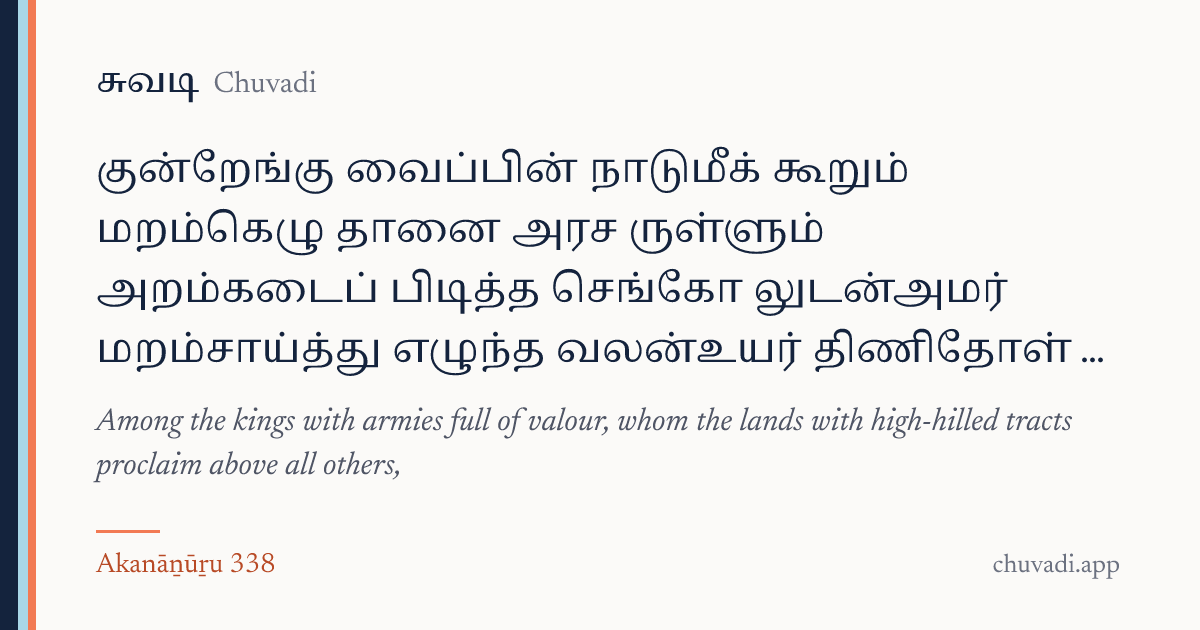
உயர்ந்த மலைகள் நிறைந்த நாடுகள் எல்லாம் மேலானவர் என்று புகழும், வீரம் மிக்க படைகளையுடைய அரசர்களுக்குள்ளும், அறத்தைக் கடைப்பிடித்துச் செங்கோல் செலுத்துபவன், போரில் பகைவரின் வீரத்தைச் சாய்த்து எழுந்த வெற்றியுடைய வலிய தோள்களை உடையவன், பலரும் புகழும் செல்வமும் பசும்பொன் அணிகலனும் உடைய பாண்டியன். அவனுடைய, தெய்வங்கள் உறையும் உயர்ந்த மலைச்சரிவில் வாழ்பவள் அவள். 'கொத்தாக மலர்ந்த ஒளிரும் காந்தள் மணக்கும் நறுமண நெற்றியும், இரண்டாகப் பிரித்து முடித்த கூந்தலும் உடைய மாநிறத்தவள் அவள். அவளுடைய நுண்ணிய ஒளிரும் வளையல்கள் என் முதுகைச் சுற்றும்படி தழுவுவது இப்போது இயலாவிட்டாலும், ஏங்கும் என் நெஞ்சுக்கு எப்போதும் ஆறுதல் தரும் துணையாக, பகைவர் நாட்டைப் பாழாக்கும், அணுகமுடியாத வலிமையும் வெற்றி வேலும் உடைய பொறையனின் அகன்ற பெருங்காட்டில் உள்ள கொல்லி மலையைப் போல, எங்கள் நட்பு அழியாதிருக்கட்டும்! அவளிடம் செல்லும் தூது அறாமல் இருக்கட்டும்! பகைவர் மேல் வானளாவ உருவிய, உறுதியான பிடியுடைய ஒளிரும் வாளையும், ஈன்ற பசுக்களைக் கவர்ந்து வரும் இளைய வீரர்களையும் உடைய தலைவனான, திரண்ட போர்களையுடைய சோழனின் செல்வம் நிறைந்த பாக்கத்தில், வணிகம் ஓயாத பெருந்துறையில், முழங்கும் கரிய கடலின் அலைகளைவிடவும் அத்தூதுகள் பலவாகட்டும்!'
குறிஞ்சித் திணை. இன்னும் தலைவியை அடைய முடியாத தலைவன், நட்பு நிலைக்கவும் தூது ஓயாமல் இருக்கவும் வேண்டுகிறான். அவன் யாரிடம் பேசுகிறான் என்பது பாடலில் தெளிவாக இல்லை. பாண்டியன் மலை, பொறையனின் கொல்லி, சோழனின் துறை என மூவேந்தர் நாடுகளும் உவமைகளாக வருகின்றன.
ஆங்கிலம் · English translationAI
Translation
- Among the kings with armies full of valour, whom the lands
- with high-hilled tracts proclaim above all others,
- holding firm to justice with an upright sceptre, in battle
- breaking enemy valour, with strong shoulders raised in victory,
- the Pāṇṭiyaṉ of fresh jewels whose fortune many praise:
- on the slope of his mountain heights where fearful powers dwell —
- 'with her fragrant brow that smells of the bright clustered kāntaḷ,
- with her twin-parted tresses, that dark girl —
- so that her fine-stranded, shining bangles circle my broad back,
- even if embracing her is not granted, always,
- as a comforting companion to my longing heart,
- crushing the land of his enemies to ruin,
- Poṟaiyaṉ of the victorious spear, of unapproachable strength —
- like Kolli in his wide, dark forest,
- may the friendship never fail! To her
- may the messages never be cut off! — of those who cannot bear him,
- with bright, strong-hilted swords drawn to strike the sky,
- the lord of the young warriors who bring back fresh-calved cows,
- Cōḻaṉ of massed battles, in his wealth-filled harbour town,
- at the great port where trade never ceases,
- more than the waves of the roaring dark sea, may they be many!'
What the poem says
The hero speaks. He loves a girl who lives on the slopes of a mountain in the Pāṇṭiya country. Even if he cannot yet hold her in his arms, he wants their friendship to last, and he wants a steady stream of messages between them. The quoted lines (7–21) are his vow or prayer. The poem does not say whom he addresses, perhaps his own heart, perhaps the friend who carries messages.
The poem is built on three royal comparisons. First, the setting is the mountain of the Pāṇṭiyaṉ, praised as just, victorious and rich. Second, the friendship should be as lasting as Kolli, the mountain of Poṟaiyaṉ, who crushes his enemies' lands. Third, the messages should be more numerous than the waves at the busy port of the Cōḻaṉ, whose young warriors raid enemy cattle. Each of the three kingdoms of the Tamil country is given one image: the mountain where she lives, the mountain that stands for permanence, the sea that stands for countless numbers.
Line 6, aṇaṅku uṭai, 'having fearful powers', describes the heights as haunted by spirits or goddesses, a common way of making a kuṟiñci mountain awesome. The kāntaḷ flower in line 7 is the emblem flower of the hills, and its scent on her forehead marks her as a girl of that country. The poem fits kuṟiñci well, a love not yet fulfilled and kept alive by messages.