




அகநானூறு 339
பாடல் · The poem
Tap a word to see where else it occurs.
பொருள் · Meaning in TamilAI
இறுக்கிக் கட்டிய, விரைந்து ஓடும் குதிரைகள் பூட்டிய நெடிய தேரின், வலிய ஆரங்களைத் தாங்கிய சக்கரம் அழுந்தும் பக்கங்களில், பாம்பைப் போல நீர் விரைந்து ஓடுகிறது. பிடியை விடும் விரல்கள் போலச் சுருங்கிப் பயற்றங்காய்கள் முற்றுகின்றன. குளிர்ந்த பனிக்காலம் வந்து நிலைத்துவிட்டது. முன்பு முயற்சிக்கு எழுந்த தளராத என் உள்ளத்தை ஆண்மை இழுக்கிறது; காமம் தடுக்கிறது. இவ்வாறு இரண்டாகப் பிளவுபட்ட என் நெஞ்சம் நடுவில் கிழிகிறது. இருபுறமும் எரியும் கொள்ளிக்கட்டையின் நடுவில் நின்று வருந்தி, எந்தப் பக்கமும் செல்ல முடியாத எறும்பைப் போல ஆனேன். அவள் வருந்துவாளோ? உடலோடு உயிர் இணைந்தது போன்ற நட்பும், அந்த உயிர் வாழ்வது போன்ற காதலும் உடையவள்; பிரிவது சாவைப் போன்றது; அத்தகைய அவள் இரங்கத்தக்கவள்!
பாலைத் திணை. வினைமேல் சென்ற தலைவன் பனிக்காலம் வந்ததும் கடமைக்கும் காதலுக்கும் இடையே தவிப்பதைத் தனக்குள் கூறுகிறான். 'இருதலைக் கொள்ளி இடை எறும்பு' என்ற உவமை, இரண்டு பக்கமும் துன்பம் உள்ள நிலையைத் தெளிவாகக் காட்டுகிறது.
ஆங்கிலம் · English translationAI
Translation
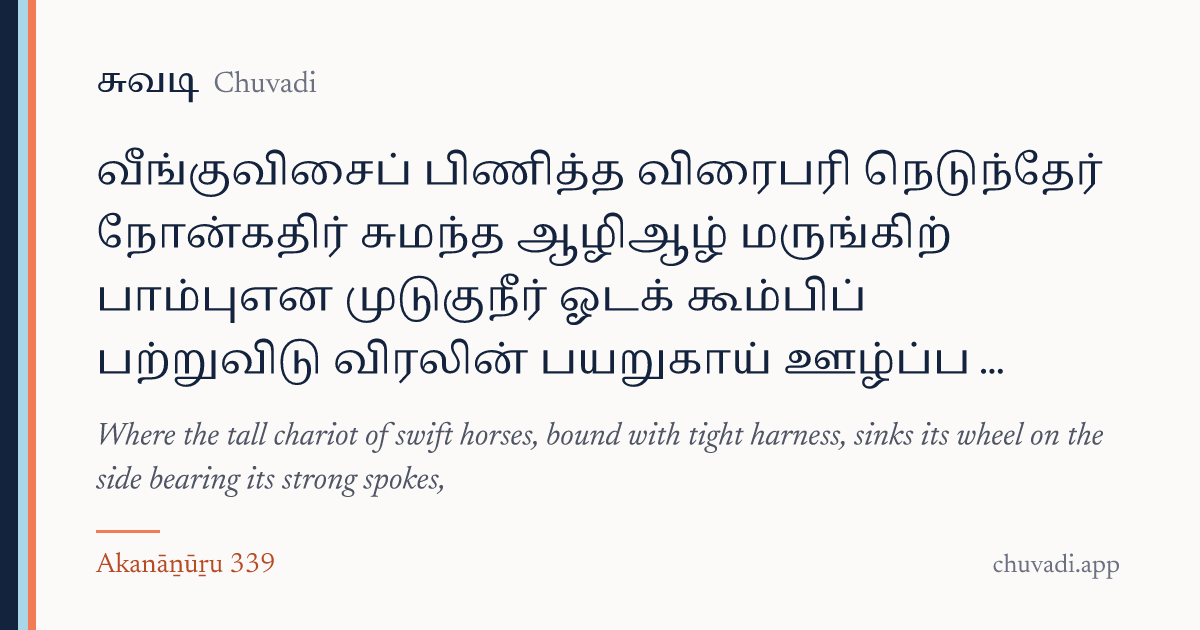
- Where the tall chariot of swift horses, bound with tight harness,
- sinks its wheel on the side bearing its strong spokes,
- water runs rushing like a snake; closing up
- like fingers letting go their grip, the green-gram pods ripen;
- the season of cold has set in. Foremost,
- my unwavering heart that rose up for manly effort —
- as manhood pulls it on and desire holds it back,
- my divided heart is torn at its very centre;
- suffering in the middle of a firebrand burning at both ends,
- I have become like the ant that can reach neither end.
- Will she be hurting? She is to be pitied, she
- whose friendship is like life joined to the body, and whose
- love is like that life's living,
- and parting from whom is like death!
What the poem says
A man who has gone away to work speaks to himself. The cold season (aṟciram) has come. Chariot ruts are running with water, and the green-gram pods have ripened and closed up like fingers loosening their hold. It is the season when he should be with her. He is caught between the work that his manhood (āṇmai) drives him to finish and the desire that pulls him home.
The image in lines 9–10 is well known in Tamil: an ant (uṟavi) on a stick burning at both ends, with nowhere to escape. It is a precise picture of a man torn between two duties, each of which will hurt him.
The poem ends with his thought of her. Will she be suffering? Their friendship is like life joined to the body, their love like the living of that life, and parting from her is like death. The three comparisons rise from union to life to death. The poem is under pālai and is about separation, though the man is weighing a return rather than setting out. Line 4, paṟṟu viṭu viraliṉ, 'like fingers letting go their grip', is taken as describing how the pods curl and split.