



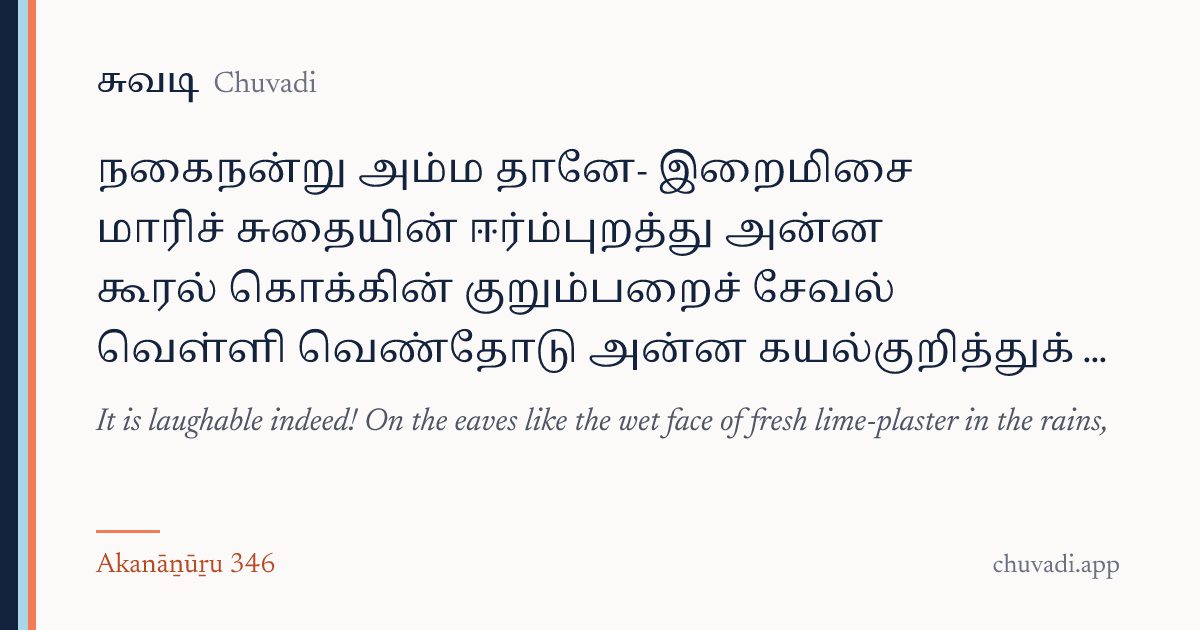

அகநானூறு 346
பாடல் · The poem
Tap a word to see where else it occurs.
பொருள் · Meaning in TamilAI
இது நன்றாகச் சிரிக்கத்தக்கதுதான்! மழைக்காலத்தில் பூசிய சுண்ணாம்பின் ஈரமான மேற்பரப்பைப் போன்ற, சிலிர்த்த இறகுகளும் குட்டைச் சிறகுகளும் உடைய ஆண் கொக்கு, வெள்ளியின் வெண்மையான தகடு போன்ற கயல் மீனைக் குறிவைத்து, கூரை மேல் அமர்ந்திருக்கிறது. கள்ளுண்ட மகிழ்ச்சியில் ஆரவாரிக்கும் உழவர்கள், காஞ்சி மரத்தின் குட்டைக் கம்புகளை நட்டு, இனிய சாறுடைய மென்மையான பல கரும்புகளை இடையே பின்னி, பெரிய வயலின் பசும்புல் தரையால் அடைத்து, வருந்திக் கட்டிய வலிய வளைந்த அணையின் மேலே வழிந்து ஓடும் வேகமான நீரைப் பார்த்து, அந்தக் கொக்கு மெல்லக் காத்திருக்கிறது. அத்தகைய வளமுடைய ஊரனே! அதை நாங்கள் ஒருபோதும் பொருட்படுத்தவில்லை. நன்றாக இசைகூட்டிய யாழையுடைய பாணனோடு, இறுக்கிக் கட்டி மண் பூசிய முழவின் கண் அதிர்ந்து ஒலிக்க, மகிழ்ச்சியான நண்பர் கூட்டத்தோடு கள் குடித்து, எம் வீட்டுக்கு வராமல், முன்பு ஒருநாள் நீ உன் அந்த வீட்டுக்குச் சென்றபோது, அந்த வீட்டிலுள்ள சிறிய வளையல் அணிந்த பெண் மகிழ்ந்தாள். நெடிய தேரும் அணிகலன் பூண்ட யானையும் உடைய பழையன் மாறனின், மாடங்கள் நிறைந்த தெருக்களையுடைய கூடலில், வெள்ளம்போன்ற படையோடு வேற்றுநாட்டில் தங்கிய கிள்ளி வளவனின் சிறந்த போர் அழிந்து, விரைந்து ஓடும் குதிரைகளோடு பல களிறுகளும் கவரப்பட்டு, அயல் மன்னர்கள் ஊரைக் கைப்பற்றியபோது கோதை மார்பன் அடைந்த மகிழ்ச்சியைவிடவும் அவள் பெரிதும் மகிழ்ந்தாள்!
மருதத் திணை. பரத்தையிடம் சென்று திரும்பிய தலைவனிடம் தலைவி கடுமையாகக் கூறுகிறாள். அணையைத் தாண்டி வரும் மீனுக்காகக் காத்திருக்கும் கொக்கு, புதிய பெண்களை நாடும் தலைவனை உள்ளுறையாகக் குறிக்கிறது. 'பாசவல் பொத்தி' என்பதன் சரியான பொருளும், போரில் யார் யாரோடு பொருதனர் என்பதும் உறுதியாகத் தெரியவில்லை.
ஆங்கிலம் · English translationAI
Translation
- It is laughable indeed! On the eaves
- like the wet face of fresh lime-plaster in the rains,
- the short-winged male heron with ruffled feathers,
- eyeing the kayal fish that shine like a strip of white silver —
- where the ploughmen, glad with toddy and revelling,
- drove in short stakes of kāñci, and the sweet-juiced,
- soft-stemmed sugarcane, many fine canes, wove between,
- and packed it with green turf from the great paddy fields,
- the strong-faced, curved dam that they built with toil —
- watching the fierce water spilling over it, slowly
- sits keeping watch: O man of the fruitful town! —
- we never cared about that at all! You, with your
- bard of the well-tuned fine yāḻ, as the tight-strung,
- clay-smeared drum throbbed at its face and sounded,
- drinking toddy with your circle of merry companions,
- not coming to our house — that day, earlier,
- when you went off to your own house there, in that house
- the girl of small bangles rejoiced — with tall chariots
- and jewel-decked elephants, Paḻaiyaṉ Māṟaṉ,
- at Kūṭal with its streets crowded with mansions,
- when, encamped in a foreign land with a flood of an army,
- Kiḷḷi Vaḷavaṉ had his fine war broken,
- and many fierce-galloping horses and tuskers were seized,
- and foreign kings took the town —
- more than Kōtai-mārpaṉ in his joy!
What the poem says
The wife speaks to her husband, sharply. 'It is laughable!' she begins, and she means his excuses or his present show of affection. 'We never cared about that.' She reminds him of the day he did not come home but went off, with his bard, his drums and his drinking friends, to 'your own house there', the courtesan's. The girl of that house was happier that day than Kōtai-mārpaṉ was at the news of a great victory.
The victory is told compactly in lines 19–25. Kiḷḷi Vaḷavaṉ, a Cōḻa king, camped with a huge army in enemy country, at Kūṭal of Paḻaiyaṉ Māṟaṉ. His war was broken, his horses and elephants were seized, and 'foreign kings took the town'. Kōtai-mārpaṉ rejoiced at this. The poem gives only these lines, and they leave open exactly who fought whom and whose town was taken. They should be read as the poem states them, without further history.
The opening scene works as uḷḷuṟai. Ploughmen merry with toddy build a little dam of kāñci stakes, sugarcane and turf. A heron perches on the wet eaves and waits for the fish that come over the dam. The patient heron watching for prey suggests the husband who sits and waits for new women. Line 8, pācaval potti, is taken as packing the dam with green turf, but the exact meaning of pācaval is uncertain.