



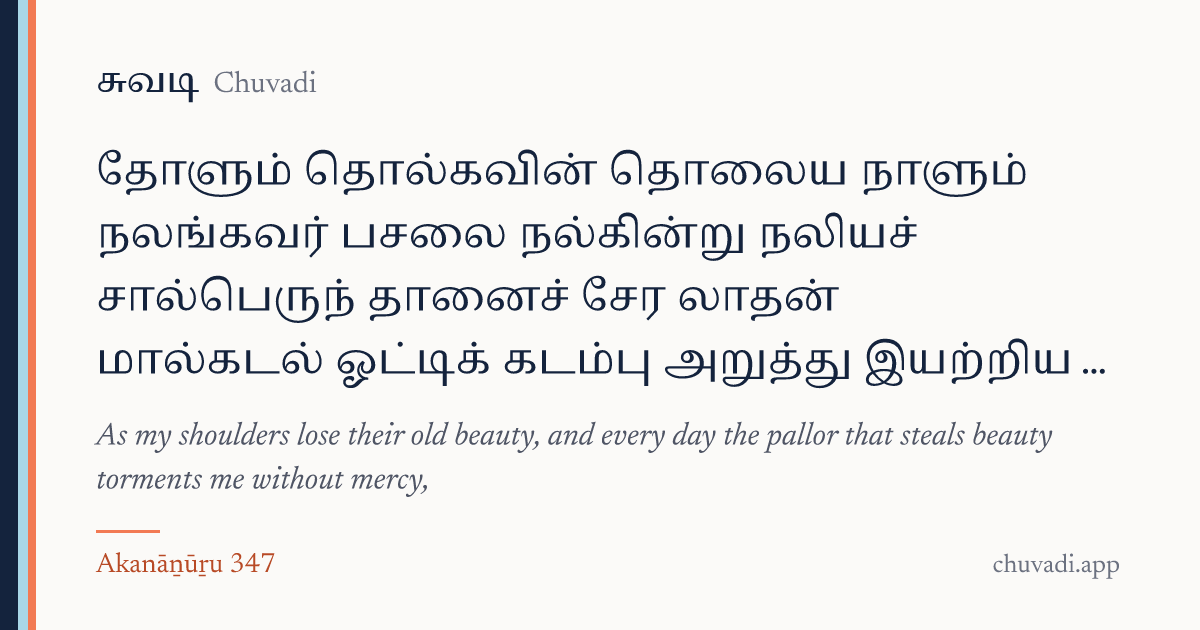

அகநானூறு 347
பாடல் · The poem
Tap a word to see where else it occurs.
பொருள் · Meaning in TamilAI
என் தோள்கள் பழைய அழகை இழக்க, நாள்தோறும் அழகைக் கவரும் பசலை இரக்கமின்றி வருத்துகிறது. பெரும் படையுடைய சேரலாதன், பெருங்கடலில் பகைவரை ஓட்டி, கடம்ப மரத்தை வெட்டி அதனால் செய்த, நன்கு இசைகூட்டிய முரசின் கண் அதிர்வதுபோல, பழிச்சொற்களைத் தூற்றும் கொடிய வாயுடைய சேரியும், மறைவாகப் பேசும் பழைய ஊரும் எழுப்பும் அலர் நமக்கு மட்டும் மிஞ்ச, அவர் சென்றுவிட்டாலும், அவர் செய்யும் வினை அவருக்கு வெற்றியாக முடியட்டும், தோழி, வாழ்க! மழை பொய்த்து, மேகம் மறைந்து ஒளிந்த, மூங்கில் வாடும் மலைச்சரிவில், ஒளிரும் நிறமுடைய வலிய புலி பாய்ந்ததால், உருண்ட அடியும் வெண்கொம்பும் உடைய களிற்றின் முழக்கத்துக்கு அஞ்சி, கன்றைவிட்டு ஓடிய, தலையில் முடியில்லாத இளம் பெண்யானை, பிறகு தன் கையைத் தலைமேல் வைத்துக்கொண்டு மயங்கிய துயரத்தோடு, குழந்தையைத் தொலைத்த பெண்களைப் போல, நெடிய மரங்களிடையே தேடுகிறது. அத்தகைய மலையைக் கடந்து சென்றவர் அவர்!
பாலைத் திணை. பொருள் தேடிப் பிரிந்த தலைவனுக்கு வெற்றி உண்டாகட்டும் என்று தலைவி தோழியிடம் கூறுகிறாள். ஊராரின் அலர், சேரலாதனின் முரசு ஒலியோடு ஒப்பிடப்படுகிறது. கன்றைத் தேடி அலையும் பெண்யானை, இழப்பை உணரும் தலைவியின் துயரையும் குறிப்பாகக் காட்டலாம்.
ஆங்கிலம் · English translationAI
Translation
- As my shoulders lose their old beauty, and every day
- the pallor that steals beauty torments me without mercy,
- Cēralātaṉ of the great, full army,
- who drove across the vast sea and cut down the kaṭampu, and made
- a well-tuned drum — like that drum's face throbbing,
- the hot-tongued quarter that scatters scandal,
- the gossip of the old town full of whispers, being left to us,
- though he has gone, may the work he does turn out well
- for him — may you live, friend! Where the rain fails
- and the clouds hide and vanish, on the slope where the bamboo withers,
- when the bright-hued strong tiger sprang, and fearing the roar
- of the white-tusked elephant with rounded feet,
- leaving her calf she ran, the bare-headed young cow-elephant,
- and with trunk laid on her head, in bewildered anguish,
- like women who have lost a child, she searches
- by the tall trees: that mountain he has crossed!
What the poem says
The heroine speaks to her friend. Her lover has gone away to work. She is pale and thin, and the town is talking about her. The gossip of the 'hot-tongued quarter' is as loud as the war drum of Cēralātaṉ. Yet her wish is generous: may the work he has gone to do succeed.
The drum is described briefly. Cēralātaṉ, a Cēra king with a great army, 'drove across the vast sea and cut down the kaṭampu', and the drum was made from it. The poem says only this. The kaṭampu was evidently a tree held by his enemies, and its cutting was a famous deed. The point here is the drum's booming noise, which stands for the noise of the town's gossip.
The final scene is the mountain he has crossed. In a drought a tiger springs, and a young cow-elephant, frightened by the bull's roar, runs and leaves her calf behind. Then she searches among the tall trees with her trunk laid on her head, 'like women who have lost a child'. The anguished mother may suggest the heroine's own sense of loss. The scene is also simply a frightening picture of where he is.