



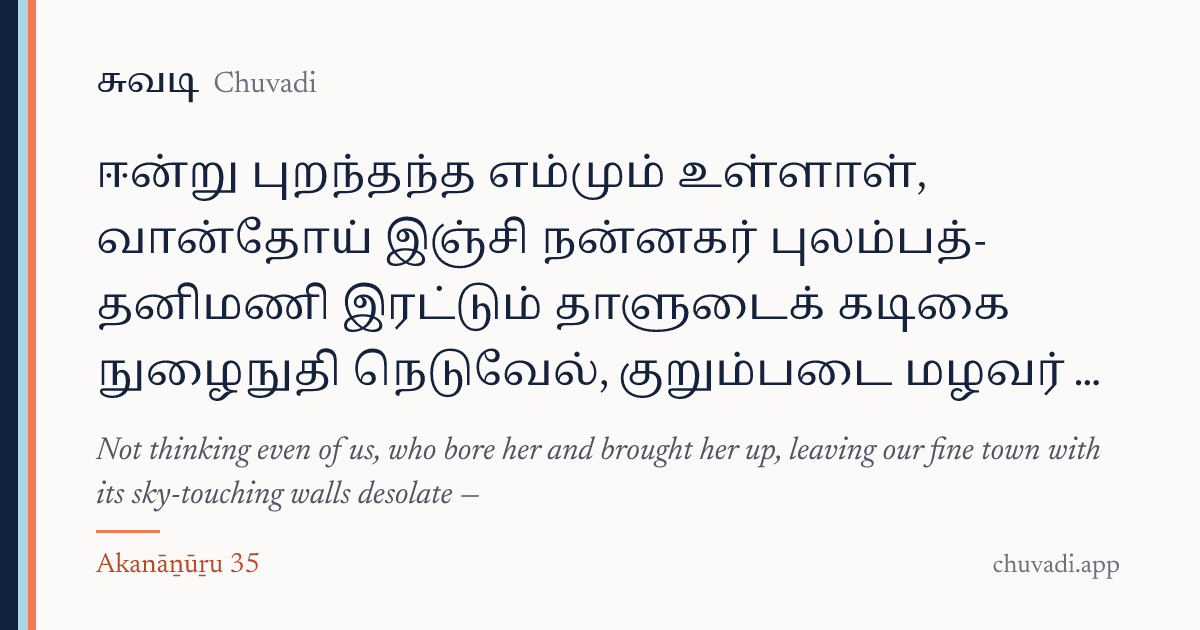

அகநானூறு 35
பாடல் · The poem
Tap a word to see where else it occurs.
பொருள் · Meaning in TamilAI
பெற்று வளர்த்த எங்களையும் நினைக்காமல், வானைத் தொடும் மதில்களை உடைய எங்கள் நல்ல ஊர் தனிமையில் வருந்தும்படி அவள் சென்றுவிட்டாள். அவள் சென்ற வழி எப்படிப்பட்டது? அடிப்பகுதியில் ஒற்றை மணி ஒலிக்கும் தண்டுடைய, ஊடுருவும் கூர்முனையுடைய நெடிய வேல்களை ஏந்திய சிறுபடையுடைய மழவர், எல்லையிலிருந்து பசுக்களைக் கவர்ந்து சென்று, வில்லையே ஏராகக் கொண்டு வாழும் சிறந்த அம்புடைய வீரர்களைப் பரல்நிலத்தில் வீழ்த்தினர். அந்த வலிய வீரர்களின் கற்குவியலில் உறையும் தெய்வத்தை வழிபடுவதற்காக, நடுகல்லுக்கு மயிற்பீலி சூட்டி, துடிப்பறை முழக்கி, கள்ளோடு செம்மறியாட்டைப் பலியாகக் கொடுக்கிறார்கள். அத்தகைய, பல பிரிவு வழிகளை உடைய, கடக்க அரிய, புலால் நாறும் கொடிய பாலையைத் துணிந்து கடந்து அவள் பிறருடையவள் ஆகிவிட்டாள். ஆயினும், ஓயாத முழவுடைய கோவலூர்த் தலைவனும் நெடுந்தேர் உடையவனுமாகிய காரியின் கொடுங்கால் முன்துறையில் ஓடும் பெண்ணைப் பேராற்றின் நுண்ணிய நீரலைகளைப் போன்ற சுருண்ட கரிய கூந்தலுடைய என் பேதைக்கு, அவள் அறியாத நாட்டில் துணையாக நின்று காத்தவன், அவளை மீண்டும் மீண்டும் அணிசெய்து, ஆர்வ நெஞ்சத்தோடு அவள் அழகில் கலந்து, தன் மார்பையே துணையாகக் கொண்டு அவளை உறங்கச் செய்வானாக!
இது பாலைத் திணை; உடன்போக்குச் சென்ற மகளை வாழ்த்தி நற்றாய் கூறுவதாகக் கொள்ளலாம். நடுகல்லும் பலியும் நிறைந்த கொடிய வழியின் காட்சியும், மகளின் கூந்தலை ஆற்றலையோடு ஒப்பிடும் தாயின் கனிவும் எதிரெதிராக நிற்கின்றன. 'கொடுங்கால்' என்பது ஊர்ப்பெயரா ஆற்றின் வளைந்த கரையா என்பது உறுதியாகத் தெரியவில்லை.
ஆங்கிலம் · English translationAI
Translation
- Not thinking even of us, who bore her and brought her up,
- leaving our fine town with its sky-touching walls desolate —
- where, with a single bell ringing on the haft below the blade,
- long spears with piercing points, the Maḻavar of small war-bands,
- who drove off cattle from the frontier, felled on the gravel
- the fighting men who live by the plough of the bow, with their excellent arrows;
- to worship the gods of the cairns of those strong men,
- they crown the hero-stones with peacock feathers, sound the tuṭi drum,
- and with rice-beer offer the sacrifice of sheep —
- the cruel wasteland with forking paths, hard to pass, reeking of flesh,
- she dared it and has become another's; even so, adorning her again and again,
- with a loving heart, mingling with her fine beauty, may he
- let her sleep with his chest as her companion! —
- of the lord of Kōval of drums that never sleep,
- Kāri of the tall chariot, at the ford before Koṭuṅkāl,
- like the fine ripples of the great Peṇṇai river
- is the dark, curling hair of my simple girl —
- he, the companion who has cared for her in a land she does not know!
What the poem says
A mother speaks after her daughter has eloped. She is very likely the girl's own mother (naṟṟāy): she speaks of 'us, who bore her and brought her up'. Like akam.15, this is a blessing rather than a lament, and it is moving because it accepts what has happened.
The middle of the poem describes the road the girl has taken, and it is full of death. On this frontier, raiders called Maḻavar, armed with long spears with bells on their shafts, carry off cattle and kill the warriors who resist. Those fallen men are honoured with hero-stones (naṭukal): people crown the stones with peacock feathers, beat the tuṭi drum, and offer rice-beer and sheep. It is the wasteland of cattle raids, 'reeking of flesh'.
And yet: she dared it, and she now belongs to another family. The mother's wish follows. May he, the companion who has looked after her in a land she does not know, adorn her again and again, take joy in her beauty, and let her sleep on his chest. The last image is the mother's tender memory of her child's hair, dark and curling like the fine ripples of the Peṇṇai river at the ford of Kāri, the lord of Kōval with its never-silent drums and tall chariot.
Kāri and Kōval are named only as the poem names them. 'Koṭuṅkāl' (line 15) is taken here as a place name at the ford; it could instead describe the river's 'curving bank'. The phrase 'piṟaḷ āyiṉaḷ' (line 11), 'she has become another's', is the mother's acknowledgment that her daughter now belongs to her husband's family.