



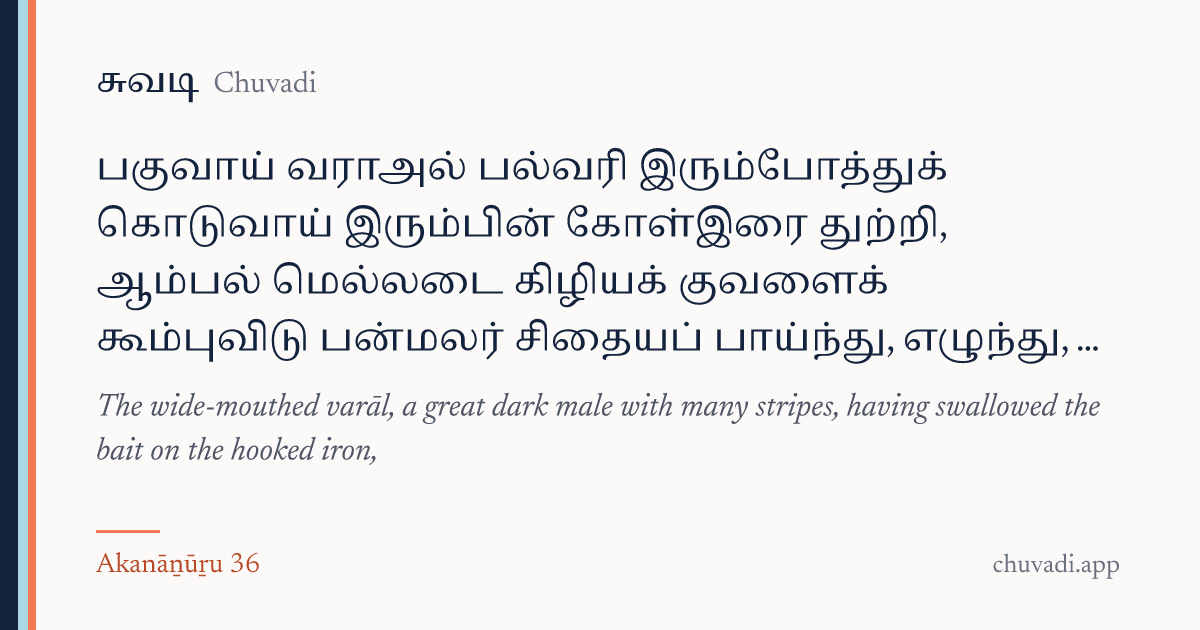

அகநானூறு 36
பாடல் · The poem
Tap a word to see where else it occurs.
பொருள் · Meaning in TamilAI
அகன்ற வாயுடைய, பல வரிகளை உடைய பெரிய ஆண் வரால் மீன், வளைந்த இரும்புத் தூண்டிலில் உள்ள இரையை விழுங்கிவிட்டு, ஆம்பலின் மென்மையான இலைகள் கிழியும்படியும், குவளையின் மொட்டவிழ்ந்த பல மலர்கள் சிதையும்படியும் பாய்ந்து எழுந்து, புதராகப் படர்ந்த வள்ளையின் அழகிய கொடிகளைச் சிக்கவைத்து, தூண்டில்காரன் இழுத்தாலும் வராமல், கயிறு வீசப்பட்ட சினமுடைய காளைபோல வெறி மிகுந்து, பகல் முழுதும் குளத்தைக் கலக்குகிறது. அத்தகைய, பூக்களால் நிறம் பெற்ற நீருடைய ஊரனே! பெருகி வரும் வெள்ளமுடைய வையை ஆற்றின் நீண்ட மணலுடைய அகன்ற துறையில், அழகிய மருதமரம் உயர்ந்து நிற்கும் மலர்கள் விரிந்த சோலையில், நறுமணமுள்ள அடர்ந்த கூந்தலும் சிறிய வளையலும் உடைய இளம்பெண்ணோடு நீ மணம் கொண்டாடினாய் என்று ஊரார் பேசுகிறார்கள். அந்த அலர், கத்தரித்த பிடரியுடைய குதிரைகளையும் கொடி கட்டிய தேரையும் உடைய செழியன், ஆலங்கானத்தின் அகன்ற போர்க்களம் சிவக்கும்படி, சேரல், செம்பியன், சினம் மிக்க திதியன், போரில் வல்ல யானைகளும் பொன்னணியும் உடைய எழினி, நாரால் வடிகட்டிய கள்ளுடைய எருமையூரன், தேன் மணக்கும் மார்பில் உலர்ந்த சந்தனமுடைய இருங்கோ வேண்மான், நன்கு அமைந்த தேருடைய பொருநன் என்னும் எழுவரின் வலிமை அடங்கும்படி, ஒரே பகலில் அவர்களுடைய முரசுகளையும் வெண்குடைகளையும் கைப்பற்றி, புகழ் பரவும்படி அவர்களைக் கொன்று களவேள்வி செய்த நாளில், வெற்றி பெற்ற வீரர்கள் எழுப்பிய ஆரவாரத்தைவிடப் பெரிதாக இருக்கிறது!
இது மருதத் திணை; புதிய பெண்ணோடு உறவு கொண்ட கணவனிடம் தலைவி (அல்லது அவள் சார்பில் தோழி) இடித்துக் கூறுவது. தூண்டிலில் சிக்கியும் கரைக்கு வராமல் குளத்தைக் கலக்கும் வரால் மீன், வீட்டின் அமைதியைக் குலைக்கும் கணவனைக் குறிக்கும் உள்ளுறை. ஆலங்கானப் போரின் வெற்றியாரவாரம் ஊர் அலரின் பெருக்கத்தை உணர்த்துவதற்காகவே கூறப்படுகிறது; போரைப் பற்றிப் பாடல் சொல்வதற்கு மேல் இங்கே எதுவும் சேர்க்கப்படவில்லை.
ஆங்கிலம் · English translationAI
Translation
- The wide-mouthed varāl, a great dark male with many stripes,
- having swallowed the bait on the hooked iron,
- tearing the soft leaves of the āmpal, and of the kuvaḷai
- crushing the many flowers just loosing from their buds, leaps and rises,
- tangles the fine vines of the thicket-forming vaḷḷai,
- and will not come when the angler hauls it in,
- but like a furious bullock with a rope thrown over it, wild with rage,
- all day it churns up the pool — lord of the town of flower-bright waters!
- On the wide ford of long sand by the Vaiyai with its rushing flood,
- in the grove of open blossom where the fine marutu stands tall,
- with the girl of small bangles and thick, fragrant hair
- you held a wedding, they say; and that gossip —
- on the day when Ceḻiyaṉ, with his bannered chariot and horses with clipped manes,
- made the wide field of Ālaṅkāṉam run red,
- when Cēral, Cempiyaṉ, Titiyaṉ full of wrath,
- Eḻiṉi of gold ornaments and elephants skilled in war,
- the lord of Erumaiyūr with his liquor strained through fibre,
- Iruṅkō Vēṇmāṉ, with dried sandal on his honey-scented chest,
- and Porunaṉ of the well-made chariot — so
- the fine strength of the seven was brought low, and in a single day
- he seized their drums and white umbrellas, so that his fame went abroad,
- and killed them, and made the battlefield his sacrifice —
- it is louder even than the roar of his victorious warriors!
What the poem says
The wife, or her friend speaking for her, addresses the husband, the lord (ūraṉ) of a rich marutam town. The town is full of gossip (alar): he is said to have 'held a wedding', that is, taken up openly with a young woman, in a grove of marutu trees on the sandy banks of the Vaiyai.
The opening is the uḷḷuṟai. A big striped varāl fish has taken the angler's hook but refuses to be landed. It thrashes through the pond, tearing the water-lily leaves, crushing the kuvaḷai flowers, tangling the vaḷḷai vines, raging like a bullock that has felt a rope thrown over it. The hooked fish fits the husband: he has been caught, and in his struggles he is wrecking the peace and beauty of his own household. It may also hint that the other woman has him hooked.
The second half measures the gossip. It is louder, the speaker says, than the victory roar of Ceḻiyaṉ's warriors on the day he made the field of Ālaṅkāṉam run red with blood. The poem names the seven he defeated: Cēral, Cempiyaṉ, Titiyaṉ, Eḻiṉi, the lord of Erumaiyūr, Iruṅkō Vēṇmāṉ and Porunaṉ. In a single day, it says, he broke their strength, took their drums and white umbrellas (emblems of royal power), killed them and made the battlefield a sacrifice. This is all the poem tells; the comparison is there to make the scandal as loud as the most famous battle-cry the speaker can think of.
The shift from a fish pond to a royal battlefield is deliberately extreme, and it gives the reproach its sting. Who exactly speaks is not stated; the wife is the more likely, since the gossip concerns her husband.