




அகநானூறு 37
பாடல் · The poem
Tap a word to see where else it occurs.
பொருள் · Meaning in TamilAI
அவர் எங்களை மறந்து அங்கேயே தங்கிவிட மாட்டார் என்றாலும் — இரவு முழுதும் முழங்கும் ஓசையோடு மகிழ்ச்சி பொங்கும் உழவர்கள், களத்தில் குவிந்த நெல்லை அள்ளுகிறார்கள்; அதிலிருந்து எழும் குற்றமற்ற நுண்ணிய தூசி, பனிமூட்டமான வானம் போலத் திசைகளை எல்லாம் மறைக்கிறது. இரவு விடியும் வைகறையில் வைக்கோலைப் பிரித்துத் தூற்றுகிறார்கள். உழைப்பால் வந்த சோர்வு நீங்கும்படி, காற்றில் அரும்பிய வளமான தளிர்களை உடைய அழகிய மாமரத்திலிருந்து கிளிபோலப் பச்சையான காய்க்கொத்துகளைப் பறிக்கிறார்கள். பதமாகப் புளித்த புதிய பானையில் நிறைந்த பானத்தை, வெயிலுக்குப் பின்புறம் காட்டிப் பிடித்த நெருங்கிய இலைகளால் ஆன பசுமையான தொன்னைகளில், குளத்தில் இறங்கும் எருதுகள்போல வயிறாரப் பருகுகிறார்கள். கொள்ளும் பயறும் பாலோடு கலந்த, வெள்ளிக்கோலால் வரைந்ததுபோல வெண்மையாக மலர்ந்த சோற்றுக்கஞ்சியை, கைகள் மேலும் வாங்க மறுக்கும் வரை உண்கிறார்கள். பின்பு உயர்ந்த வட்டமான குவியல்களைச் சுற்றி, பகல் கழியும்வரை மருதமர நிழலில் எருதுகளோடு ஓய்வெடுக்கிறார்கள். இது உண்மையிலேயே அழகிய வேனில்காலம்தான் — சிறந்த அழகை நுகரத் துணை உடையவர்களுக்கு!
இது பாலைத் திணை என்று தொகுப்பின் வரிசை கூறுகிறது; பிரிவும் வேனில் பருவமும் அதற்குப் பொருந்துகின்றன, ஆனால் வரையப்படும் காட்சி மருதநிலத்து அறுவடைக் காட்சி. பிரிந்த தலைவனை நினைந்து தலைவி தோழியிடம் கூறுவதாகக் கொள்ளலாம். உழைப்புக்குப் பின் ஒன்றாக உண்டு ஓய்வெடுக்கும் உழவரின் நிறைவு, துணையில்லாத தலைவியின் தனிமையைக் கூர்மையாக்குகிறது. ஒன்பதாம் அடியில் உள்ள புளித்த பானமும், 'பருதி அம் குப்பை' என்பதும் எவை என்பது உறுதியாகத் தெரியவில்லை.
ஆங்கிலம் · English translationAI
Translation
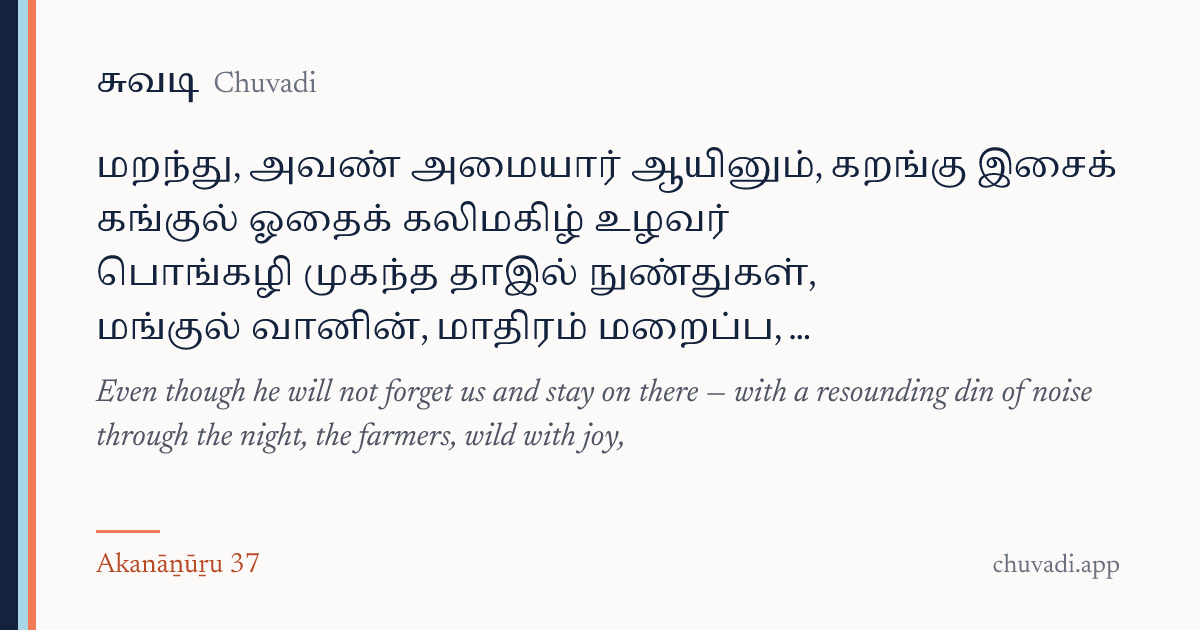
- Even though he will not forget us and stay on there — with a resounding din
- of noise through the night, the farmers, wild with joy,
- have scooped up the heaped grain from the threshing; its flawless fine dust,
- like a misty sky, hides all the quarters;
- at the dawn, as night wanes, they toss the straw aside and winnow,
- and so that the stupor of their hard labour may leave them, from the lovely
- mango tree whose rich shoots have budded in the wind
- they pluck the clustered bunches, green as parrots,
- and the brimming new pot that has soured just right,
- in green cups of close-set leaves held with their backs to the sun,
- they drink like bullocks plunging into a pool; and, handsomely,
- horse-gram and green gram mixed with milk, the white
- porridge, its grains opened like lines drawn with a silver rod,
- they eat until their hands refuse to take more; and then, around the tall
- round heaps they gather, and as the day goes by,
- in the shade of the marutam tree they rest beside their bullocks —
- this is the lovely summer, indeed,
- for those who have companions to enjoy their beauty!
What the poem says
The heroine speaks, probably to her friend. Her husband is away on the wasteland road, and the season is summer (vēṉil). She begins with a concession: he will not forget her and stay away for good. But the rest of the poem shows why this season is so hard to bear alone.
What she describes is not the pālai at all but the farming country at the end of the harvest, the world of marutam. The farmers have worked through the night, threshing to the sound of drums; the chaff hangs in the air like mist and hides the horizon. At dawn they winnow. Then, to shake off their weariness, they pick green mangoes and drink a soured new brew from leaf-cups, gulping like bullocks wading into a pond; they eat white porridge with horse-gram, green gram and milk until they can eat no more; and at midday they rest with their oxen in the shade of the marutam trees, beside the round heaps of grain.
It is a scene of satisfaction and ease after labour, everyone together, nothing lacking. The last two lines turn it: 'this is the lovely summer, for those who have a companion with whom to enjoy their beauty.' For her it is not. The happiness of others makes her own separation sharper, and the summer itself, the season of the dry road, is the season of his absence.
The tiṇai label is pālai by the anthology's arrangement, and it fits through the absent husband and the season, though the landscape painted is marutam. Several food words are uncertain, especially the soured drink of line 9 (taken as a fermented brew) and 'paruti am kuppai' (line 15), taken as round heaps of grain or straw.